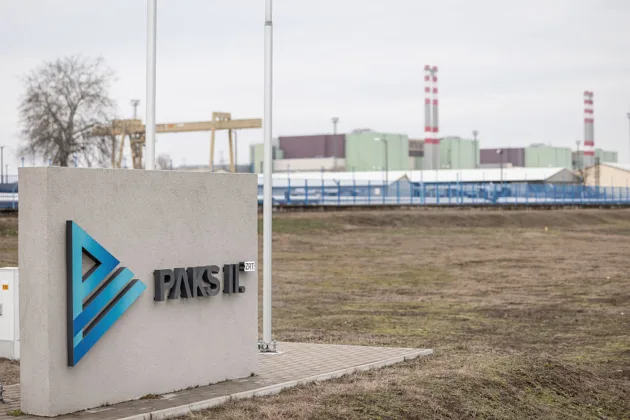




Hungary has launched a public, searchable database of communist-era state security files, releasing the identities of tens of thousands of individuals recorded as informants, collaborators and recruitment targets under Soviet-backed rule.
The initiative, managed by the Historical Archives of the Hungarian State Security (ÁBTL) via the newly unveiled portal nyitottaktak.hu, marks the culmination of a decades-long political battle.
It ends more than three decades in which Hungary’s secret police archives remained largely sealed from general public scrutiny. ÁBTL director Gergő Bendegúz Cseh has said the release goes further than anywhere else in the former Eastern bloc.
The timing carries heavy historical symbolism: Today marks the 70th anniversary of the Soviet military intervention on November 4, 1956, when Soviet tanks rolled into Budapest to suppress the Hungarian anti-communist revolution that had begun on October 23.
In this initial release phase, the government has published the “H-Database” — derived from magnetic data tapes dating from January 1990 — alongside statutory operational indices (“6-cards” and registration ledgers), exposing between 50,000 and 60,000 names.
Users can search by name, place and date of birth and cover name. Sensitive personal data, such as details of health, addiction or sexual orientation, has been redacted.
A secondary release containing roughly 9,000 detailed recruitment dossiers (B-dossziék) is scheduled for February 25, 2027, the national memorial day for victims of communism.
Records of the communist-era III/I foreign intelligence branch are not being released on national security grounds.
Between 1945 and 1989, Hungary’s interior ministry and state security agencies deployed an extensive informant web to monitor intellectual circles, church congregations, dissidents and everyday citizens.
While previous administrations since the 1989 transition restricted file access to academic researchers and to those named in the files and their close relatives, the new administration enacted fast-track declassification legislation in September.
Parliament passed the law on September 15 by 149 votes to none, with 35 abstentions, most of them from the Fidesz-KDNP opposition.
Prime Minister Péter Magyar, whose Tisza party won the April election, has accused Fidesz-KDNP governments of rejecting proposals to publish the documents on 25 occasions between 2010 and 2026.
Former prime minister Viktor Orbán said on November 3 that communist secret services had tried to recruit him as an informer during his military service. He said he refused and later came under heavy police surveillance.
Government officials and archivists have strongly cautioned the public, though, against drawing hasty conclusions or settling historical grudges solely on the basis of a name appearing in the database.
State security records systematically mixed willing ideological collaborators with individuals blackmailed over criminal charges, health issues or sexuality, alongside people merely earmarked for recruitment who never agreed to provide intelligence.
Furthermore, large swathes of files were destroyed during the 1956 street battles and purged in shredding operations by outgoing communist officials during the transition in 1988-89, leaving the remaining archival record fragmented.
According to estimates cited by the ÁBTL, some 150,000 people informed for the state security services over four decades. Only about a third of their names are known and only one in ten has a surviving detailed file such as a B-dossier.
János Bóka, leader of the Fidesz parliamentary group, criticised the release of documents “taken out of context and without any analysis”.
“I urge everyone to approach this long-overdue release of documents with dignity and compassion,” Magyar said during a briefing in Budapest.
“Many families will now be confronted with difficult information that will often concern deceased members of their families. It is impossible to overcome trauma without discussing it and asking questions.”
Today is an important day in Hungary’s political transformation. At 9.30 am, on the 70th anniversary of the crushing of the 1956 Revolution, the names of 60,000 former informers recruited by the communist regime will be made public on the https://t.co/ctQSKVeY1y website. https://t.co/27nkDMViC7
— Magyar Péter (Ne féljetek) (@magyarpeterMP) November 4, 2026