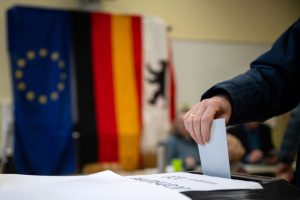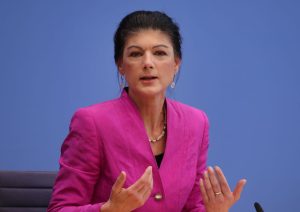











Germany’s left-wing Sahra Wagenknecht Alliance (BSW) party has said it would take legal action against the results of Germany’s federal election on February 23, alleging “irregularities” in vote counting.
The party, which narrowly missed entering parliament, filed a complaint on March 11 with the country’s constitutional court, demanding a full review of the results.
In the ballot, BSW secured 4.97 per cent of the vote, just 13,400 votes short of the 5 per cent threshold required for parliamentary representation.
According to party leader Wagenknecht, post-election reports allegedly indicated that thousands of party votes were either miscounted or wrongly allocated to other parties.
Official investigations uncovered ballot transmission errors, misallocations and incorrectly invalidated votes, prompting corrections in several constituencies. In North Rhine-Westphalia alone, 1,295 additional BSW votes were recovered.
BSW MEP Fabio de Masi argued that the investigation into these irregularities was anything but systematic.
“The missing 9,529 votes needed to reach the 5 per cent threshold are likely far fewer in reality. Many of the extreme anomalies we flagged, such as districts reporting zero votes for BSW while registering multiple votes for Bündnis Deutschland [Alliance Germany], were simply ignored,” he said on March 13.
He further criticised the lack of comprehensive data, suggesting that election officials had failed to investigate clear discrepancies.
“A precise recount is essential to determine whether we actually fell short of the 5 per cent hurdle—or if we missed it by just a handful of votes,” he added.
According to the final results determined by State election officials as of March 11, the revised tally showed that individual election committees recorded 4,277 additional votes for BSW.
If no further adjustments were made, the Federal Electoral Committee was expected to declare these results official on March 14.
BSW has filed legal applications with the Federal Constitutional Court seeking an interim injunction to delay certification until a nationwide recount has been conducted.
The Unified European Left Group of the Council of Europe has urged European Union involvement.
It argued on March 12 that even a minor adjustment could push BSW over the threshold and into the Bundestag.
To ensure the election’s democratic legitimacy, the group has called on the Council of Europe’s Venice Commission to intervene.
It said the commission could provide oversight to guarantee compliance with the Code of Good Practice in Electoral Matters, ensuring transparency and accountability.
Additionally, it has pushed for electoral reforms in Germany, particularly for overseas voting, including revised registration requirements, embassy voting options and proxy designations.
In its statement, they referenced Federal Returning Officer Ruth Brand’s prior warning to then-chancellor Olaf Scholz regarding the integrity of the German election.
“On 8 November 2024, Federal Returning Officer Ruth Brand warned Chancellor Scholz that not fully utilising the full 60-day period between the Bundestag‘s dissolution and the election could lead to logistical challenges, particularly for voters abroad, and noted that there is “a high risk that the cornerstone of democracy and trust in the integrity of the election could be violated,” the group wrote.
This resurfaced warning has added further weight to BSW’s claims, raising questions about whether the rushed timeline may have contributed to the alleged irregularities.
The legal action by the BSW followed doubt emerging over the election, with concerns largely focused on the difficulties faced by Germans living abroad, with voting ballots arriving too late in many instances.
Questions are mounting over the integrity of Germany’s snap federal election, with concerns largely focused on the hurdles faced by Germans living abroad. https://t.co/k0SZBZR9NN
— Brussels Signal (@brusselssignal) February 25, 2025