










The Netherlands’ fragile minority coalition has been left facing imminent collapse after its centrist government parties struck a last-minute tax agreement with left-wing opposition factions, freezing out their Liberal coalition partners and sparking a backlash from the country’s conservative flank.
The political turmoil erupted after the centrist Democrats 66 (D66) and Christian Democratic Appeal (CDA) bypassed their third coalition partner, the right-liberal People’s Party for Freedom and Democracy (VVD), to secure budget support from the left-wing Progressive Netherlands (PRO) party and the pro-European Volt party with higher taxes on “the wealthy” and lower taxes on wages.
Because the current Dutch cabinet operates as a minority government, it must negotiate with opposition parties in both houses of parliament to pass legislation. Potential deals were supposed to be discussed amongst the governing parties.
The decision to unilaterally pivot left has infuriated the sidelined VVD.
VVD leader Dilan Yeşilgöz, who is also deputy prime minister and defence minister, argued these measures directly violate the coalition’s foundational agreements to protect the Dutch investment and business climate.
Since the deal was announced on November 11, The Hague has been in a political crisis, with strong speculation that the VVD might leave.
When the government was formed, it was agreed to keep the peace on financing and hold a centrist course, which is why PRO, formed from the merger of the Labour Party and GreenLeft, was left out. Now the CDA and D66 have walked back on this.
Yeşilgöz stated that her party had been “ambushed” by its coalition partners, describing the deal as “substantively bad for the Netherlands” and warning that the VVD may withdraw its support entirely, which would trigger the collapse of the cabinet.
D66 parliamentary leader Jan Paternotte has denied the charge, saying the VVD was informed “practically immediately” after the deal was sealed.
While a key part of the deal is being framed as a “millionaire tax”, the fiscal implications go significantly further.
Rather than a standalone wealth levy, the deal brokered systematically shifts the tax burden from labour to capital by introducing a new 38.5 per cent top rate in Box 3, the Dutch tax bracket for savings and investments, on returns above €60,000. The rate below that threshold would fall from 36 to 35.5 per cent.
The package is expected to raise €1 billion a year, less than the €1.5 billion originally sought, with €900 million earmarked for a cut in the lowest income tax rate.
Furthermore, the finalised amendment makes so-called paper gifts, used to reduce inheritance tax, less attractive. It also freezes the indexation of the Box 2 threshold, which applies to income from substantial company shareholdings, from 2027 to 2031.
For the right-liberal VVD, its staunch opposition is rooted in the country’s economic competitiveness; the party argues that the new taxes on investment income will damage the Dutch investment environment and that the deal breaks the coalition agreement. The final text does, though, drop earlier plans to end the tax-advantaged transfer of family businesses.
Proponents of the budget deal maintain that the measures are a necessary and highly targeted intervention to address wealth inequality rather than a broad attack on the middle class.
They emphasise that the new top rate strictly applies to returns above €60,000 on savings and investments, deliberately shielding the vast majority of ordinary citizens.
By securing a higher contribution from the country’s wealthiest individuals, the government is able to finance structural income tax cuts for low- and middle-income households, effectively shifting the fiscal burden away from daily labour and onto passive capital.
For the left-wing factions that brokered the compromise, this redistribution is framed as a matter of basic fiscal fairness.
The decision by D66 and CDA to court the Left has also drawn heavy criticism from right-wing opposition parties, who had previously been engaged in budget talks.
Joost Eerdmans, leader of the conservative JA21 party, declared that “the door to the right has now been slammed shut”. He also called the deal “a bomb under the cabinet”.
The populist Farmer-Citizen Movement (BBB) expressed deep disappointment at the manoeuvre, its leader Henk Vermeer speaking of “a pile-up of unwillingness, incompetence and powerlessness”.
On November 12, the House of Representatives passed the PRO-Volt amendment with 79 of 150 votes, D66 and CDA voting in favour. A motion of no confidence in the Jetten cabinet tabled by the Party for Freedom (PVV) was defeated by 116 votes to 34.
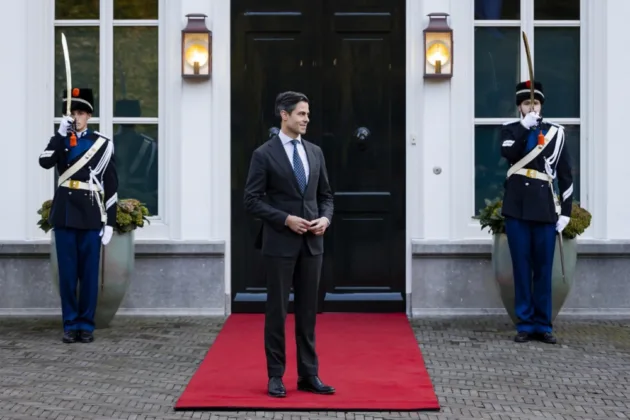
Prime Minister Rob Jetten has acknowledged that relations between the coalition partners “are not easy” and called for a “serious restart” that includes the VVD.
Crisis talks between Jetten and his deputy prime ministers are still ongoing.