




The Spanish Government has presented a €9 billion Social Climate Plan to accelerate the country’s energy transition, doubling down on the green agenda 13 months after the worst power outage Europe has known in more than two decades.
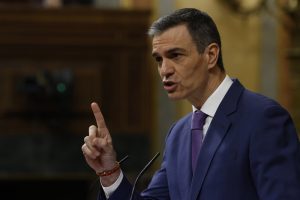
Prime Minister Pedro Sánchez unveiled the package in Madrid on May 25, framing it as a “fair” model that would extend the benefits of decarbonisation to households unable to renovate, install solar panels or buy an electric car without state support.
“The energy revolution can’t be just for those who can change cars, put up solar panels on their roof or renovate their homes without subsidies,” Sánchez said. “It needs to reach everyone.”
The plan, which would be co-financed by the European Union and fits within the broader European Green Deal architecture, has been announced as Spain confronts a global energy shock caused by the war between the United States and Iran, and as the government positions itself ahead of the next round of EU climate negotiations.
A SOCIAL FACE FOR THE GREEN AGENDA
Of the total envelope, €4.7 billion has been earmarked for housing policies, with a focus on making homes, public housing and entire neighbourhoods more energy efficient. The package includes funding for shared electricity schemes and the installation of solar panels in residential districts.
A further €4.3 billion has been set aside for transport, including the renovation of fleets used by small firms and self-employed workers and measures aimed at improving connectivity in rural areas. Low-income households and vulnerable groups would be offered a near-free public transport pass.
Sánchez argued that the transition was already delivering results, pointing out that Spanish emissions have fallen by 19 per cent since 2018 and that renewables now account for 56 per cent of electricity generation, up from 39 per cent.
The Third Vice-President of the Government of Spain and Minister for Ecological Transition, Sara Aagesen, described the plan as a “fundamental tool for complex times” in which “the climate emergency is a reality”. The government hopes to send the package to Brussels before the end of the year.
THE SHADOW OF APRIL 28
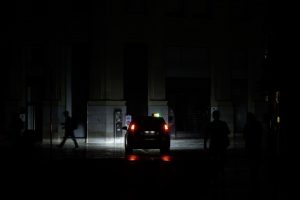
The presentation has come just over a year after the systems of mainland Spain and Portugal collapsed simultaneously at 12.33pm on April 28, 2025, plunging 47 million people into darkness. Brussels Signal reported from the scene at the time, with airports, trains, mobile networks and supermarkets brought to a standstill within minutes.
The European Network of Transmission System Operators for Electricity (ENTSO-E) published its final report on March 20, 2026, after a year-long investigation by a 49-member expert panel. It identified a combination of voltage and frequency oscillations, gaps in reactive power control and cascading disconnections in Spain — describing the event as “a first of its kind”. A year on, Brussels Signal noted that no individual, institution or company has yet been held fully to account.
A parallel inquiry by Spain’s Senate has gone further. Internal audio recordings obtained by the upper house showed that operators of Red Eléctrica had attributed the collapse to “oscillations by photovoltaics” within minutes of the outage.
French President Emmanuel Macron weighed in earlier this year, telling that Spain’s problem was “a 100 per cent renewable energy model that its own domestic grid cannot support”.
In October 2025, Brussels Signal covered a warning from Red Eléctrica that further fluctuations could trigger automatic disconnections, raising the risk of another large-scale outage. The grid operator estimated that consumer costs linked to system reinforcements have exceeded €1 billion in 2025 alone.
Sánchez, though, has shown little appetite for a course correction. At WindEurope 2026 in April, he pledged to “double installed capacity by the end of the decade” and announced a €13.6 billion grid plan, while reiterating that the government would stick to its target of phasing out all seven of Spain’s nuclear reactors by 2035.
Critics have not forgotten that in a 2022 Senate appearance — clips of which went viral on the day of the outage — Sánchez had insisted there would be no blackouts in Spain, accusing his opponents of scaremongering. Brussels Signal has also reported that Spain had been warned repeatedly before April 28 about precisely the scenario that played out.
A NARROW PATH IN PARLIAMENT
For the Social Climate Plan to clear the Congress of Deputies, Sánchez will need to assemble a majority. His Socialist Party (PSOE) holds only a little over a third of the 350 seats and has relied on a fragile coalition with the left-wing Sumar party, plus the support of Catalan, Basque and other regional groupings.
That arithmetic has already forced the government to roll over the 2023 budget for a third consecutive year, and negotiations on a new spending plan remain unresolved.
The opposition Partido Popular (PP) and right-wing Vox have both called for a reassessment of the nuclear phase-out and for greater investment in baseload generation since the blackout. A non-binding motion approved by Congress in February 2025 urged the government to reverse the phase-out, and the operators of the Almaraz plant have requested an extension to mid-2030, with a decision expected after a report by the nuclear regulator this summer.
For now, the Spanish Government has stuck to its line: more renewables, more electrification, less nuclear, and a social cushion to bring those left behind. Whether the parliamentary maths — or the grid — will hold is another matter.