




A European Commission consultation on the future of the EU’s tobacco rules has closed amid a growing dispute over whether Brussels should pursue stricter restrictions on nicotine products or distinguish between cigarettes and substantially less harmful alternatives.
The Commission launched the public consultation on May 22, following a separate call for evidence earlier that month. The consultation closed on August 14 and is intended to inform a revision of the EU’s tobacco-control framework, which the Commission plans to propose before the end of 2026.
According to the Commission’s own evaluation of the existing framework, the EU tobacco rules had contributed to a significant decline in smoking and tobacco-related deaths. At the same time, it identified the rapid emergence of novel tobacco and nicotine products, particularly their growing use among young people, as a major challenge.
That tension is at the centre of the coming revision. Public-health advocates generally argue for stronger controls on products containing nicotine, while harm-reduction advocates say regulation should reflect the substantially different risks associated with smoking and non-combustible products.
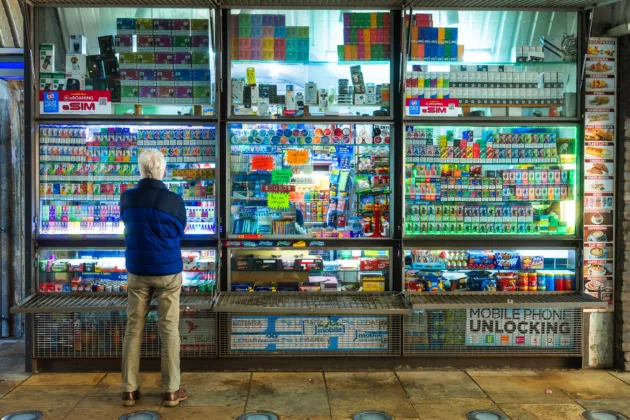
Miguel Ángel Martínez, president of the European Confederation of Tobacco Retailers (CEDT), said the consultation process had raised concerns among retailers about whether the questionnaire adequately captured the experience of the sector.
“With the closure of the Open Public Consultation, following CEDT’s active participation, we are concerned that the way the questionnaire was designed reflects a limited effort to capture the evidence, expertise and practical realities of the EU retail and distribution sector,” Martínez said.
He warned that disproportionate restrictions could push consumers away from legitimate retailers and towards illegal channels.
“Disproportionate measures risk undermining compliant retailers to the advantage of illicit channels,” he said.
A similar argument has been made by Karl E. Lund, a Norwegian tobacco researcher who has worked in tobacco control and research for four decades.
Lund told Brussels Signal he had followed the EU consultation from Norway and was struck by the breadth of the criticism. In his view, the range of social backgrounds represented in the responses made it more difficult to dismiss opposition to tighter restrictions as simply an organised tobacco-industry campaign.
Lund argues that the central question for policymakers should be whether consumers who are unwilling or unable to quit smoking can be encouraged to move away from combustible cigarettes.
He points to Norway and Sweden as examples of countries where conventional tobacco control has been combined with widespread availability of alternative nicotine products. Sweden in particular has achieved exceptionally low smoking rates while maintaining access to products such as snus and nicotine pouches.
“Snus has not only competed with cigarettes in the nicotine market, but has now largely outcompeted cigarettes,” Lund said.
The distinction is significant because the overwhelming health burden associated with smoking comes from combustion and inhalation rather than nicotine itself.
Sweden’s approach therefore differs from a policy that treats nicotine products largely as a single regulatory category. The country permits traditional snus under an exemption from EU rules and has developed a separate regulatory framework for tobacco-free nicotine products.
Lund argues that Brussels risks missing an opportunity if it applies increasingly similar restrictions to products with substantially different risk profiles.
“In Scandinavia, and especially in Sweden, the authorities instead follow the principle of risk-proportional regulation of nicotine products,” he said.
The EU’s approach has increasingly come under scrutiny as governments across Europe introduce their own restrictions on newer nicotine products. The Commission’s evaluation specifically identified novel tobacco and nicotine products as an emerging regulatory challenge, particularly because of concerns over their attractiveness to young people.
The Commission is also facing pressure from member states over individual products. In 2026, for example, EU institutions have dealt with national measures restricting or banning certain electronic cigarettes, illustrating the increasingly fragmented regulatory environment for newer nicotine products.
For Lund, however, the ultimate objective should remain reducing smoking rather than eliminating every form of recreational nicotine use.
“After 60 years of warnings, campaigns, increasing taxation, stricter behavioural restrictions, denormalisation and stigmatisation of smokers, you in the EU still have 90-100 million smokers,” he said.
He argues that continuing to intensify traditional tobacco-control measures could produce diminishing returns while increasing incentives for illicit trade.
“In my opinion, it is unethical to impose bans and barriers on the least dangerous nicotine products, while continuing to sell cigarettes 24/7,” Lund said.
The argument puts him at odds with a regulatory philosophy that prioritises prevention and restriction across tobacco and nicotine products, but Lund says his position is not based on defending the tobacco industry.
“From my bottom-up perspective I see this exclusively from the smokers’ side,” he said.
Negotiations on a major overhaul of the EU’s Tobacco Taxation Directive have collapsed, with Sweden refusing to support the proposal and effectively halting progress on one of the Commission’s flagship public health initiatives. https://t.co/4wOHKGRbqU
— Brussels Signal (@brusselssignal) June 5, 2026
Philip Morris International (PMI) said it welcomed the participation of what it described as an “unprecedented number” of European citizens in the Commission’s Open Public Consultation and Call for Evidence on the revision of the Tobacco Products Directive and Tobacco Advertising Directive.
According to PMI, the majority of respondents raised concerns about possible bans and restrictive regulations, arguing that such measures could threaten jobs and competitiveness, fuel illicit trade and discourage smokers from switching away from cigarettes.
The company said the Commission would undermine the credibility of its consultation if it failed to take those views into account.
“Different products carry different risks and should be regulated accordingly,” PMI said. “Responsible regulation must be guided by science and real-world evidence, not ideology.”
The Commission’s position is that its existing legislation has played an important role in reducing smoking and tobacco-related mortality, while the emergence of new products requires the framework to be updated. The revision will also support the EU’s stated ambition of achieving a tobacco-free generation by 2040.
The Commission has not yet published the final breakdown of consultation responses, and it is likely early to determine whether most participants opposed specific proposed restrictions.
It is also eying a levy of new taxes from nicotine products, in line with its own tee-total perspective, which has triggered a lot of opposition, both from countries who see raising taxes as their prerogative and from their perspective on harm reduction.
Brussels is expected to present its proposed revision before the end of 2026. The resulting legislation could determine not only how cigarettes are sold and advertised across Europe, but also how the EU regulates the rapidly expanding market for nicotine pouches, heated tobacco and other non-combustible products.
🚬 More than 80% of responses to the EU's tobacco consultation opposed stricter tobacco regulations.
Attention now turns to whether the European Commission will listen.https://t.co/ZVDd6MPLgR
— Brussels Signal (@brusselssignal) July 9, 2026