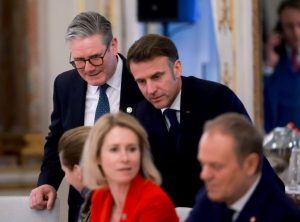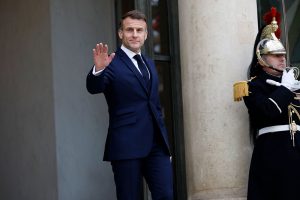

After a meeting of European leaders on Sunday, a spokesman for German Chancellor Merz voiced Europe’s readiness to take “the leading role in negotiations to end Russia’s full-scale invasion of Ukraine.” Conditions for a deal would include a cease-fire along the current front lines, “robust security guarantees” for Ukraine, and a continued freeze on Russian assets until Ukraine is compensated for war damages. The telling use of the phrase “full-scale invasion” reveals Europe’s preferred endgame: The territories seized prior to the 2022 invasion are a bargaining chip on offer to Russia. Europe is inviting Putin to take a limited win, keeping Crimea and occupied Donbas in exchange for an end to the war. If Zelensky accepted this, it could only have come with promises to usher Ukraine into the EU immediately after any deal is reached. Anything less would lead to his prompt ouster by an enraged Ukrainian populace.
The Russian President, with his usual malign puckishness, proposed the thoroughly suborned Gerhard Schröder as Europe’s representative, ample evidence that he does not yet consider Europe a power deserving to negotiate on equal terms with imperial Russia. Putin is also aware that anything short of victory over Ukraine puts his continued rule and very life in peril. Keeping only what Russia already had prior to the “full-scale invasion” in 2022 renders the subsequent sacrifices in blood and treasure for naught. Virulent Russian nationalists and a battered military will take any such deal as a betrayal of their animating ideology and the Russian people. Yet putting Putin at risk with a peace deal is clearly part of Europe’s plan. Her leaders have quietly embraced Stalin’s old truism: “No man, no problem.” The man launched this war: If he is humiliated and ousted upon its conclusion, then Russia may resume its transformation into a “normal European state”.
This pleasing fable is belied by a recent essay in Foreign Affairs, “The Inertia of Russia War: Why Putin Can’t End the Conflict” by Seva Gunitsky and Jeremy Morris. While this journal normally caters to the extinct volcanoes of American foreign policy, it occasionally publishes essays meriting the attention of foreign ministries across Europe. Gunitsky and Morris argue that “…after more than four years of conflict, Russia’s economy and society have been reorganised around war, creating a powerful set of domestic incentives that make ending the war difficult.” The only thriving sectors of the Russian economy are associated with military spending. The armed forces monopolise state resources, and veterans expect privileged access to public support and government jobs. Urban elites are kept content with a grey market in imported consumer goods while unrest in the provinces is met with violent repression.
Putin has recreated the old Soviet war economy, which optimised the vast natural resources of the USSR for the production of military hardware and the indulgence of party loyalists. Ending the war threatens the economic vertical that has done well out of the conflict, from the oligarchs who own weapons factories to the well-compensated workers working on their production lines. Putin is trapped by the war economy he has resurrected, but so is any successor. War, hot or cold, is the essential predicate of this Russia, the very social and economic glue that unites Russian society. Putin’s successor will come from the cadres that have done well out of the war and has no incentive to reduce the insular hostility toward Europe that unites their country. The presence of nearly a million veterans suspicious of any Kremlin policies that insult their sacrifices in the heroic struggle against the godless West constitute a severe check on any Russian leader, who fears the emergence of a Russian version of Germany’s interwar Stahlhelm movement: Angry, organised, and really good at armed violence.
Europe must look beyond Putin and recognise that the Russia he created will endure past the man himself. There is no liberal democrat waiting to take over: They are either dead like Navalny or fully co-opted by the mystical nationalism that passes for state religion in Russia. Russia will demand unrestricted exports of oil and gas to Europe as part of any deal to end the hot conflict, which will reinvigorate Kremlin finances and permit the war economy to thrive. Defence industries will rearm the Russian army, while wealthy Russians will again be free to visit their money in London and their houses in the south of France. We will need to amend the old Cold War joke: Russia will be Upper Volta with rockets and Louis Vuitton bags.
Where will any deal leave Europe? Likely faced with an insecure, authoritarian empire snarling around the frontiers of the EU. No future Russian leader will wish to recreate Putin’s spectacular blunder in 2022, but will employ the low risk/high reward tactics of covert operations and subversion in Russia’s “near abroad.” Aiding biddable leaders to advance the Kremlin’s interests will remain a priority as will the “protection” of Russian minorities in former Soviet republics. A latter-day George Kennan would advise Europe to recognise the enduring, adversarial nature of Russia and embrace containment across the full range of open and covert conflict.
Unlike the 1940s, Europe is wealthy enough to deter Russia, although at no small cost to her generous social welfare and agricultural support programmes. Ukraine will become an expensive EU protectorate while NATO will become increasingly financed by Europe, no matter who succeeds President Trump. The US can continue to provide C3I support and a precious nuclear guarantee to NATO, while the EU will provide those “robust security guarantees” needed to guard Ukrainian independence. Kyiv now owns the most capable military in Europe and has a lot to teach Europe about modern warfare. Organising Europe’s defence industrial base around Ukraine’s hard won skills and tactics is the surest means of deterring Russian aggression. One thing Russian military leaders have gained since 2022 is a profound, grudging respect for the Ukrainian army. Defence spending guided by Ukrainian strategies will do more to secure Europe than vast fortunes devoted to next generation combat aircraft and armoured vehicles.
There is no going back to the 1990s happy times when Europe assumed Russia was finding its place in the Common European Home. Europe chose to ignore the privations, corruption and outright mayhem of those years for Russia, which then begat Putin’s authoritarian restoration. A wary engagement with a hostile economic partner is perhaps the best Europe can hope for today. Any “leading role” in negotiations with Russia must accept this grim fact.