






Romania’s sole nuclear power plant has moved to the brink of a complete shutdown after record-low water levels on the Danube forced one reactor offline and now threaten the second.
State-owned operator Nuclearelectrica took Unit 1 at the Cernavodă plant offline in a controlled shutdown on July 28 because of very low flows caused by severe drought. It was the second such shutdown in the plant’s history, the first having come 23 years earlier.
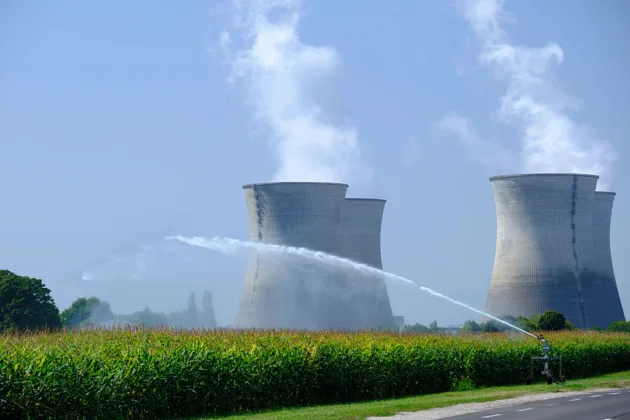
The two CANDU reactors, each rated at around 700 MW, normally supply roughly a fifth of Romania’s electricity. The plant uses Danube water for cooling, making it particularly vulnerable to prolonged dry spells.
Unit 2 has remained online thanks to emergency measures ordered by the authorities. These have included controlled underwater explosions to clear a rock obstruction on the riverbed, extensive dredging and the sinking of rock-filled barges to redirect more water towards the cooling intake.
The obstruction, a formation known as Pârjoaia on the Bala branch, was dislodged by army combat divers using 180kg of explosive. The Government has released 12.1 million lei (€2.3 million) from its reserve fund for the works.
Interim defence minister Radu Miruță described every additional day of operation as a significant gain for the national grid, putting its value at roughly three times the cost of the interventions.
The works lifted the level by 8cm, though a silt bank later formed and diverted water away from the intake channel.
Despite these interventions, the National Administration of Romanian Waters reported that levels at Cernavodă stood at minus 227cm on the evening of August 10, three centimetres above the minimum operating threshold. That threshold, minus 230cm, was reached on August 11, with the river continuing to drop by around two centimetres a day.
Nuclearelectrica said in a filing to the Bucharest Stock Exchange on August 11 that a controlled shutdown of Unit 2 could occur on the morning of August 13, depending on forecasts from the National Institute of Hydrology and Water Management (INHGA), further falls in the Danube and the plant’s operating parameters.
Flow at the Romanian entry point of Europe’s second-longest river has reached new all-time lows, well below seasonal averages and undercutting previous records set decades ago.
Apele Române deputy director Sorin Rîndașu put the flow at about 1,370 cubic metres per second, against a previous minimum of 1,400 and an August average of 3,900.
The National Committee for Emergency Situations declared a nationwide state of alert on July 31 for a period of 30 days. The Government approved an electricity risk-preparedness plan on August 6 and, a day later, the energy ministry issued an early warning to the European Commission and EU member states under Article 14 of Regulation (EU) 2019/941.
Households and businesses have been urged to reduce consumption voluntarily during evening peak hours, while contingency plans allow for staged, pre-notified cuts to industrial users if necessary.
Domestic production has been below peak demand, increasing reliance on imports and gas-fired generation. On the evening of August 5 demand reached 7,675 MW against domestic output of 5,321 MW, with imports covering close to 31 per cent of consumption, grid operator Transelectrica said. Day-ahead prices for August 4 rose 48 per cent to about €178 per MWh.
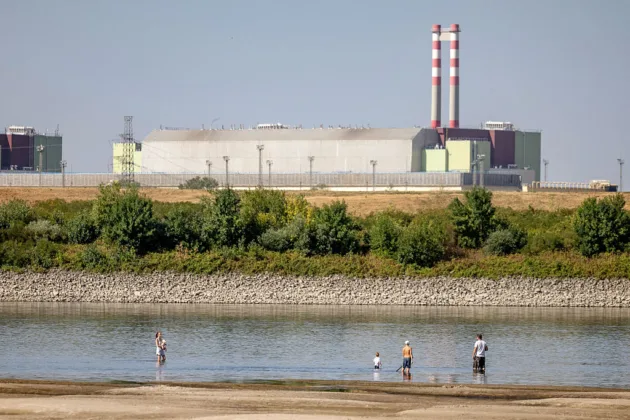
Neighbouring Hungary has faced similar constraints at its Paks nuclear plant, where low Danube levels have forced a complete shutdown, the first in its 44 years of service. Prime Minister Péter Magyar announced the decision. The four-reactor station supplies close to half of Hungary’s electricity.
In Bulgaria, the two operating units at Kozloduy have continued to run to schedule.
Nuclearelectrica has stressed that the measures are preventive and aimed at protecting nuclear safety and equipment.
It continues to monitor INHGA hydrological forecasts and says it will reconnect units as soon as conditions allow, in full compliance with safety standards.