



A court in Damascus has sentenced former Syrian president Bashar al-Assad to death in absentia for war crimes and crimes against humanity committed during the country’s 14-year civil war.
The Fourth Criminal Court delivered the verdict on August 11 in a session broadcast live on Syrian state television. Judge Fakhr al-Din al-Aryan said Assad had used State institutions to carry out the crimes.
He was convicted of premeditated murder, torture, arbitrary detention and crimes against humanity. The conflict left about half a million people dead and millions displaced.
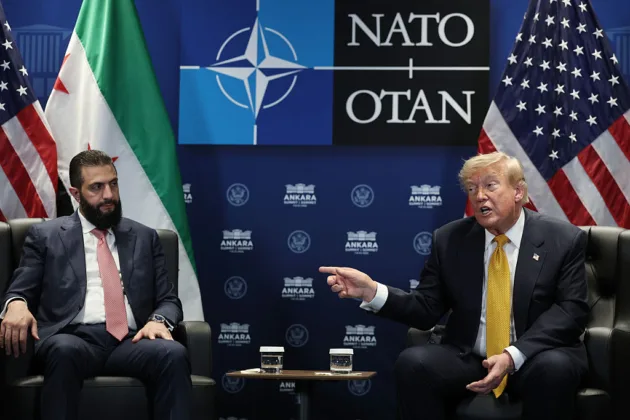
His younger brother Maher was also sentenced to death in absentia. Both men fled to Moscow in December 2024 as forces led by Ahmed al-Sharaa, now Syria’s President, entered the capital.
Their maternal cousin Atef Najib was the only senior defendant tried in person. The former brigadier general, who ran the political security branch in Deraa province, stood inside a cage in a prison uniform as the sentence was read.
Najib was convicted over the 2011 crackdown in Deraa, southern Syria, that ignited the uprising. The court said he could appeal.
Six other former officials were condemned in the same case, among them Assad’s defence minister Fahd al-Freij. Most were tried in absentia.
The court ordered that the Assad brothers be pursued internationally. Russia granted both political asylum and has repeatedly rebuffed Syrian requests for their extradition.
The sentences cannot be carried out unless the men are returned to Syrian custody. Assad also faces a French arrest warrant over the 2012 bombing of a press centre in Homs.
It is the first ruling against Assad or his inner circle since the family’s five decades in power ended 20 months ago.
The verdict comes as Brussels deepens ties with the transitional authorities. The Council lifted almost all economic sanctions on Syria in May 2025 while keeping measures on the former regime in the name of accountability.
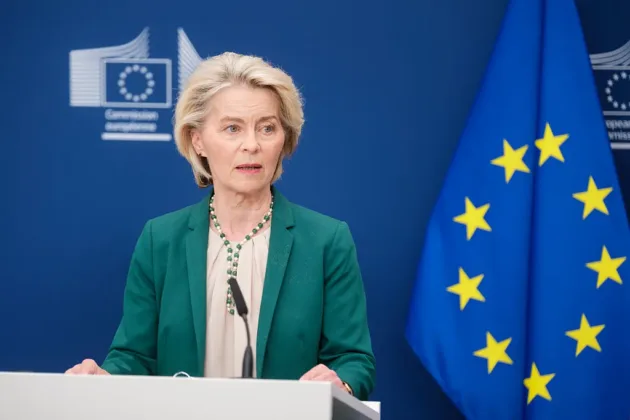
European Commission President Ursula von der Leyen visited Damascus in January and announced some €620 million in support for 2026 and 2027. In May the Council restored the EU-Syria Cooperation Agreement, suspended since 2011.
The bloc has cast that rapprochement partly as a route to the eventual return of Syrian migrants, a prospect its own officials have conceded remains distant. Germany, home to the largest Syrian diaspora in the EU, now rejects about 95 per cent of new Syrian asylum claims.
The EU opposes capital punishment in all circumstances and makes its abolition a condition of accession. No response to the death sentences had been issued in Brussels by the time of publication.