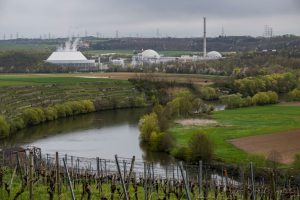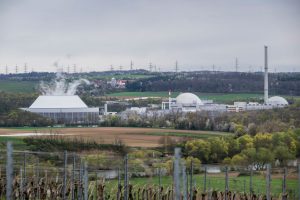








A group of former senior managers and technical heads of Germany’s nuclear power plants have written an open letter to Chancellor Friedrich Merz, Economy Minister Katherina Reiche and Union parliamentary group leader Jens Spahn calling for the reactivation of the country’s recently closed nuclear facilities.
The letter, seen exclusively by Bild, argues that restarting the three plants shut down in April 2023 — Isar 2, Emsland and Neckarwestheim 2 — is both technically feasible and strategically necessary.
The signatories, who include Horst Kemmeter (former head of Emsland and Biblis), Dr Jürgen Haag (former Emsland director), Hans-Joachim Müller (Brokdorf) and Professor Horst-Michael Prasser of ETH Zurich, stress that competence, infrastructure, fuel management expertise and personnel still exist in Germany.
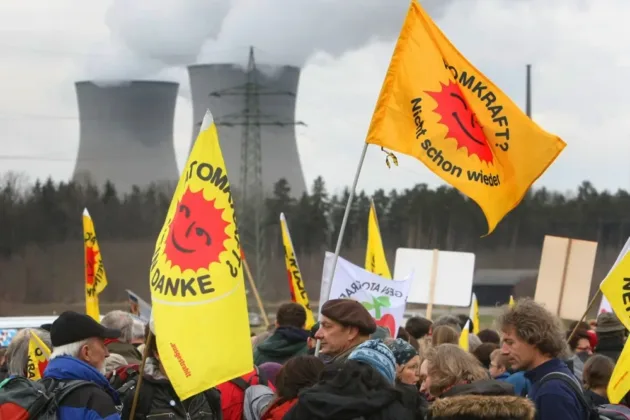
They describe the 2023 phase-out as a “political mistake” that has become increasingly obvious amid global energy developments.
The former operators emphasise that the plants’ locations, buildings and grid connections remain intact, and that similar German-designed reactors continue to operate safely in Spain, Switzerland, the Netherlands, Brazil and Argentina.
The three reactors together generated around 32 terawatt hours of electricity per year, enough to supply roughly nine million German households.
The appeal lands at a moment when senior figures in the new CDU-led government, including Merz himself, have repeatedly described the nuclear exit as a serious strategic error.
The letter urges politicians to create the necessary regulatory framework to make reactivation possible.
The signatories also link the move to future technologies, arguing that maintaining operational nuclear competence in Germany is essential for any credible involvement in Small Modular Reactors (SMRs) and nuclear fusion development.
Germany’s decision to close its nuclear fleet has come at a steep price.
Studies estimate the annual economic and health cost of the phase-out at around €11 billion, with increased air pollution from higher coal and gas use.
Cumulative extra CO₂ emissions since the accelerated closures run into hundreds of millions of tonnes, with associated ETS costs running into tens of billions of euros.
The country has become a net electricity importer in many periods, often paying premium prices for power from French nuclear plants or elsewhere.
At the same time, high and volatile energy costs continue to drive German industry to consider relocation abroad, with surveys showing 37–45 per cent of industrial and energy-intensive firms contemplating production cuts or moving operations overseas.
The decision to phase out nuclear power was first taken by the red-green Schröder government in 2000.
Following the 2011 Fukushima disaster, Chancellor Angela Merkel’s CDU-FDP coalition reaffirmed and accelerated the exit.
In 2022, amid the energy crisis triggered by the war in Ukraine, Chancellor Olaf Scholz’s government granted a short-term extension, but the last three German nuclear plants — Isar 2, Emsland and Neckarwestheim 2 — were finally shut down in April 2023.
🇩🇪 Germany’s energy transition is under scrutiny.
Germany’s shift to renewables and nuclear exit is central to the EU Green Deal. However, the industrial impact is increasingly debated.
Is this the future of Europe’s energy model?
Read the analysis 👇#Germany #GreenDeal…
— Brussels Signal (@brusselssignal) June 22, 2026