


European Commissioner for Home Affairs and Migration Magnus Brunner has said the European Union came through the Ceuta border crisis intact, while urging member states to speed up the application of the bloc’s new migration rules.
Speaking after an emergency videoconference of interior ministers on August 4, the Austrian commissioner said the crossings had tested the security of the bloc’s external borders and its resilience to disinformation. “Europe, I think, has definitely passed this test,” he told reporters.
Brunner said Spanish interior minister Fernando Grande-Marlaska had confirmed that the situation was under control, that nobody had reached mainland Spain and that free movement inside the Union was unaffected. He credited cooperation between Madrid, Rabat and the EU institutions.
Ceuta lies outside the Schengen area, a point the Spanish Government itself put to the meeting.
The videoconference, chaired by the Irish presidency of the Council of the European Union, produced agreement on five lines of work covering smuggling, returns, external borders, third-country partnerships and early warning systems. No new legal instrument, Frontex decision or funding allocation accompanied it.
Asked about Italy’s decision to reintroduce checks on its internal border with Spain, Brunner said the Schengen Borders Code allowed such steps on an exceptional and temporary basis. The Commission would now assess whether the measure was necessary and proportionate, he said.
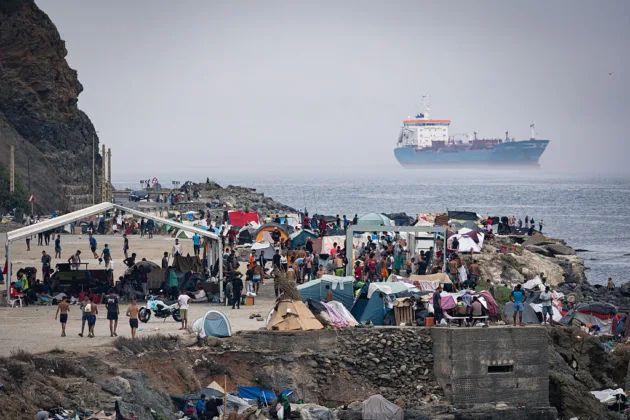
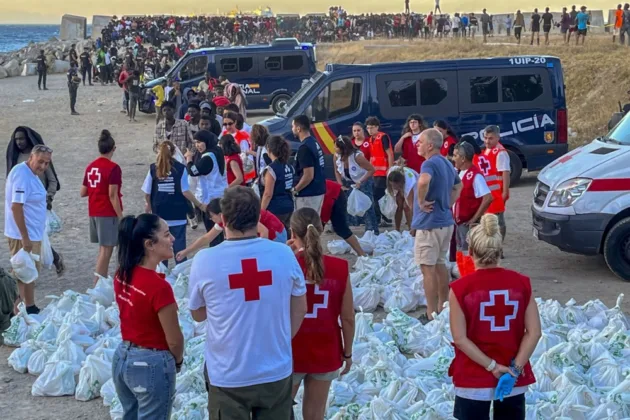
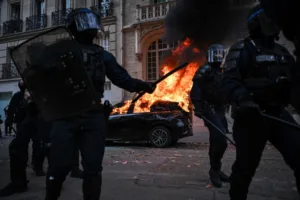
Spain’s Interior Ministry put the number who entered the enclave on July 30 at about 50,000, while Ceuta mayor-president Juan Jesús Vivas gave a figure of around 60,000. The official death toll stands at 72 on the Spanish side of the border and 11 on the Moroccan side.
The commissioner attributed the scale of the crossings to trafficking networks and to disinformation on social media, adding that Europol was working with Spanish investigators to trace the messages.
He declined to say whether the Moroccan authorities had played any part, noting that inquiries were still open.
Brunner said the priority was full implementation of the Pact on Migration and Asylum and the European returns regulation, alongside the safe third country concept and the five-point plan set out by European Commission President Ursula von der Leyen.
Several governments raised the creation of return hubs outside the EU, which the new regulation already permits. Brunner said Brussels would back such schemes where states chose them, though financing would fall to the next multiannual budget talks.
He confirmed that talks with Morocco on a comprehensive partnership agreement were continuing, with migration a central element, and refused to link them to Ceuta.
Danish immigration minister Morten Bodskov pressed for more EU money for border security, saying: “We will not accept a repeat of the situation in 2015.”