











German economy and energy minister Katherina Reiche (Christian Democratic Union, CDU) has said consumers should not expect significantly lower electricity prices until the 2030s, citing the long-term costs of the Renewable Energy Sources Act (EEG).
In an interview with the Deutsche Presse-Agentur (dpa) news agency, Reiche said: “We will only see noticeable relief in the 2030s.”
She defended recent reforms to the EEG and a related grid package, arguing that the energy transition can only succeed if climate protection, security of supply, affordability for citizens, industrial competitiveness and responsible use of tax money are pursued together.
The federal cabinet approved both measures on July 29, 2026, after months of negotiation between Reiche and environment minister Carsten Schneider of the Social Democratic Party (SPD).
“We are ending the EEG as an all-round, worry-free package,” Reiche said in Berlin, adding that over-subsidisation would be abolished.
The federal government currently spends €17 billion a year on EEG subsidies, a figure that continues to rise, Reiche said.
Reiche said Germany is still paying for earlier, generous support decisions, particularly the 2014 EEG reform, whose 20-year payment commitments remain a burden.
She described that reform, passed under the government of then chancellor Angela Merkel, as the most expensive in the law’s history.
The new approach aims for “more market and less permanent subsidisation”.
From 2027, smaller solar installations under 25 kW will no longer receive ongoing feed-in tariffs.
The change applies to new plants, mainly small rooftop photovoltaic systems, which will instead have to sell their output at market prices.
Payments for electricity that cannot be used because of grid congestion are also being phased out, although existing plants retain their guaranteed terms.
“Until now a principle has applied to renewables that exists in no other market: Electricity that is produced but cannot be used because of network bottlenecks is paid for anyway,” Reiche said.
Network charges have become one of the largest drivers of household electricity bills, according to the minister, because renewable capacity was built without sufficient regard for available grid capacity.
Network fees make up about a quarter of a typical household bill, according to the German Association of Energy and Water Industries (BDEW).
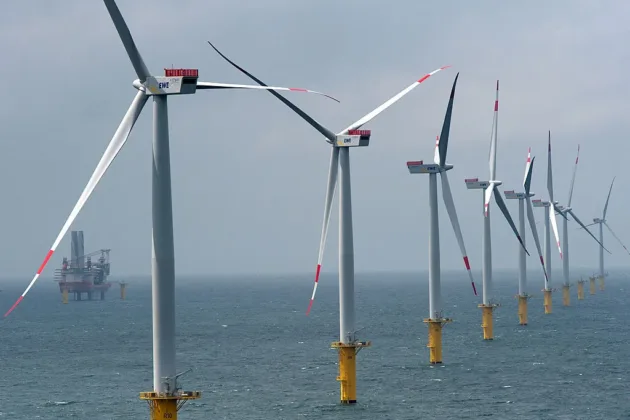
Future expansion of wind and ground-mounted solar will be steered more strongly towards locations where the network can already absorb the power.
Reiche said more than 90 per cent of German substations met that condition, and that the reform would let the wind sector build 12 gigawatts more than originally planned.
Reiche also pointed to the importance of securing diversified, long-term gas imports to stabilise power-generation costs.
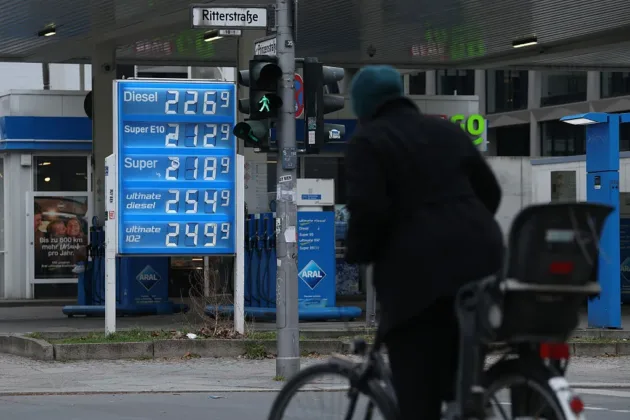
Household electricity in Germany has averaged 37 cents per kilowatt hour so far in 2026, down from 39.3 cents in 2025, according to a BDEW analysis published on April 15, 2026.
Prices nonetheless remain above the levels recorded before the 2022 energy crisis.
Renewable-energy associations and the Greens have criticised the reforms as a brake on the energy transition, warning that expansion targets may no longer be met.
The Federal Association of Renewable Energy (BEE) said the targets were in practice unreachable under the plans, while the German Wind Energy Association (BWE) warned of a halt to new construction.
Green MP Michael Kellner told dpa the draft laws were an attack on Germany’s energy transition.
Reiche said she takes the criticism seriously but believes the revised framework still offers reliable investment conditions.
Industry associations have taken the opposite view.
Holger Lösch, deputy director general of the Federation of German Industries (BDI), said the EEG amendment and the grid package addressed long-overdue questions raised by rapid renewable expansion and rising network and electricity costs.
Wolfgang Große Entrup, director general of the German Chemical Industry Association (VCI), said policy had for too long concerned itself only with the unchecked growth of renewables.
Alternative for Germany (AfD), the largest opposition party in the Bundestag, has gone further than the government.
In motions debated on January 16, 2026, the party called for the EEG, the onshore wind act and the Climate Protection Act to be repealed without replacement, arguing that renewables cannot survive in the market without subsidy.
Rather than recalibrate the law, the party wants it abolished.
The timetable is tight. The European Commission’s state-aid approval for the current EEG support system expires at the end of 2026.
Parliament must pass the new framework in the autumn if Brussels is to sign it off before the existing scheme lapses.
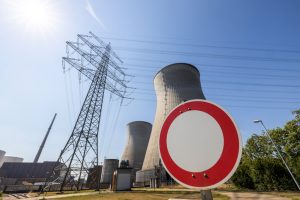
Peter Altmaier, a former German finance minister and a chief architect of Angela Merkel’s energy policy, claimed Germany’s decision to abandon nuclear power has not harmed the country’s economy.https://t.co/ICvhKOtY3R
— Brussels Signal (@brusselssignal) April 2, 2026