
The ambassadors of France, Germany and the United Kingdom have met Russia’s deputy foreign minister in Moscow, as the three European powers take a more active role in efforts to end the war in Ukraine.
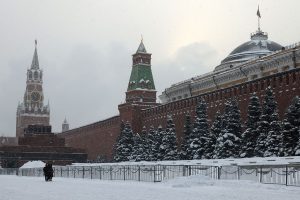
British Ambassador Nigel Casey, French Ambassador Nicolas de Rivière and German Ambassador Alexander Graf Lambsdorff held talks with Deputy Foreign Minister Mikhail Galuzin at the Russian Foreign Ministry on June 11.
The three countries, which form an informal grouping known as the E3, are among Ukraine’s main backers and lead the “coalition of the willing” assembling post-war security guarantees for Kyiv.
Moscow used the meeting to criticise the West. The Russian Foreign Ministry said it had given the envoys “an objective assessment of the destructive policies” of their governments, pointing to their continued support for Ukraine.
It added that any deal would have to address what it called the root causes of the conflict, language Russia has used to justify demands for Ukrainian territory and a block on Kyiv joining NATO.
Leaving the ministry, de Rivière told reporters the three had held a “good discussion” with Galuzin and would issue a statement later.
The ambassadors had requested the meeting, a move disclosed on June 10 by Russian Foreign Minister Sergei Lavrov after a session of the Collective Security Treaty Organisation (CSTO) in Kazan.
Lavrov was dismissive. He said he doubted the envoys would say anything that differed from a hardline E3 document drawn up with Zelensky in London, though he agreed Moscow would hear them out.
That document followed talks on June 7, when Prime Minister Keir Starmer hosted President Volodymyr Zelensky, President Emmanuel Macron and Chancellor Friedrich Merz at Downing Street.
The four leaders set out five conditions for what they called a “just and lasting peace”, among them an immediate ceasefire, legally binding security guarantees and keeping Russian assets frozen until Moscow pays for war damage.
The diplomatic push has gained little traction with the Kremlin. President Vladimir Putin rejected Zelensky’s offer of a face-to-face meeting on June 5, dismissing an open letter from the Ukrainian leader and saying he saw “no point” in talks.
Zelensky is due to join a Ukraine-focused discussion at the G7 summit in France on June 16.