









A major conference on illicit trade in Europe this week has exposed the growing scale of smuggling and counterfeiting, with new data showing that countries with the highest taxes and strictest regulations are suffering the most severe black-market problems.
The latest KPMG European Illicit Cigarette Consumption Report 2025, presented on June 3, reveals that 55.3 billion illicit cigarettes were consumed across 38 European markets last year, equivalent to more than one in every nine cigarettes smoked on the continent.
Consumption of black-market cigarettes rose more than seven per cent year-on-year in 2025, reaching levels not seen in over a decade.
The illicit cigarette market in Europe is experiencing a significant shift.
Counterfeit products, increasingly manufactured within the EU, are now replacing the traditional flow of contraband from Eastern to Western Europe.
This evolution is characterised by faster, more elusive supply chains and a growing proximity of production and distribution to end consumers, particularly in Western European markets.
Regarding novel products, the study revealed that contraband accounted for 1.2 per cent of total heated tobacco consumption, a figure substantially lower than that for traditional cigarettes.
Among the most affected countries were Germany, Austria, and the Netherlands.
For the first time, the study included an assessment of oral nicotine products in select markets.
Findings indicate that in countries where nicotine pouches are banned or heavily restricted, survey data still reveal significant availability—frequently involving counterfeit, non-compliant, or imported products.
This suggests that consumer access remains widespread despite legal barriers. The highest proportions of ineligible products, with the potential to reach a large consumer base, were observed in the Netherlands, Germany, and Belgium.
This generated tax losses of €22.4 billion at Weighted Average Price over 38 European countries, a 15.2 per cent increase on the previous year, with counterfeit cigarettes rising by 13 per cent.
High-tax countries are hit hardest.
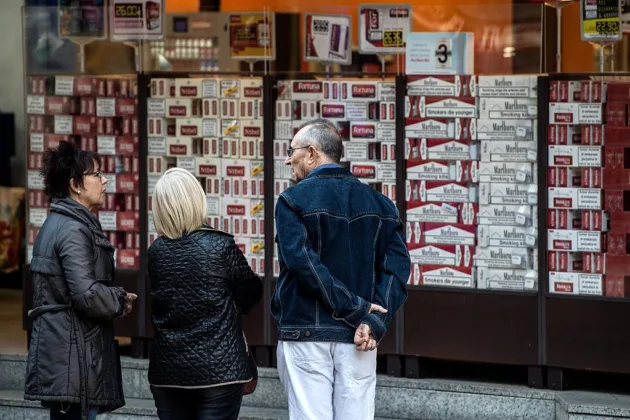
France remains the worst-affected market, with illicit cigarettes making up around 41 per cent of total consumption.
Belgium has seen an alarming deterioration, with contraband and foreign-sourced cigarettes accounting for up to 44 per cent of consumption in some quarters, costing the Belgian treasury billions in lost revenue.
The Netherlands has experienced one of the sharpest surges, with illicit consumption more than doubling in recent years.
In contrast, countries with more moderate tax levels fare significantly better.
Germany, for example, maintains a relatively low illicit share of around two to four per cent, although absolute volumes and counterfeit penetration are still rising.
Compared to other European countries, Germany exhibits one of the highest shares of low-priced legal products from neighbouring countries, as well as illegally imported heated tobacco products.
In contrast, Italy, where the heated tobacco market is more than twice the size of Germany’s, sees minimal inflows from abroad. This disparity suggests that clearly differentiated policies may effectively limit cross-border evasion and illicit trade.
This clear correlation between high excise duties and booming black markets was a central theme at the conference.
Organised crime networks have adapted cleverly.
Criminal groups increasingly move production closer to high-tax end markets, with over 100 illegal cigarette factories discovered across Europe in the past year alone.
Western Europe has the highest levels of illicit consumption.
Belgium has emerged as an important transit and distribution hub, while Germany serves both as a transit country and, in some cases, a production base for goods heading to France and the Benelux states.
Experts at the conference stressed that illicit trade is no longer limited to tobacco.
It now extends heavily into alcohol, fuel, counterfeit goods, and even pharmaceuticals. However, tobacco remains the most profitable and visible sector for criminal organisations because of the enormous price gaps created by aggressive taxation.
The data strongly suggests that overly punitive tax policies, without adequate enforcement and realistic border controls, do not reduce consumption, they simply transfer billions of euros from government treasuries into the hands of organised crime.
Lower-tax countries with more balanced approaches experience far less smuggling, while high-tax nations lose substantial revenue and inadvertently strengthen criminal networks.
The European Union will not participate in a vote on a revised treaty at the WHO Framework Convention on Tobacco Control (COP11) in Geneva, Switzerland this month. https://t.co/l82nXykWHd
— Brussels Signal (@brusselssignal) November 17, 2025