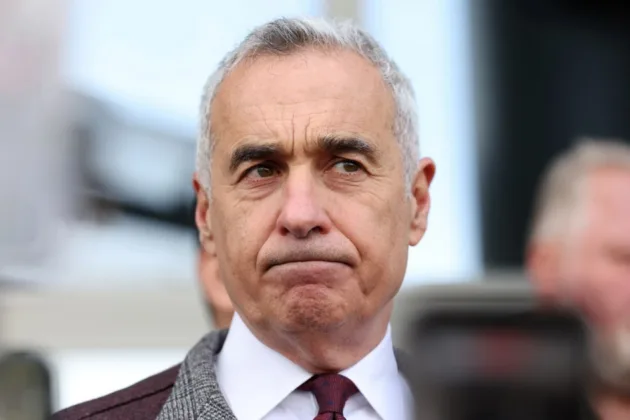












Around one in five student loans issued in the United Kingdom has gone to foreign nationals, the majority of them EU citizens holding settled status, according to figures compiled by Conservative MP Neil O’Brien, the party’s shadow minister for policy renewal and development.
Foreign students received approximately £4 billion (€4.67 billion) in tuition and maintenance loans in the 2024-25 academic year, accounting for about 20 per cent of all lending through the Student Loans Company (SLC).
EU citizens form the bulk of recipients. Romanians alone accounted for one in 20 first-time loans, according to data O’Brien published on August 7, 2026 and first reported by GB News.
Of the roughly 239,000 foreign loan recipients, about 195,000 hold settled status under the EU Settlement Scheme (EUSS). Some 160,941 held settled status outright and 34,879 were classed as EUSS migrant workers, with a further 24,344 eligible through indefinite leave to remain.
Over the past decade the share of loans going to non-UK students has nearly doubled, rising from 10.2 per cent to 19.3 per cent. More than one million non-UK nationals have received a British student loan since records began, 423,000 of them in the past five years.
Student loans are generally closed to overseas nationals, but an exemption remains for those with settled or pre-settled status. Applicants must have lived in the UK, the Channel Islands or the Isle of Man for three continuous years before the start of the academic year.
EU students arriving without either status lost access to tuition fee funding in 2021-22, a change that has not reduced the foreign share of lending.
O’Brien, who obtained the data through parliamentary questions and Freedom of Information (FOI) requests, warned that foreign borrowers are about 25 per cent less likely to repay than British students.
The weighted average repayment rate for non-UK nationals stands at 51 per cent, against 68 per cent for British borrowers, according to figures released to him by the Department for Education (DfE).
He estimated that taxpayers could be losing between £1.2 billion (€1.4 billion) and £2.2 billion (€2.57 billion) a year on unrecovered debt and said the DfE has no clear picture of eventual recovery rates.
Official forecasts assume about 30 per cent of new loans will never be repaid, a figure the department does not break down by nationality.
Romanian borrowing has grown fastest. Some 86,000 Romanian nationals took out £1.3 billion (€1.52 billion) in 2024-25, an eightfold rise since 2016, and their repayment rate stands at 45 per cent.
The SLC also records 54,537 borrowers from EU countries living abroad who have made no repayment in the past year, owing a combined £1.5 billion (€1.75 billion).
He also questioned why tens of thousands of new settled status grants continue to be issued years after the original deadline, linking the flow of late claims to continued access to loans.
The Home Office set June 30, 2021 as the application deadline but continues to accept late claims where it judges there are reasonable grounds.
“In the past 12 months alone, around 66,000 completely new applicants gained residency via this scheme, five years after the deadline,” he said.
“Why are the Home Office allowing these implausibly late claims, and on what basis are they still being granted?”
By March 2026, 4.4 million people held settled status and a further 1.5 million pre-settled status, against a Home Office estimate in 2019 that between 3.5 million and 4.1 million would be eligible. Non-EEA nationals now account for more than 20 per cent of new applications, with nearly 50,000 Indian nationals granted settled status through the scheme.
O’Brien has called for new EUSS claims to be halted, arguing ministers could act without fresh legislation.
“My worry is that too many of these people will leave and not repay, or are getting the loan to top up their income while mainly working and doing a bit of studying,” O’Brien said. “If we stop the flow of new EU settled status claims, the flow of EU student loans is likely to dry up too.”
Bridget Phillipson, education secretary until July 2026, acknowledged a “disproportionate” number of Romanian claims and pledged action against franchised colleges.
In a written ministerial statement on March 25, 2025 she said SLC investigations suggested organised exploitation of both Romanian students and the taxpayer, and referred the matter to the Public Sector Fraud Authority.
Phillipson was replaced at the DfE by Lucy Powell in the reshuffle that followed Andy Burnham’s appointment as Prime Minister on July 20, 2026.
4) Repayment rates for some smaller nationality groups are incredibly low: pic.twitter.com/AG83MAdA5U
— Neil O'Brien (@NeilDotObrien) August 7, 2026