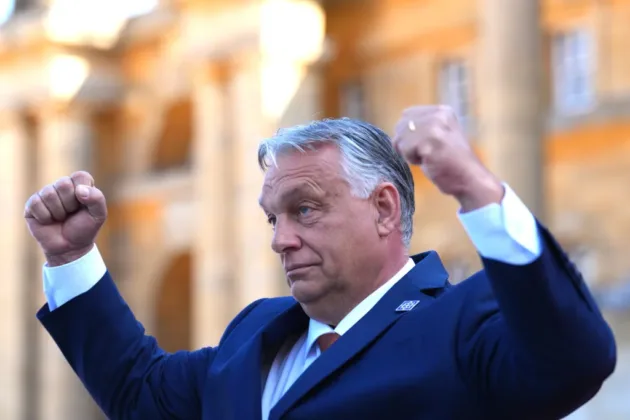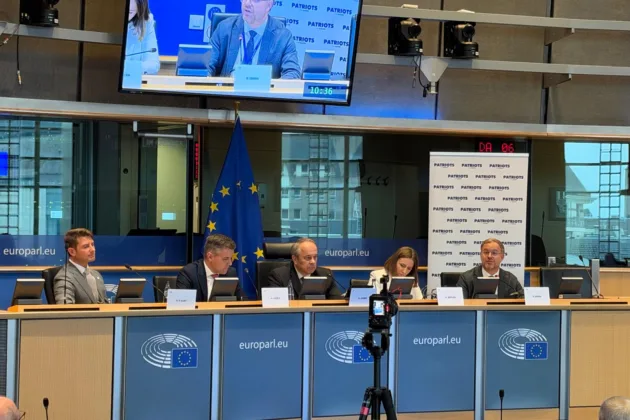


Returning to Brussels for the first time since his electoral setback, former Hungarian Prime Minister Viktor Orbán sought to project confidence in a closed-invitation press conference today, which Brussels Signal attended.
One of the central messages of his press conference was that one election defeat does not change the broader direction of European politics. Orbán repeatedly portrayed the EU Patriots alliance as the political force of tomorrow.
According to him, “nationalist and anti-migration Right” will continue to grow. “The right is growing,” Orbán said. “We see it everywhere.”
A new YouGov survey released today places the German right-wing party AfD at 29 per cent nationally, just one point shy of the 30 per cent threshold.https://t.co/VUh4hZ73Ef
— Brussels Signal (@brusselssignal) June 16, 2026
That growth, he argued, is increasingly forcing a strategic choice on Europe’s centre-right parties. Referring to the so-called cordon sanitaire used in countries such as France to isolate the far Right, Orbán said the strategy would eventually become unsustainable.
Indeed today, in the European Parliament centre-right and right-wing groups voted together on tougher immigration return rules.
“If the right wants to win, it has to create this majority,” he said, arguing that conservative and nationalist parties would ultimately have to work together rather than rely on alliances with the Left.
The press conference came as Orbán attempted to refocus attention away from domestic political troubles and corruption allegations.
Asked about calls for investigations and accusations surrounding the use of EU funds, Orbán largely brushed the issue aside.
“There is no one under prosecution,” he said, repeatedly declining to engage with the substance of the allegations.
Orbán insisting that no facts had been proven : “I am a man of facts,” he told reporters.
“Hints and insinuations are not my world,” he added.
The unwillingness to answer came as Orbán faces pressure from current PM Péter Magyar. Magyar has proposed introducing a constitutional limit of two terms for future prime ministers, a measure seen as directed at Orbán.
Prime Minister Péter Magyar has pushed through a constitutional amendment capping prime ministerial service at eight years, locking his predecessor Viktor Orbán out of any return to power. https://t.co/znOtm8t7Dd
— Brussels Signal (@brusselssignal) June 16, 2026
Orbán redirected the conversation toward what he described as the failures of the European Union.
Brussels, he argued, has failed to deliver on its core responsibilities: Security, peace, economic growth and migration control.
European leaders, he suggested, would only be able to halt the advance of right-wing parties if they could point to concrete successes.
The former Hungarian prime minister attacked EU migration policy, arguing that it has transformed a migration challenge into an integration crisis.
He also criticised Europe’s economic performance and energy policies, claiming Brussels has imposed costly environmental measures while failing to generate growth.
Ukraine was another major target. Orbán reiterated his opposition to Kyiv’s accession to the European Union, claiming that admitting Ukraine would bring “calamity” to Europe.
Hungary, he said, had already granted Ukraine everything it had requested, but EU membership remained a red line.
When asked what mistakes had led to Fidesz’s defeat, however, Orbán was less keen to answer.
“I could answer,” he said. “But I don’t want to”. He later admitted that he bore responsibility for the loss, saying there was no major campaign decision for which he was not accountable. Yet he refused to identify any specific errors.
He argued that Fidesz’s mistake will be the point of the discussion within Patriot for European meeting before the European Council summit on June 18-19, and that hopefully the conclusions will serve the upcoming campaign of other right-wings parties.