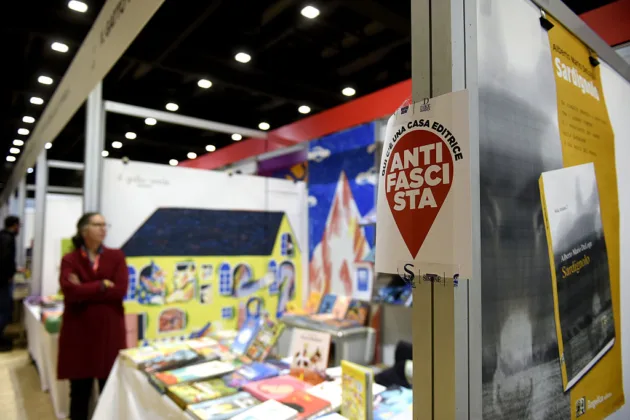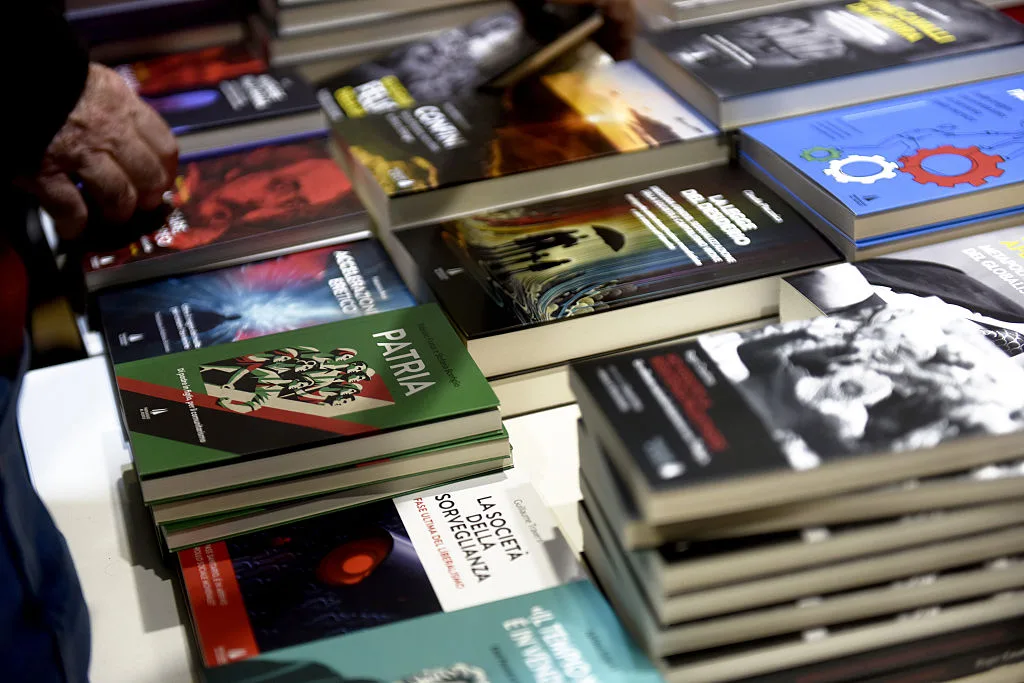



A leading publishing house has announced it will no longer exhibit at Più Libri Più Liberi, Rome’s annual fair dedicated to small and independent publishers, after organisers required exhibitors to sign a declaration affirming adherence to Italy’s anti-fascist constitutional values as a condition of participation.
Paper First, the publishing house founded in 2016 by Il Fatto Quotidiano — one of Italy’s best-known national daily newspapers — publishes political essays, investigative journalism and current affairs titles. Led by editor-in-chief Marco Travaglio and owned by SEIF, the newspaper’s publishing company, Paper First is generally regarded as occupying a left-leaning and highly critical editorial position. While it is often critical of Italy’s right-wing governments, it has also regularly attacked centre-left parties and governments, maintaining an editorial line that presents itself as independent of both political blocs.
In a letter sent to organisers and published on June 26, SEIF chairwoman and chief executive Cinzia Monteverdi announced that Paper First would not attend the 2026 edition of the fair, scheduled for December. She said the publisher refused to submit to what she described as an ideological certification.
“Paper First will not be at the fair, not because it has been excluded, but because it refuses to sign a declaration that it considers alien to the liberal and democratic tradition it is supposed to defend,” Monteverdi wrote. She argued that requiring publishers to prove their democratic credentials imposed a political prerequisite for participation instead of judging exhibitors on their actual conduct.
The dispute originated after the December 2025 edition of Più Libri Più Liberi, when the participation of Passaggio al Bosco, a small publishing house with ties to figures in the governing Brothers of Italy party, sparked protests.
The publisher specialises in conservative and right-wing intellectual history, publishing authors such as Ernst Jünger and Armin Mohler, as well as works by historical political figures including Romanian fascist leader Corneliu Zelea Codreanu.
Critics argued that its catalogue promoted or rehabilitated extremist ideas and called for the publisher to be excluded from the fair altogether, arguing that giving it a stand amounted to legitimising those views.
Founded in 2002 and organised by the Italian Publishers Association (AIE), Più Libri Più Liberi is Italy’s largest fair dedicated exclusively to small and independent publishers. Held every December at Rome’s La Nuvola convention centre, it attracts hundreds of exhibitors and tens of thousands of visitors, making it one of the country’s most influential events for the publishing industry.
During last year’s event, dozens of publishers temporarily covered their stands in protest, while several left-wing intellectuals and authors withdrew from the event, urging organisers to expel Passaggio al Bosco. They argued that the Italian Right was seeking to expand its influence within cultural institutions and publishing, sectors traditionally dominated by progressive intellectuals.
For the 2026 edition, organisers introduced a declaration requiring exhibitors to affirm their commitment to the values of the Italian Constitution and its anti-fascist foundations before being admitted.
Supporters said the measure was necessary to protect the fair’s democratic identity. Opponents argued it was designed to exclude right-wing publishers through an ideological litmus test incompatible with freedom of expression in a liberal democracy.
Prime Minister Giorgia Meloni also criticised the requirement, describing it as a form of censorship and warning against excluding participants on political or ideological grounds.
Paper First’s withdrawal is the highest-profile boycott of the 2026 fair so far, while the organisers’ decision has drawn criticism from members of the governing coalition and conservative commentators, turning what began as a dispute within Italy’s publishing industry into a broader debate over censorship, ideological gatekeeping, political pluralism and freedom of expression in the country’s cultural institutions.