










Éric Trappier knows something about protecting technical advantage that could benefit the rest of European industry. The CEO of Dassault Aviation has come in for a bit of stick over the recent collapse of the multinational Future Combat Air System (FCAS) project. Trappier’s German counterpart snarked about the French obsession with strategic autonomy and his refusal to share key design and computer technology with his partners in Germany and Spain. The implication being that typical French pig-headedness had thwarted one of the EU’s fondest dreams, the development of an integrated European defence industrial base capable of competing with the Americans in the highest of high tech, fighter jets.
It was with this goal in mind that the €100 billion FCAS programme was launched in 2017 by President Macron and Bundeskanzler Merkel. The virtues of defence cooperation appeared to guarantee its success: A jointly-produced European fighter aircraft could realise greater economies of scale than any single national programme, beginning with the replacement of over 300 French Rafales and German Eurofighters in a decade’s time. FCAS would be a big step toward the defence consolidation called for in Mario Draghi’s 2024 report and help wean the continent off its dependence on American military production.
Much of the dispute over FCAS revolved around the work shares for the jet at the heart of the system: The portion of its design and manufacture allotted to each participant. But not all work shares are equal. The most technically demanding and lucrative are SDRs: System Design Responsibilities, which comprise all the expertise that enables stealth, AI controls, and the encrypted communications needed to control a swarm of drones.
Dassault was the only member of the FCAS consortium able to fulfill the SDR’s needed for a sixth generation aircraft. At the other end of the spectrum are IDRs: Installation Design Responsibilities, which are the skills needed to bolt the aircraft together on the factory floor. While Trappier was willing to share IDRs with his partners, the SDRs derive from Dassault’s core competencies, which no well-managed company willingly trades away.
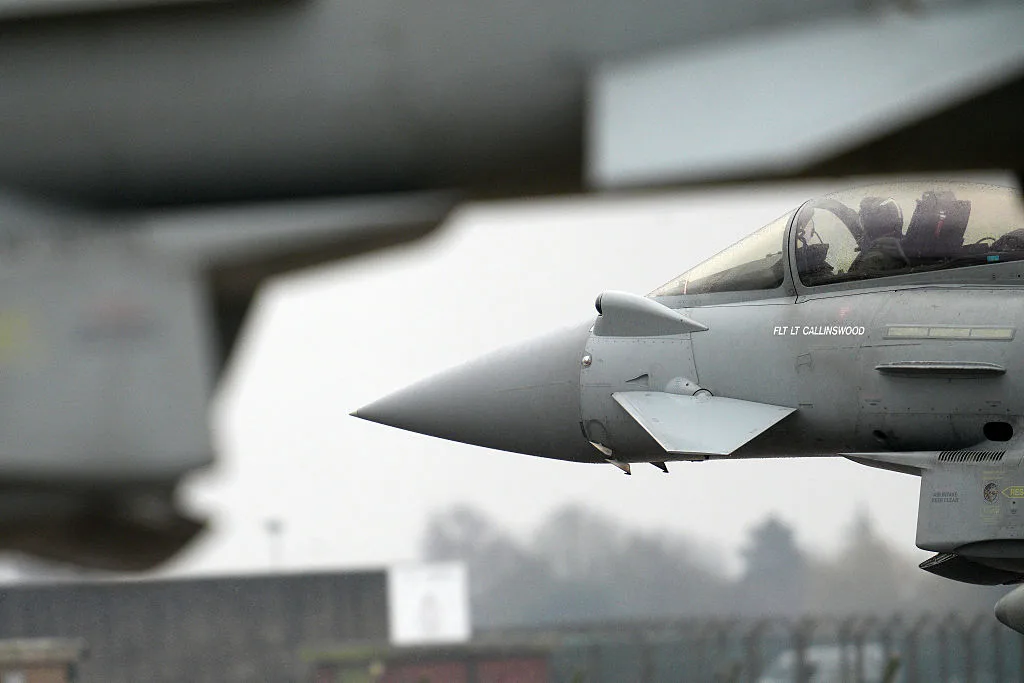
Trappier was also fully aware of the fraught history of Germany’s last joint fighter jet procurement programme, the Eurofighter Typhoon. The French have a pragmatic rule of thumb regarding multi-national projects: Costs rise as the square root of the number of participants, while time to production exceeds that of a purely national effort by the cube root of the number of participants. The Typhoon easily overshot these estimates. Design on this Cold War interceptor began in the early eighties with progress to operational deployment taking twenty years. The unit cost of the fourth generation (i.e., non-stealthy) Typhoon topped that of the American fifth generation F-22 Raptor, which was deployed two years before the Typhoon. The joint Eurofighter programme delivered a jet late, at excessive cost and designed to an obsolete standard. Production spread across four national assembly lines forestalled a beneficial learning curve and supply chain efficiencies. Work share requirements meant that the left wing was produced in Italy, the right wing in Spain, and the fuselage divided into three components built in three different countries.
In exchange for Dassault swallowing similar inefficiencies with the FCAS programme, Germany demanded access to the design and digital integration skills acquired at great expense and effort by the French firm. This was simply unacceptable to Trappier, who had no intention of infusing Airbus Germany and Spain’s Indra with his company’s precious intellectual property and design know-how. Dassault walked away from FACS, but will seek export markets for its sixth generation aircraft on terms similar to its deal with India, which now produces the Rafale on its own production line but with little access to Dassault’s design magic.
Rather than condemning Trappier as a Gaullist throwback, European CEOs might contrast his policies with those that have led to the continent’s industrial decline. For several decades now, European firms have traded technology for Chinese market access. Volkswagen taught China how to build cars. Siemens and Alstom revealed the secrets of high speed rail. Airbus built an assembly line in Tianjin. All three firms agreed to the transfer of their hard-won technological prowess to boost near-term profits. Germany didn’t just transfer technology, but entire companies to China. Kuka was a crown jewel of German industry, and the world’s leading maker of the assembly line robots at the heart of a modern manufacturing. Rather than hold onto this precious asset, Angela Merkel waved through its sale to the Chinese Midea Group in 2016. China now runs world class factories and threatens European industrial dominance in automobiles, high speed rail, and soon enough in commercial aircraft. It is instructive that China still lags well behind the West in jet engines, one sector where no Western firm transferred technology to Chinese partners.
So spare some sympathy for Éric Trappier. European defence integration will not come at the expense of his company’s advantages. He competes in the world’s most technologically demanding and capital intensive market and knows that his firm thrives only when it holds its intellectual property close. He seeks to nurture customers, not competitors. Had the rest of European industry shared Trappier’s caution as it began its stampede into China, Europe might not find itself facing the invasion of its traditional markets by a ferocious competitor it helped create.
A “Dassault approach” to trade with China might have preserved Europe’s industrial prowess rather than sacrificing it for quarterly sales targets. European manufacturers now face the hard graft of rebuilding technological advantage while shouldering the additional burdens of expensive energy, declining productivity and stagnant consumer demand. Should they succeed, Monsieur Trappier might offer some useful advice on how to keep it.