

France and Germany have abandoned plans to jointly build a next-generation fighter jet, scrapping the centrepiece of Europe’s most ambitious defence project after years of industrial deadlock.
A German government official confirmed on June 8 that the two countries would no longer pursue a shared combat aircraft, ending the manned fighter at the heart of the Future Combat Air System (FCAS).
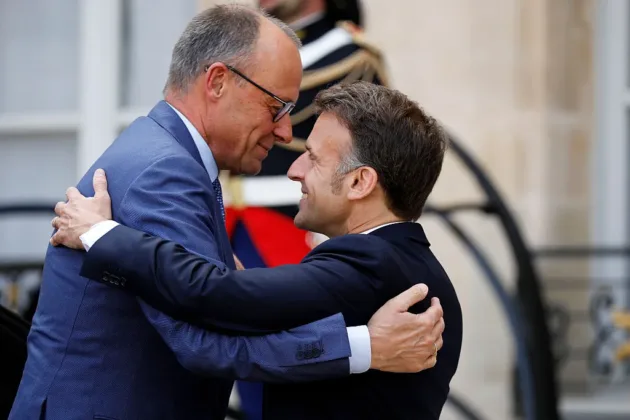
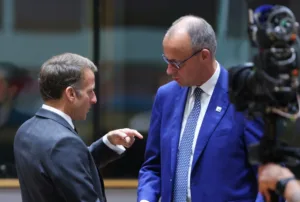
Chancellor Friedrich Merz had told President Emmanuel Macron that the firms involved could not reach agreement, the official said. The decision was taken on the sidelines of a European Union summit in Montenegro on June 6.
Launched in 2017 by Macron and then-German chancellor Angela Merkel, and later joined by Spain, FCAS was meant to be Europe’s flagship sixth-generation fighter, at an estimated cost of around €100 billion.
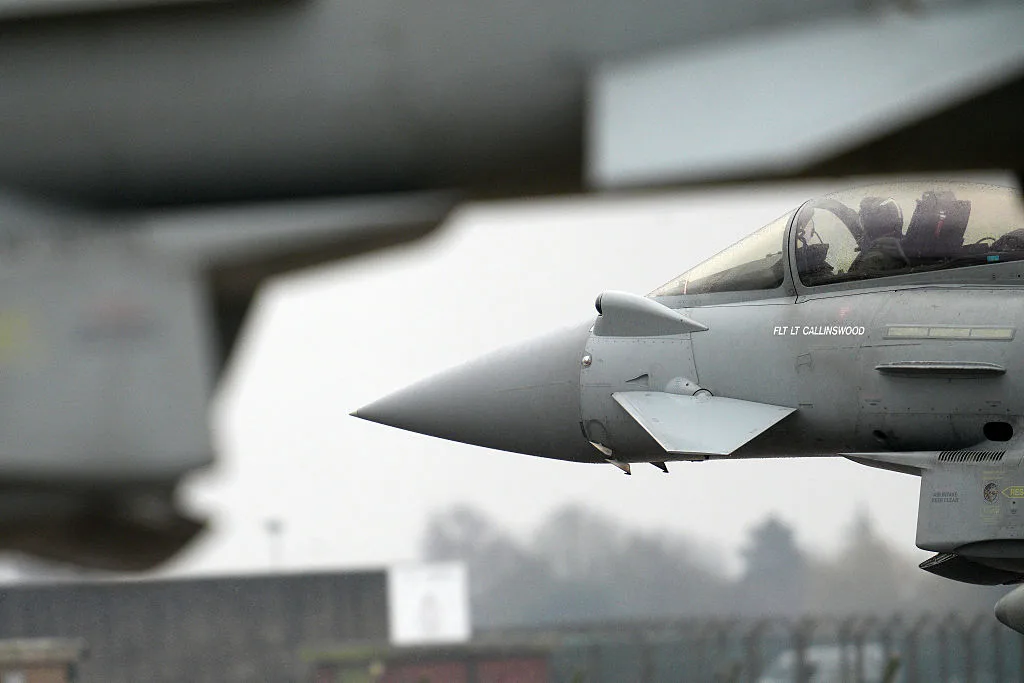
It was designed to replace France’s Rafale jets and the Eurofighter aircraft flown by Germany and Spain, supported by drones, sensors and networked digital systems.
But the programme was beset for years by disputes between the main contractors, France’s Dassault Aviation and Airbus, which represents German and Spanish interests.
Rows over leadership, the division of work and intellectual property proved impossible to resolve. Dassault demanded the lead on the aircraft, while Airbus refused to be treated as a junior partner.
The two sides also wanted different planes. France required a carrier-capable, nuclear-armed jet, a need Berlin did not share, and proposals to develop two variants failed to win joint backing.
A French and German mediation effort collapsed in April. Cédric Perrin, head of the French Senate’s foreign affairs and defence committee, said Macron “was the only one who still believed in the survival of FCAS”.
The collapse comes despite repeated calls for Europe to integrate its fragmented militaries, with Russia’s war in Ukraine in its fifth year and growing doubts over United States security guarantees under President Donald Trump.
Not all of the venture would be wound up. The two governments said they would press ahead with the so-called Combat Cloud, a digital network linking aircraft, drones and other weapons systems.
Defence ministers from both countries are due to draw up a narrower cooperation plan at a meeting expected on July 17.
For Airbus, the breakdown opens a search for new partners, with Sweden’s Saab and the British-Japanese-Italian fighter programme cited as options. Dassault is expected to develop the next Rafale on its own.
Macron, speaking in April, had denied the venture was dead. “Europe has never needed unity, greater independence and greater sovereignty more than it does now,” he said.