



The European Commission has proposed a new sanctions regime that would let the European Union freeze the assets of migrant smugglers, human traffickers and organised crime networks, and bar them from entering the bloc.
The proposal, presented on July 9, 2026, was drawn up with Kaja Kallas, the High Representative for Foreign Affairs and Security Policy and a Commission vice-president.
It would apply to migrant smuggling, trafficking in human beings, illicit drugs, the illegal manufacture and trafficking of firearms, and money laundering.
Designated individuals and entities would face asset freezes and a ban on anyone making funds or economic resources available to them. Travel bans would prevent them entering or transiting through member states.
The Commission said the regime would target illicit activities originating outside the EU which, because of their widespread, systematic or organised nature, threatened the bloc’s values, its security and that of its member states, or international security.
Those who lead, direct or support such activities could also be listed.
European Commission President Ursula von der Leyen said the aim was to “drive them out of business”, adding that Europeans must be the ones to decide who comes to the continent and in what circumstances.
The Commission said organised criminals destabilised societies, undermined the rule of law and democracy, and weakened economic stability and security.
Although illegal arrivals had fallen by more than 50 per cent over the past two years, it said, too many people still lost their lives at the hands of smugglers.
Von der Leyen first announced the plan in her State of the European Union address in September 2025.
She called then for a system of sanctions aimed specifically at smugglers and traffickers, to freeze their assets, restrict their movement and cut off their profits.
The scope of the regime was left open for months. A European Parliament research briefing published on March 9, 2026 noted that member states would have to decide which crimes beyond smuggling and trafficking to include.
The Commission has now answered that question by adding drugs, firearms and money laundering to the list.
The EU has no dedicated autonomous sanctions regime aimed at transnational organised crime groups or the people who facilitate them, according to the same briefing, written by policy analyst Beatrix Immenkamp.
The bloc does operate a Global Human Rights Sanctions Regime, adopted in 2020, and country-specific regimes. Neither is built around criminal networks as such.
Britain moved first. Its Global Irregular Migration and Trafficking in Persons Sanctions Regime entered into force on July 23, 2025, and the Foreign, Commonwealth and Development Office described it as the first of its kind anywhere.
Twenty individuals and five entities were designated in the opening round.
The United States operates comparable measures against organised crime groups, the parliamentary briefing said, while the United Nations has sanctioned smugglers and traffickers in Libya under its country regime for that State.
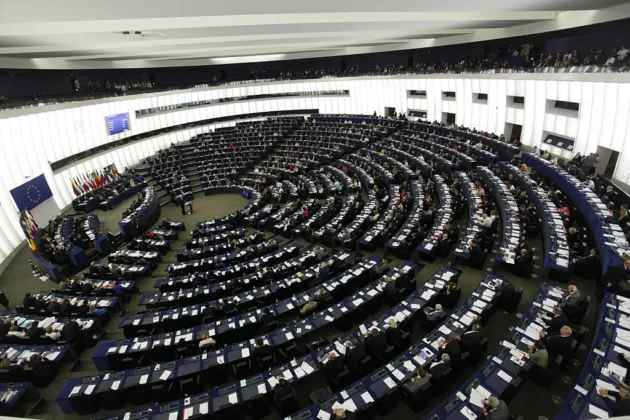
The proposal now goes to the Council of the European Union, not the European Council, a distinction that matters because sanctions under the bloc’s common foreign and security policy are agreed by ministers rather than by heads of state and government.
A Council decision establishing the framework requires the unanimous backing of all 27 member states. The accompanying regulation, which gives the measures legal effect across the single market, is adopted by qualified majority.
Governments will also have to settle the precise scope of the listings, and the identity of the first people named will be a test of whether capitals are willing to sanction figures in countries they depend on for migration co-operation.
The European Parliament has no legislative role in adopting such sanctions, the briefing noted. MEPs may debate the regime, though they cannot amend or block it.
The proposal lands in the middle of a broader tightening of EU migration policy. The EU migration pact took effect on June 12, 2026.
Member states and the European Parliament struck a provisional deal on June 1 on a Return Regulation allowing so-called return hubs outside the bloc and faster deportations. Parliament approved the text later in the month.
Nineteen national leaders have since pressed the Commission to help pay for those centres, saying they wanted them running before the end of the year.
Not everyone on the Right is persuaded that sanctions add much. MCC Brussels, a think tank, said the Commission was patching a crisis of its own making and treating the symptoms rather than securing external borders.
The EU’s “addiction to sanctions is a replacement for its strategic powerlessness”, it said in a post on X on July 9.
Rights groups have taken the opposite view of the wider agenda, warning that return hubs risk leaving migrants in prolonged detention with weak legal oversight.
Whether the sanctions regime bites will depend less on the legal text than on the names attached to it.