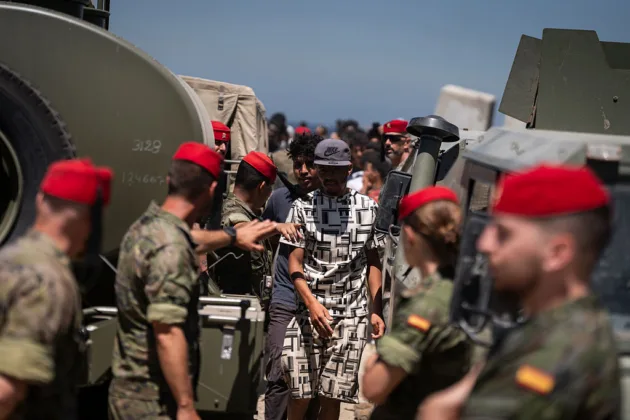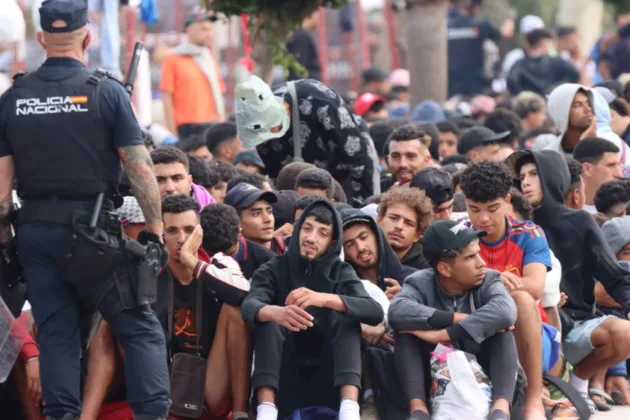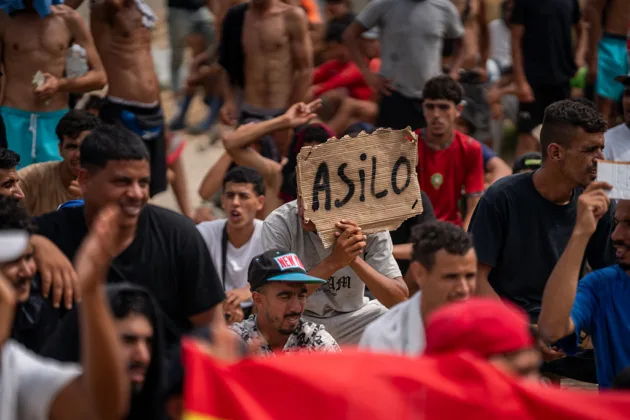












Spanish Legion units have begun combing beaches and scrubland on the edge of Ceuta for migrants still in the North African enclave, five days after tens of thousands crossed the border from Morocco.
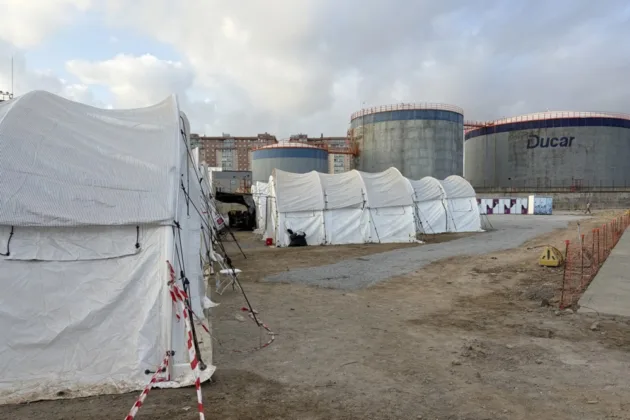
Troops are working alongside the National Police and the Guardia Civil in an operation to locate, identify and return people to the frontier. It has spread beyond the seafront to the hills outside the city, where hundreds are sleeping rough after failing to find space in the Temporary Stay Centre for Immigrants (CETI).
Legionnaires told the Spanish newspaper El Debate, speaking off the record, that three firearms had been recovered during the searches. They said most of those who crossed on impulse had already gone back, leaving a smaller group that they claimed included men with criminal records in their countries of origin.
Neither the Defence Ministry nor the Government Delegation in Ceuta has confirmed that account. No official figures for weapons seizures or arrests linked to the operation have been published.
The Ceuta government of regional president Juan Jesús Vivas, of the Partido Popular (PP), estimated on August 3 that between 3,000 and 5,000 people were still in the city. It said as many as 80,000 might have entered, well above the 50,000 to 60,000 cited by the Interior Ministry.
Spanish authorities said about 69,500 people had returned to Morocco over four days. Many left after shops closed, food ran short and onward travel to the mainland proved impossible.
The official death toll stands at 72 on the Spanish side of the border and 11 on the Moroccan side. Most drowned or were crushed at the El Tarajal breakwater, where crowds swam around the barrier on July 30 in the largest single influx of irregular migration recorded on EU territory.
Vivas had asked Madrid days earlier to declare a national emergency. The Spanish Government refused but deployed the Armed Forces to support the Guardia Civil, and troops are now guarding supermarkets, petrol stations and transport hubs.
Madrid has blamed a Supreme Court ruling of July 8 that barred the summary return of migrants intercepted at sea off Ceuta and Melilla. Italian Prime Minister Giorgia Meloni has threatened to suspend Schengen arrangements with Spain over the crossings.
The European Commission has offered operational support through Frontex and said no irregular migrants had moved on from Ceuta to the European mainland. EU interior ministers were due to discuss the crisis by videoconference on August 4.