



Lithuania’s top political leaders have agreed that a constitutional ban on the deployment of nuclear weapons should be scrapped, President Gitanas Nausėda has said.
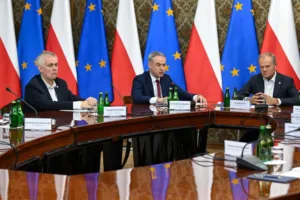
Speaking on July 2 after a meeting with parliamentary and government leaders, Nausėda said there was near-unanimous backing for removing Article 137 of the constitution.
The article currently prohibits weapons of mass destruction and foreign military bases from being stationed on Lithuanian territory. Nausėda described the clause as “obsolete” and said it should be deleted rather than merely amended.
He argued that keeping the provision risked leaving Lithuania exposed within the alliance. “It would be truly unfortunate if we became the weak link or a grey zone within NATO,” the President said.
The move follows a similar decision by neighbouring Finland, which shares a border of about 1,340km with Russia. Finland’s parliament voted on June 17 to repeal its own ban, with the change taking effect on July 1 after being signed into law by President Alexander Stubb.
Unlike Finland’s prohibition, which was set out in ordinary legislation, Lithuania’s ban is enshrined in its constitution and is regarded as among the strictest of any NATO member.
Amending it would require a two-thirds majority in the Seimas, Lithuania’s parliament, with deputies voting twice at least three months apart.
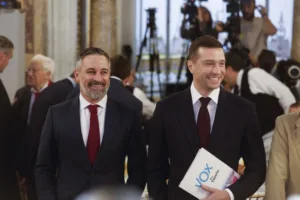
Nausėda said the main disagreement concerned procedure rather than principle. The opposition Nemunas Dawn party has argued the question should be put to a referendum, though the President believes parliament already holds a mandate to act.
Lithuania, which borders both the Russian exclave of Kaliningrad and Moscow’s ally Belarus, has tripled its defence spending since Russia’s full-scale invasion of Ukraine in 2022.
A combat-ready German brigade is due to be permanently based in the country from 2027 as part of efforts to deter further Russian aggression.
The debate has gathered pace amid a wider discussion of European nuclear deterrence. In early June, the Financial Times reported that the United States was weighing the deployment of nuclear weapons to additional NATO countries.
Defence Minister Robertas Kaunas has said any such deployment on Lithuanian soil would be considered only during a crisis or in wartime, and that no weapons would be stationed in peacetime.
Nausėda stressed there were no immediate plans to store nuclear weapons in the country, saying removal of the clause would simply let Vilnius adapt to a worsening security environment.