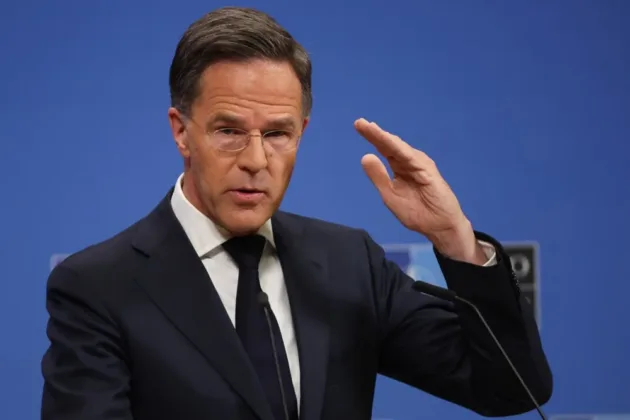


NATO Secretary General Mark Rutte has framed the problem as the alliance’s shared priority, warning that money alone could not “stop a missile or a tank”. Cash was crucial, he said, but the funds had to be turned into combat-ready capabilities, and fast.
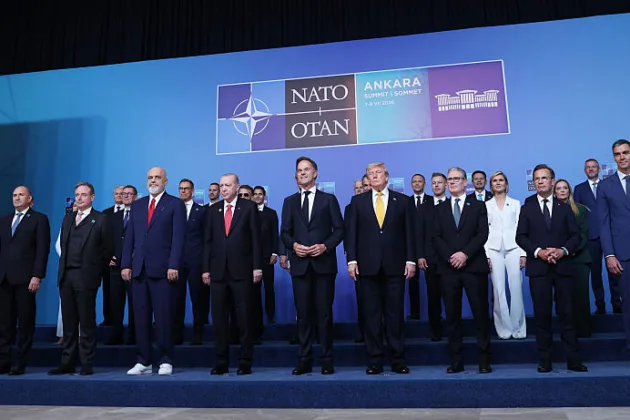
The gathering will be the 36th NATO summit and only the second hosted by Turkey, after Istanbul in 2004. Allies are under pressure to arrive with credible plans to back their spending promises.
At The Hague in June 2025, allies agreed to lift defence spending to 5 per cent of GDP by 2035, up from a 2 per cent benchmark set in 2014. Turning those commitments into hardware has proved the harder task.
Defence budgets have indeed swelled. European members and Canada lifted their core defence investment by $139 billion (€122 billion) in 2025, on NATO figures, yet converting that into firepower has lagged behind.
Industry insists change is under way after decades of underinvestment. Manufacturers were investing in much greater capacity, said Camille Grand, secretary general of the Aerospace, Security and Defence Industries Association of Europe (ASD), though he admitted the sector was “probably not” yet where it needed to be.
Russia’s invasion of Ukraine has long exposed Europe’s limits, with long waiting times and missing capabilities. American military action against Iran has since run down US stockpiles, laying bare the strain on firms trying to refill them.
Analysts have warned that Europe would quickly exhaust key weaponry, such as air defence missiles, if war broke out now. Production in some critical areas would be “overwhelmed within days”, the European Council on Foreign Relations (ECFR) said.
Shell output has climbed from 300,000 a year in 2022 towards a target of two million, though even that would fall short in a protracted conflict, the think-tank found.
Even a bigger arsenal would not buy full independence. European forces still lean on the US for command-and-control systems and key software, a dependency that could one day be turned against them, the ECFR warned.
The EU has not stood still. Since 2021 it has set up a defence fund, fast-tracked ammunition production and rolled out a €150 billion loan scheme for the sector.
Looking further ahead, the bloc’s proposed 2028-2034 budget would roughly quintuple spending on defence and space, to €131 billion. Member states have also set a goal of being ready for a major confrontation by 2030.
A FRAGMENTED MARKET
Much of the problem is structural. The bloc has “27 defence markets, 27 sets of rules”, EU defence commissioner Andrius Kubilius said, leaving its industry hemmed in by obstacles.
Europe had learned to raise the money, he added, but still needed to learn how to spend it well enough to “outproduce, out-innovate, outgun Russia”.
The fragmentation is plain in the hardware. European armies operate 12 different main battle tanks where the US fields one, and they have handed Ukraine four times as many equipment models as Washington has, Bruegel found.
National favouritism deepens the divide. The share of German procurement going to domestic firms has roughly doubled, from about 30 per cent in 2020-2021 to 60 per cent in 2025-2026, according to Guntram Wolff of Bruegel, a Brussels-based think-tank.
Large companies had little reason to invest, he said, because they knew their governments would give them preferential treatment.
LESSONS FROM UKRAINE
Europe need not look far for a nimbler model. Despite four years of bombardment, Ukraine has built a defence sector turning out millions of drones.
Kubilius drew the contrast sharply. Europe produced what he called haute couture weaponry, advanced but costly and hard to make at scale, while Ukraine’s industry was built for the battlefield.
A growing number of European firms have begun partnerships to tap that expertise. Ukraine’s battle-tested innovations, from drone warfare to intelligence fusion, were assets Europe needed now, the ECFR argued.
The stakes run wider than any single summit. Rutte has argued it is only logical for Europeans to carry more of the load, noting that a Europe of some 600 million people should be able to stand up to a Russia of between 120 and 140 million.
That case has grown louder as the US shifts forces towards the Indo-Pacific and warnings mount that Russia could strike within years.
In Ankara, leaders are expected to sign deals worth billions of dollars at a defence industry forum held alongside the summit on July 7, NATO’s flagship event on transatlantic defence production.