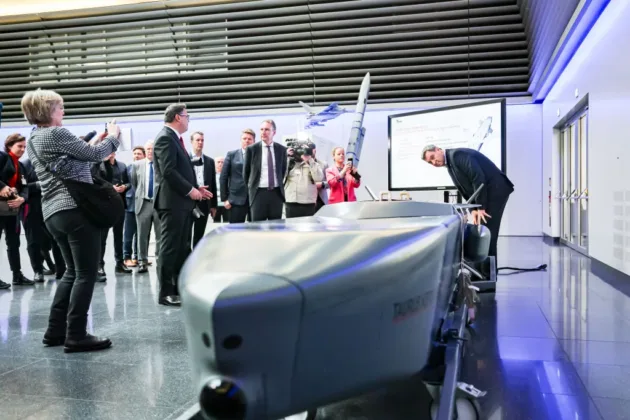






The United States has awarded Raytheon a contract worth $22.9 billion (€19.8 billion) to expand production of Tomahawk cruise missiles, as Washington moves to replace weapons spent in the war with Iran.
The US Navy announced the seven-year deal on August 17. It formalises a framework agreement signed in February with the manufacturer, a unit of RTX.
Raytheon said the contract would allow annual output to rise to more than 1,000 missiles, from about 60 at present. The company builds the weapon at its plant in Tucson, Arizona.
US under secretary of war for acquisition and sustainment Michael Duffey said the department had asked industry to expand munitions production and that RTX had “answered that call”.
Acting Navy secretary Hung Cao said the money would accelerate deliveries at “unprecedented speed”. Raytheon president Phil Jasper said the parent company was investing in workforce, technology and plant to lift output.
The Tomahawk is fired from surface ships and submarines and can hit land targets around 1,600km away. It has been the mainstay of American long-range strike since the Gulf war in 1991.
American stocks have been under strain since Operation Epic Fury began on February 28. The US think-tank the Center for Strategic and International Studies estimated in July that Patriot holdings had fallen below 1,000 from 2,330, with THAAD interceptors down from 452 to about 250.
The Department of War, as the Pentagon was renamed in 2025, also signed framework deals this month with Northrop Grumman and Lockheed Martin to raise production of missile components.
The award carries weight in Europe because the continent has few alternatives of its own. The United Kingdom operates submarine-launched Tomahawks, and the Netherlands won US approval in April 2025 to buy up to 163 Block V rounds in a package worth $2.19 billion (€1.9 billion).
The Dutch Government said in June 2025 that its future submarines would instead carry the Joint Strike Missile being developed by Norway’s Kongsberg. It kept the American weapon for its planned frigates.
France, Germany, Italy and Poland launched the European Long-Range Strike Approach in 2024, with Sweden and the UK joining later. The initiative is aiming at cruise and ballistic missiles with ranges of up to 2,000km, though no system has been selected.
European stockpiles remain thin in the meantime. Production in critical areas would be overwhelmed within days of a major conflict, the European Council on Foreign Relations has warned.
Artillery output tells a similar story. Shell production across the bloc has climbed from 300,000 rounds a year in 2022 but still falls short of the two million target NATO has set.