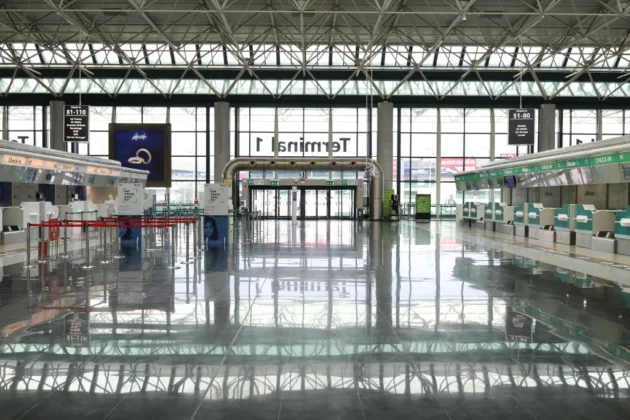






More than 5,000 travellers arriving from Italy have been stopped and asked for their documents at Spanish airports since border controls came into force on August 8, according to the Spanish Interior Ministry.
The ministry put the figure at 5,080 people across 462 flights by 1pm on August 17. Some 725 National Police officers have taken part in the operation.
Some 434 passengers were checked from August 16 onwards. Madrid’s Adolfo Suárez-Barajas airport accounted for 191 of them, drawn from five flights, and Barcelona’s El Prat for another 118 from six.
Alicante recorded 36 checks across 10 flights and Valencia 18 across three. Seville identified eight passengers from a single aircraft, Bilbao five from four flights and Málaga four from four.
In the Balearic Islands the highest total was at Ibiza, with 12 passengers from three flights, followed by Menorca with 10 and Mallorca with six.
Tenerife South led the Canary Islands on 19 checks, ahead of Lanzarote on four and Gran Canaria on three. Fuerteventura registered no arrivals from Italy at all.
The controls apply at ports and airports with direct links to Italy and are due to run until September 7. Spanish interior minister Fernando Grande-Marlaska signed the order after Rome refused to withdraw the checks it imposed on arrivals from Spain on August 1.
The two measures are not symmetrical. Italy screens only non-EU nationals travelling from Spain, while the Spanish order covers every passenger regardless of nationality, although officers have concentrated on third-country nationals.
Rome notified the European Commission that its controls would run until August 31, with the option of renewal. Italian interior minister Matteo Piantedosi said any rollback would depend on the security risk rather than on a date.
That date passed without a repeat of the July crossings. Moroccan police arrested at least 111 people near Ceuta on August 15, according to Reuters, as Spain reinforced the enclave with extra Guardia Civil officers, a floating sea barrier and naval vessels.
The dispute grew out of the migration crisis in Ceuta, where about 72,000 people crossed from Morocco on July 30-31. The minister gave that figure on August 4.
Sánchez has resisted Italian pressure by citing Frontex records of irregular entries between 2021 and 2026, which put Italy on 478,600 against 234,760 for Spain.
Madrid says almost all those who reached Ceuta have since returned and that the enclave sits outside the Schengen area, requiring a separate police check before anyone travels on to the mainland.
Home affairs commissioner Magnus Brunner has said no migrant from Ceuta reached the Schengen area. The Commission has yet to rule on whether either set of controls is proportionate.