











The Dutch Government has urged Spain to do what is necessary to protect the European Union’s external borders after tens of thousands of people crossed into Ceuta from Morocco.
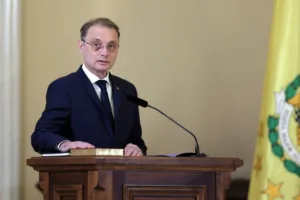
Foreign Minister Tom Berendsen said on July 31 that developments in the Spanish city were worrying and that The Hague expected Rabat to take the necessary steps as well. He said he had spoken to his Spanish and Moroccan counterparts that morning and welcomed the European Commission’s offer of help.
Spain’s interior ministry estimated that some 49,000 people entered Ceuta by land and sea in the 24 hours to the morning of July 31. A ministry spokesperson said at least 18 had died attempting the crossing, most of them by drowning.
The Dutch intervention followed a sharper one from Rome. Italian Prime Minister Giorgia Meloni had threatened to suspend Schengen arrangements with Spain, prompting Madrid to summon the Italian ambassador.
Berendsen belongs to the Christian Democratic Appeal (CDA), one of three parties in the minority coalition led by Prime Minister Rob Jetten that took office on February 23. Migration has dominated Dutch politics since the previous government collapsed over asylum policy.
Opposition leader Geert Wilders described the crossings as an Islamic invasion and called for everyone who entered to be sent back.
European Commissioner for Home Affairs and Migration Magnus Brunner offered Spain financial, technical and operational support, including through the border agency Frontex. He said protecting the bloc’s external borders was “a crucial part of our efforts to fight illegal migration”.
Spain deployed the Armed Forces to support the Civil Guard in Ceuta and rejected local calls to declare a national emergency. Prime Minister Pedro Sánchez travelled to the city on July 31 with Interior Minister Fernando Grande-Marlaska.
Sánchez said his Government was mobilising all available resources and working with Moroccan and international authorities to restore normality as quickly as possible.
Madrid and Rabat agreed to return those who entered illegally as soon as possible, though neither set out a timetable. Spanish Foreign Minister José Manuel Albares linked the surge to a Supreme Court ruling of July 8 that barred the summary return of migrants intercepted at sea off Ceuta and Melilla.
Ceuta and Melilla form the EU’s only land border with Africa, and each city has a population of around 85,000. Reception centres in Ceuta were already beyond capacity before the mass crossing, with facilities for unaccompanied minors reported to be running at some 16 times the number of places available.