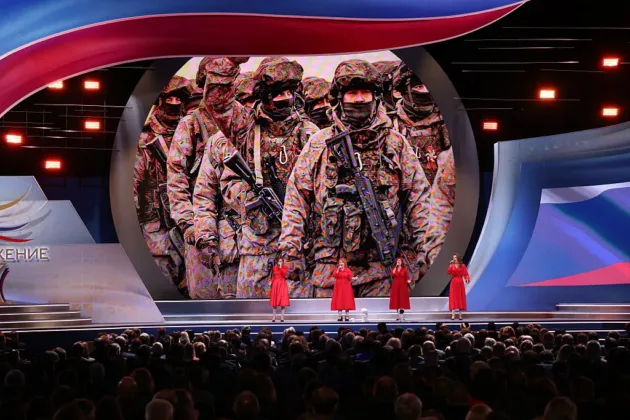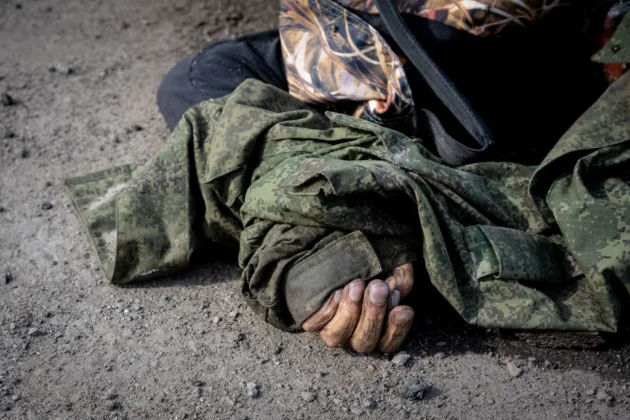



The Center for Strategic and International Studies (CSIS), a Washington-based think tank, said in a report released on July 1 that Russian forces had suffered around 1.4 million casualties, including killed, wounded and missing soldiers, between February 2022 and June 2026.
Of those, between 400,000 and 450,000 were fatalities. The figure represented more than four times the number of Americans killed in all United States wars combined since the Second World War, the study said.
Ukrainian forces had suffered between 525,000 and 625,000 casualties over the same period, with 125,000 to 150,000 killed. Both governments are widely believed to undercount their losses and Kyiv does not publish official figures.
The estimates were broadly in line with Western intelligence assessments, CSIS said. It attributed Russia’s toll to its reliance on attritional assaults, weak combined-arms tactics, poor training, corruption and low morale.
Independent Russian journalists have separately identified more than 213,000 named Russian dead from open sources, a count they say still understates the true toll.
“These rates are astounding,” said Seth Jones, one of the report’s authors.
DRONES SHIFT THE BALANCE
The report found the casualty ratio had shifted sharply in Ukraine’s favour. For much of the war it stood at between two and three Russian casualties for every Ukrainian loss, though it had risen to nearly eight to one in the first half of 2026.
CSIS attributed the change largely to Kyiv’s expanding drone programme, which had widened what it called the “kill zone” along the front and made it increasingly difficult for Russian troops to advance.
Ukraine’s layered defences had proved effective at killing and wounding attackers while limiting their movement, the authors said. They based their findings on more than 20,000 recorded Ukrainian strikes on Russian targets, from energy sites and rail lines to missile and microelectronics plants.
Ukrainian long-range strikes had also reached deep inside Russia, hitting refineries, pipelines and fuel depots and striking Moscow and St Petersburg as well as border regions such as Belgorod. One target, the Ukrainka air base, lay more than 6,000 kilometres (3,700 miles) from Kyiv.
Among the weapons was the Hornet, an autonomous attack drone costing about $6,000 (€5,100) with a range of up to 150 kilometres (93 miles), which uses artificial intelligence to identify and strike its targets. Such systems were “changing the character of warfare”, CSIS said.
The campaign has squeezed Russian fuel supplies, with Kremlin spokesman Dmitry Peskov confirming Moscow was in talks to import petrol as domestic refining fell.
Putin has acknowledged a nationwide fuel squeeze, with queues at petrol stations and mandatory sales limits imposed across more than a dozen regions, though he insisted the strikes had no effect on the front.
MANPOWER UNDER STRAIN
Russia’s monthly losses of between 30,000 and 34,000 in 2026 had probably outpaced its recruitment of about 27,000 new troops a month, the study found.
For much of the war Moscow had replaced its losses through its first wartime mobilisation since the Second World War, prison recruitment and cash incentives.
The gains bought at that price remained slight. Russian territorial control shrank by roughly 400 square kilometres (154 square miles) in April and May, its first net monthly losses since August 2024, with troops advancing near the Donetsk hub of Kostiantynivka at about 50 metres a day and no faster than 90 metres a day elsewhere along the front.
CSIS described the pace as one of the slowest offensives of the past century, comparable to the Battle of the Somme in the First World War.
In a further sign of strain, Putin scaled back his annual Victory Day military parade in May over concerns about Ukrainian long-range strikes, the report said.
A EUROPEAN RECKONING
Despite the losses, the study said President Vladimir Putin remained committed to subjugating Ukraine and to weakening NATO and the European Union, and would likely keep fighting without greater pressure.
The report also noted growing social unrest inside Russia over the war and falling living standards, while judging the wartime economy strained but not yet close to buckling.
CSIS argued that Europe and the United States had failed to apply their full economic and military weight against Moscow. It said Ukraine’s best hope might be a stalemate leading to a ceasefire or peace deal.
Even so, the fighting has shown no sign of easing. Russia pressed on with one of its heaviest bombardments of the war overnight on July 1, when Ukraine’s air force said Moscow had launched 74 missiles and nearly 500 drones and decoys at Kyiv.
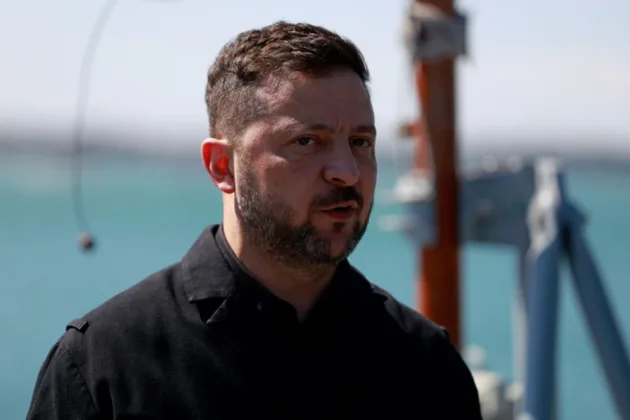
President Volodymyr Zelensky has said more than 16,000 Ukrainian civilians have been killed since the invasion began.
Russia’s failure to convert its numerical weight into decisive gains has been evident for months, even as the Kremlin presses on regardless of the cost.