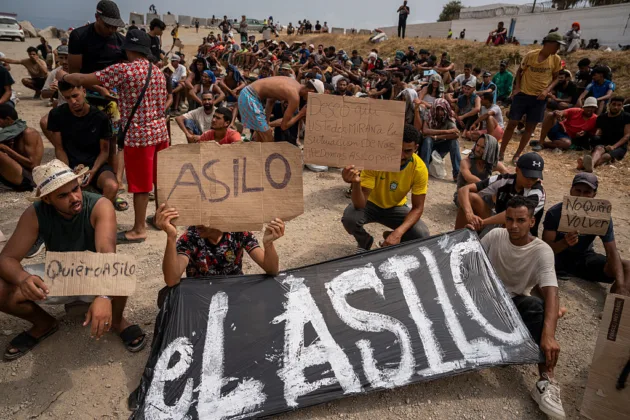










New data from the Madrid regional government reveals that around 70 per cent of individuals registered as unaccompanied foreign minors (menores extranjeros no acompañados, or MENAs) are in fact 18 years of age or older.
The figures, released by the Community of Madrid and reported by ABC, come from medical and documentary checks carried out on thousands of young migrants who arrived claiming to be under 18.
According to the data, a large majority were found to be adults upon proper assessment.
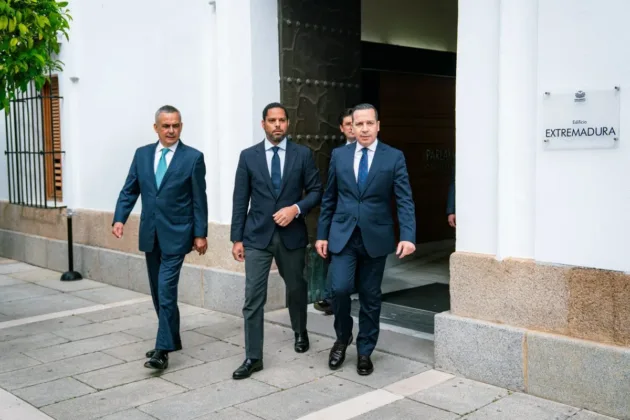
Regional officials have described the situation as unsustainable, arguing that resources intended for the protection of genuine unaccompanied children are being diverted to house and support adults.
The Community of Madrid has repeatedly called for stricter age verification protocols at the national level, including the use of more reliable medical and biometric testing.
Since 2018, the Community of Madrid has cared for more than 11,000 unaccompanied foreign minors.
In 2024 alone, 2,442 arrived, with over 1,600 in 2025.
The regional government has filed 29 police complaints after verifying that individuals in its care claiming to be minors were in fact adults.
In 2024, 848 age-determination cases were opened. More than half (470) were archived because the individuals absconded before wrist X-rays could be carried out.
Of the 378 who underwent radiological testing at Gregorio Marañón Hospital, only 112 were confirmed as minors, while 266 (70 per cent) were found to be 18 or older.
The Public Prosecutor’s Office has warned of a collapse in the system, with delays of up to eight months for tests and significant strain on accommodation and airport resources, particularly from arrivals via Barajas from Morocco and Egypt.
A Moroccan biology professor at a university in his home country, alleged to have abandoned his two young sons in Bilbao, has been arrested by Spanish police. https://t.co/g2ibkZw5XH
— Brussels Signal (@brusselssignal) March 27, 2026
Spain has seen a sharp rise in arrivals of unaccompanied foreign minors in recent years, particularly from North Africa and parts of Latin America.
Nationwide the average of detected frauds is around 39 per cent.
Spanish media outlet ABC reported that there are also many cases of parents who abandon their siblings at the doors of police stations and specialised reception centers.
“They give them guidelines on how they have to go to the authorities, without a passport on them, to be able to access the assistance channel for these adolescents, who become dependent on the regional governments.”
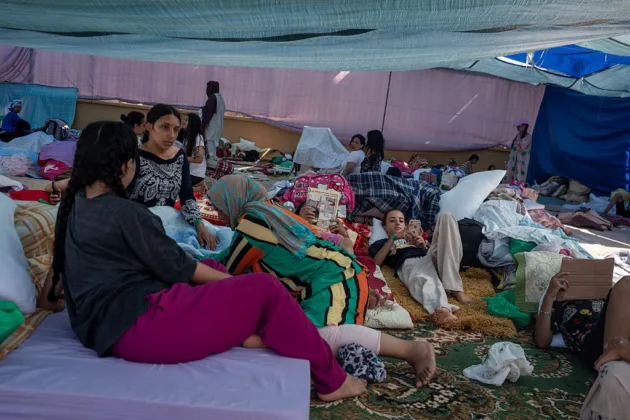
Many end up in overcrowded reception centres, and there have been repeated reports of violence, exploitation, and individuals disappearing from the system.
Another emerging issue is the extraordinary regularisation process for immigrants previously in irregular status.
Authorities are receiving applications from individuals who had previously claimed to be unaccompanied minors (MENAs) but have now submitted documentation proving they were 18 or older upon arrival in Spain. This has further highlighted inconsistencies in initial age declarations.
Critics of current policy argue that lax initial age assessments and the difficulty of deporting rejected adult claimants have created incentives for economic migrants to pose as minors. Supporters of a more humanitarian approach warn that overly strict verification could endanger genuine child refugees.
Spain’s two main opposition parties have accused Prime Minister Pedro Sánchez of engineering a wave of naturalisations to reshape the electorate in his favour. https://t.co/rZ3XmxRFNU
— Brussels Signal (@brusselssignal) June 29, 2026