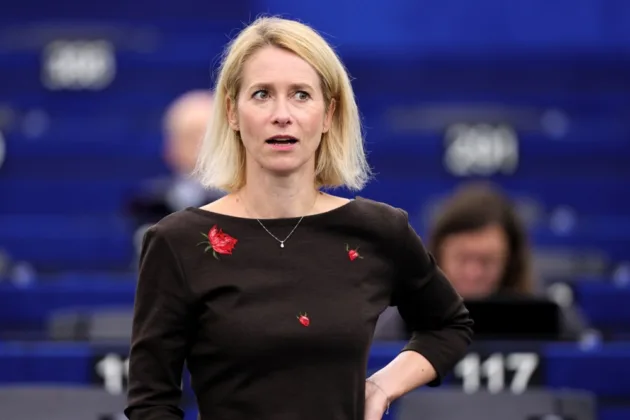
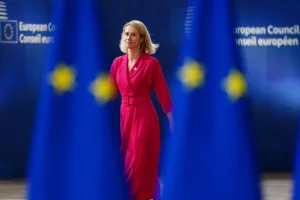


EU High Representative for Foreign Affairs and Security Policy Kaja Kallas has said she intends to put forward the most far-reaching sanctions listings against Russia since the start of the full-scale invasion of Ukraine, with the aim of increasing the total number of sanctioned Russian individuals, companies and organisations by a third.
In an interview with the German newspaper Die Welt, published on August 17, Kallas stated: “EU sanctions have already cost Russia dearly, depriving Russia’s war machine of over €1 trillion and for autumn I am putting forward the most far-reaching sanctions listings since the start of the war.
“Once adopted, they would immediately raise the total number of sanctioned Russian entities by a third. The pressure must keep growing until Moscow ends its war.”
She did not provide further details on the precise timing or the specific targets of the proposed measures. She said she expected the United States and Europe to move closer together again on sanctions policy.
She accused Moscow of deliberate terror, saying Russia was aiming more missiles at Ukrainian cities because it was making no progress on the battlefield. The United Nations human rights monitoring mission in Ukraine recorded 437 civilians killed in July, the deadliest month since May 2022.
The European Union has already adopted 21 packages of sanctions against Russia since February 2022.
The most recent, adopted on July 23, 2026, included curbs on the country’s banking sector and cryptocurrency networks, along with 218 individual listings, the largest such batch in four years.
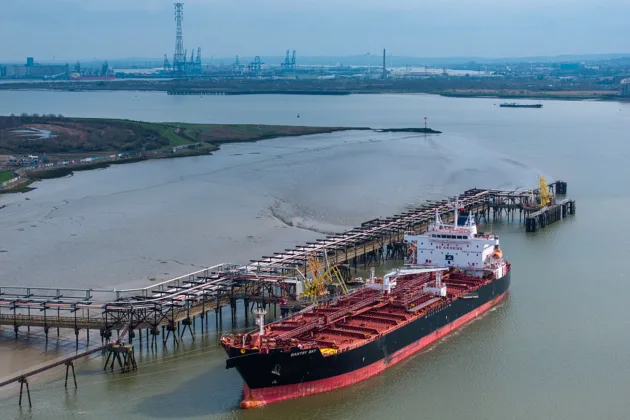
These targeted banks, crypto operators, vessels in the shadow fleet, oil refineries and entities linked to the military-industrial complex. The Council of the European Union said they covered 48 individuals and 170 entities, among them 94 banks and 41 shadow fleet vessels.
According to the European Commission, previous rounds have now affected nearly 3,000 individuals and entities. The Commission has said EU exports to Russia in 2025 were 66 per cent below their 2021 level and imports 83 per cent lower.
Kallas has repeatedly emphasised the need to maintain and intensify economic pressure on Moscow. The EU’s approach has focused on restricting revenues that support Russia’s war effort, including measures against the energy sector, financial channels and efforts to circumvent existing restrictions.
Any new package would require unanimous approval by EU member states.
Securing that consensus has frequently proved difficult.
In the negotiations for the 21st package, for example, Greece withheld support for several weeks over proposed restrictions on shipping Russian liquefied natural gas (LNG) to third countries, citing the potential impact on its large merchant fleet and companies such as Dynagas.
Athens argued a blanket ban would see the vessels reflagged outside the EU rather than stop the trade. The exemption it obtained covers contracts signed before February 24, 2022 and is reviewed annually.
Other member states also raised objections. Bulgaria sought the removal of certain individual listings, Austria pressed concerns linked to its banking sector, and several capitals, including Germany and Portugal, opposed measures affecting fish imports.
Sofia relented once Lukoil founder Vagit Alekperov and Patriarch Kirill, head of the Russian Orthodox Church, were dropped. Vienna linked its position to Raiffeisen Bank, while the planned phase-out of Russian cod and pollack imports was abandoned.
Concessions and carve-outs were ultimately required to reach agreement.
Hungary, which under Viktor Orbán had blocked or delayed successive measures, changed government after Péter Magyar’s Tisza party won the election on April 12, 2026. Politico reported, citing European diplomats, that with Budapest no longer serving as a convenient cover, disagreements between other capitals came to the fore.