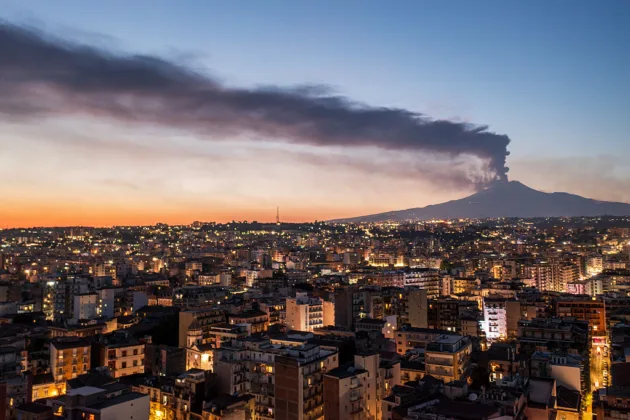






New ash emissions from Mount Etna have again restricted arrivals at Catania-Fontanarossa airport in Sicily, with inbound traffic capped at five aircraft an hour until 2pm local time on August 17. Departures are operating without restriction.
Airport operator Società Aeroporto Catania (SAC) said the airspace sectors around the volcano, designated B1 and B2, had been closed because of ash in the atmosphere. It said it would issue updates through the day and advised passengers to check their flight status with their airline before travelling to the terminal, as reported by DPA.
The measures have come two days after the airport partially resumed operations. Flights restarted at about 2pm on August 15 following a downgrade of Etna’s aviation alert colour code from red to orange.
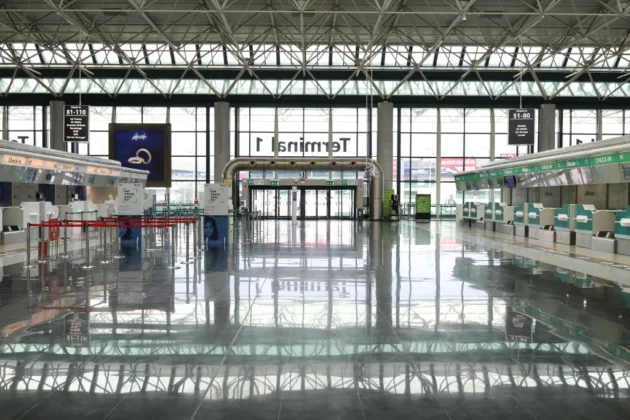
That reopening ended a week of disruption at Italy’s fifth-busiest airport by passenger traffic, in what SAC has called the worst emergency in two decades for the site’s infrastructure. The operator said about 1,974 flights had been scheduled at Catania between August 6 and 12, of which roughly 36 per cent were cancelled and a further 630 diverted to Palermo, Trapani, Comiso and Lamezia Terme.
Bloomberg reported that more than 1,350 flights were cancelled or rerouted over the same period, affecting more than 100,000 passengers.
Trade association Assoesercenti estimated the lost tourism spending at between €12.8 million and €24 million during the first four days of the emergency. Its president Salvo Politino said volcanic activity and ash emissions could no longer be treated as an unforeseeable event.
Politino has called for a permanent coordination body bringing together the Sicilian regional government, aviation and civil protection authorities, airlines and the island’s airport operators. He said the cancellations hit hotels, restaurants, transport and retail as well as passengers.
Boris Behncke, a researcher at the National Institute of Geophysics and Volcanology’s Etna Observatory, said: “Volcanic ash can be a great risk for aircraft.” He said particles drawn into engines could force them to stall.
Stranded travellers face limited redress. Under EU air passenger rights rules volcanic ash counts as an extraordinary circumstance, so carriers do not owe compensation though they must still offer rerouting, meals and accommodation where needed.
At 3,324 metres, Etna is the highest active volcano in Europe and is under constant monitoring. Scheduling at Catania depends on the volcano’s activity as well as wind direction and the concentration of ash in the air.