


Ten European Union member states have demanded that Brussels loosen the bloc’s carbon market rules to shield industry from rising costs, as the European Commission prepares to unveil its overhaul of the scheme today. Bulgaria, Cyprus, the Czech Republic, Estonia, Greece, Hungary, Italy, Poland, Romania and Slovakia set out their position in a joint declaration on July 15, drafted under Italian and Polish leadership.
Together the ten account for just over 35 per cent of the EU population, the threshold at which four or more member states can block legislation in the Council of the European Union. That puts the group narrowly inside a blocking minority on the reform.
The signatories called for the Emissions Trading System (ETS) to be turned into an instrument of industrial policy, balancing decarbonisation against competitiveness and economic security. They said the current design, which drives power and industrial emissions close to zero by 2039, would push manufacturers out of Europe.
Their central demand was a radical revision of the benchmarks used to allocate free allowances, the permits handed at no cost to energy-intensive sectors. They also asked for the cap to run to 2050 and for the phase-out of free permits in sectors covered by the carbon border adjustment mechanism (CBAM) to be suspended until the import levy proves effective.
The group rejected blanket conditions on free allowances, arguing any strings should apply only to extra permits awarded for additional effort. It also called for ETS2, the second scheme due to cover buildings and road transport, to be reconsidered because it fell hardest on vulnerable households already squeezed by fuel prices.
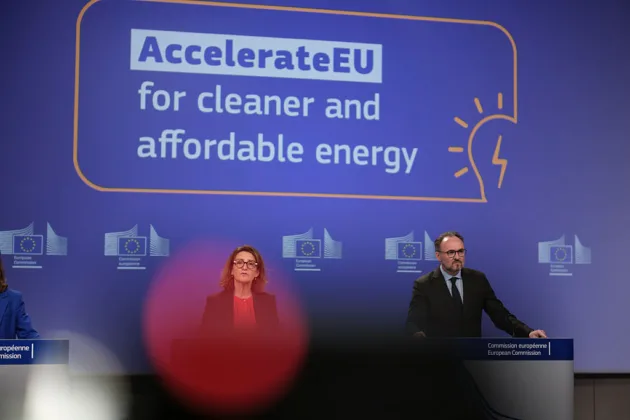
The proposal due today would meet part of that case. It would cut the annual rate at which the cap falls to about 3.7 per cent from 2031, down from 4.3 per cent, and extend free allowances to the end of 2037 rather than 2034, EU officials told Reuters.
Companies with plans to invest in decarbonisation in Europe would receive 80 per cent of their permits upfront, and governments would have to plough half their ETS revenue back into domestic industry. The system has raised €260 billion ($296 billion) since 2013 and covers about 40 per cent of the bloc’s emissions, making it a central pillar of the European Green Deal.
Spain, Portugal, Denmark, Finland, Luxembourg, the Netherlands and Sweden have pushed the other way, warning that any weakening would punish firms that cut emissions early. Poland’s opposition Conservatives (PiS) have gone further, calling for the country to leave the scheme altogether.
Ireland, which holds the rotating presidency of the Council, is aiming for agreement among governments in December, with talks with the European Parliament to follow.