

A poll of Poles carried out between July 2 and 12 has made Brussels shudder. The survey, by the state research centre Centrum Badania Opinii Społecznej (CBOS), revealed that Polish support for Ukraine’s accession to the EU has collapsed, falling from 90 per cent in March 2022 to 50 per cent. Worse still was the proportion of those who actively opposed it; that number jumped from a meagre 2 per cent to 40 per cent.
The numbers underscore the difficulty Ukraine is going to face entering the European Union: If Poland, which had been one of its strongest supporters, is turning on it, how will it win over countries which have been sufficiently less supportive?
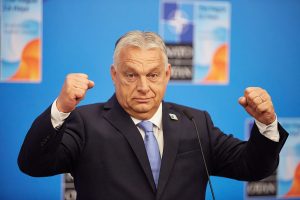
Of course, it’s possible that others will use Poland’s increasing scepticism as a shield so that they will not have to speak up, akin to how other governments hid behind Viktor Orbán’s opposition to Brussels diktats.
But they may thank Poland, because further enlargement is likely to be the death knell of the European Union. In fact, its past enlargements are already effectively a time bomb, and even without Ukraine’s entry, it is likely that they will go off in the next few decades and could take the European Union along with them.
The European Union did not exist before 1992, when the Maastricht Treaty was signed, and only emerged with the disappearance of the Soviet alternative to America’s liberal international order after the United States won the Cold War. It has existed, in its entirety, under America’s nuclear umbrella.
Practically every single country which joined the European Union and NATO after 1992 first joined the North Atlantic Treaty Organisation, even if it was only by a matter of months. The only countries that did not join NATO before joining the EU were explicitly neutral (Austria and Malta), had previously been neutral (Finland and Sweden, which joined only in 2023 and 2024 respectively) or were divided in a frozen military conflict (Cyprus).
This rapid expansion saw the European Union take countries which had never been considered part of the West, such as the Baltics, which had long been something of the border of one world and another. But now, the EU was claiming them as their own.
Under America’s umbrella, this was a simple task. They joined in 2004, when Russia was in no position to stop them. Two years prior, when NATO accession was underway, then-US president George W. Bush told Latvia’s neighbours, the Lithuanians, in Vilnius on November 23, 2002, that they were “needed in the NATO Alliance” and would “contribute to our common security”.
The Baltics are innovative, beautiful countries with rich, unique histories (histories which many in Brussels frequently seek to obfuscate). But they are not contributing to common security.
Estonia has increased its military spending to 5.4 per cent of gross domestic product in 2026, among the highest in NATO. But that’s only good for €2.4 billion, according to its defence ministry. The Commonwealth of Pennsylvania has requested $3.4 billion (€3 billion) for its prison system alone in the 2026-27 fiscal year.
The Baltics were added as a bulwark against Russia, an attempt to push as far as possible while Moscow was weak. With America’s umbrella this was not risky.
Now, though, America is withdrawing that umbrella. And as the sunlight shines onto the EU, what it reveals is a problem for Brussels: A mish-mash of national interests which have little to do with one another.
There are already cracks showing between the EU’s heavyweights, Germany and France. But those will pale in comparison to the gulf between the national interests of Portugal and Estonia, or Latvia and Belgium.
Young Europeans barely want to fight for their own countries; fewer than one in three would in Germany, Italy and the Netherlands, a Rīga Stradiņš University poll of all 32 NATO member states found. The further east one moves, the higher those numbers go, but even in Poland only 18 per cent of those aged 18 to 29 say they would take up arms, according to the pollster IBRiS. Who will pick up a gun to defend the Baltics if they won’t defend their own neighbours?