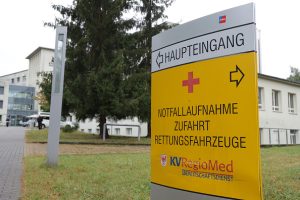






More than half of doctors and nurses in Germany’s most populous state have experienced physical or verbal violence in the workplace over the past 18 months, according to preliminary findings from a representative study commissioned by the North Rhine-Westphalia (NRW) health ministry.
The survey, whose initial findings were published exclusively by Die Welt, reveals that 57 per cent of healthcare professionals in NRW reported being victims of such incidents.
The majority of cases (59 per cent) occurred in hospitals, with emergency departments identified as particularly high-risk areas.
Young staff are disproportionately affected, as nearly 80 per cent of those under 30 have faced violence, compared with 29 per cent of those over 60.
Younger employees were also more likely to experience sexualised attacks (59 per cent of cases in that age group).
Norman Hecker, head of acute and emergency medicine at the Evangelisches Klinikum Gelsenkirchen (EVK) and a prevention expert, described the situation on the ground. The clinic’s acute and emergency department alone recorded more than 300 attacks on staff in 2023, according to the hospital.
He recounted recent incidents, including a patient threatening a nurse with a broken glass bottle and colleagues intervening in physical altercations.
“It feels as if the population as a whole has become more irritable and prone to escalation,” Hecker told Die Welt.
While patients with mental health issues, drug problems or dementia remain the main perpetrators, he noted a post-pandemic rise in violence from others.
The study also highlights racist and anti-Semitic abuse, with staff of migrant background facing slurs such as Scheißausländer (“fucking foreigner”), while German staff are sometimes labelled “Nazis” or “foreigner-haters”.
The NRW findings align with a growing body of evidence across the continent.
A major World Health Organization (WHO) survey for Europe, known as the Mental Health of Nurses and Doctors (MeND) study and released in October 2025, drew on more than 90,000 responses from doctors and nurses across the European Union plus Iceland and Norway. It found that one in three healthcare workers had experienced bullying or violent threats in the past year, while 10 per cent reported physical violence and/or sexual harassment.
Other German surveys paint a similar picture. A 2025 YouGov poll for Doctolib, which questioned more than 1,000 doctors, nurses and medical assistants, indicated that 75 per cent had faced violence or serious conflicts in the previous year. Two-thirds (66 per cent) reported verbal aggression and insults, 38 per cent said they had been threatened and one in four had been subjected to physical violence.
Hospital associations report rising incidents, particularly in emergency departments, where long waiting times and high stress are often cited as triggers, though experts stress that staff shortages exacerbate but do not solely cause the problem.
The impact on the workforce is severe. Many hospitals report staff turnover linked to violence, with some employees leaving high-risk areas such as emergency rooms or psychiatric units.
The German Hospital Federation (Deutsche Krankenhausgesellschaft, DKG) has warned that such experiences reduce the attractiveness of these roles, worsening Germany’s chronic healthcare staffing shortages and threatening patient care.
NRW authorities and police are taking steps to improve data collection and prevention. North Rhine-Westphalia’s interior minister Herbert Reul, of the Christian Democratic Union (CDU), has pushed for violence against healthcare workers to be separately recorded in crime statistics nationwide, a proposal he brought to the standing conference of Germany’s interior ministers.
Hospitals are increasingly adopting de-escalation training, security personnel, body cameras on a trial basis, panic buttons and secure retreat rooms.
“Anyone who thinks the people who help us in emergencies are the right punching bags has not understood that this affects us all,” Reul said.
The NRW study is expected to deliver full results and recommendations in the summer of 2026. Similar initiatives are underway in other German states and at the federal level.
This phenomenon is not unique to Germany. Healthcare unions and professional bodies across Europe have called for stronger legal protections, better reporting systems and cultural shifts to address the issue.