




Ceuta has gone into the weekend on alert for a second mass crossing from Morocco, with police unions saying the reinforcements sent to the Spanish exclave would not stop one.
Calls circulating on Facebook, TikTok and Instagram have named August 15, a public holiday in Spain, as the date for a repeat of the entry of more than 70,000 people on July 30 and 31. A Civil Guard assessment based on open sources, reported by RTVE, concluded that the mobilisation was genuine and documented.
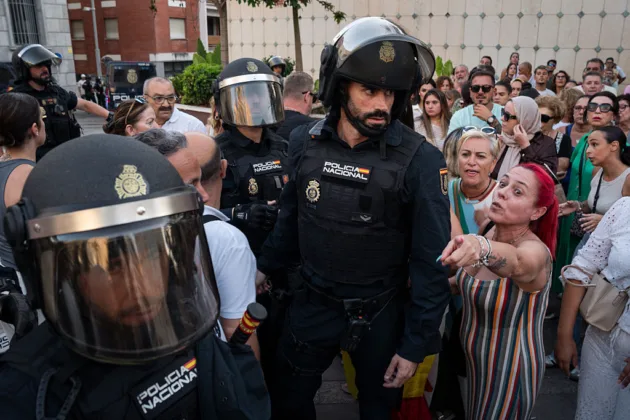
Grande-Marlaska said on August 13 in Ceuta that the city now had 880 National Police officers, 270 more than on July 30, and 714 Civil Guard officers, close to 200 more than before the crisis. He announced a further 45 riot police and 20 officers from the central immigration and borders brigade.
Police unions have told El Debate that the numbers change little. JUCIL, which represents Civil Guard officers, said a mass entry by sea was unmanageable whatever the deployment, because everything depended on Morocco preventing people from going into the water.
Eduardo García, the Ceuta secretary general of the Confederación Española de Policía (CEP), said officers were being pulled off the border for radio patrol and hospital escort duties. JUPOL, the largest National Police union, said reinforcement officers had been given no accommodation, food or water by the interior ministry and were sleeping in army barracks.
Morocco said on August 12 it had stepped up security along its frontiers with Ceuta and Melilla. Hundreds of Moroccan riot officers were filmed by laSexta at Benzú, opposite the Tarajal crossing, before being withdrawn overnight.
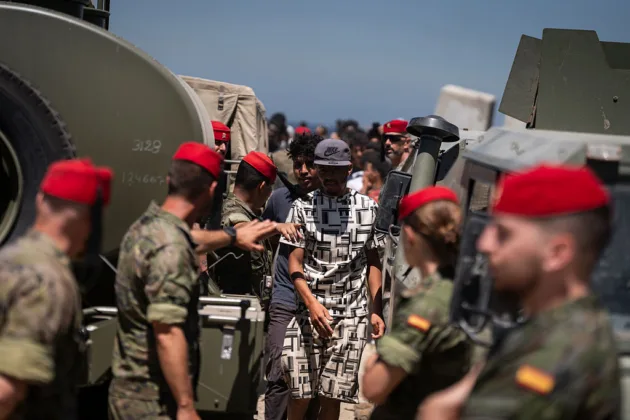
Spain has installed a 500-metre floating barrier at the Tarajal breakwater and stationed the frigates Navarra and Santa María off the coast. The Ceuta general command cancelled military leave from August 13, with more than 2,000 soldiers patrolling the city daily.
About 5,000 of those who entered in July are still in Ceuta awaiting return, according to Grande-Marlaska, and close to 1,900 minors have been identified. The Spanish Embassy in Rabat has warned in Arabic, French, Spanish and English that irregular entry confers no right to remain, saying “any information to the contrary is false”.
The July crossings led Italy to reintroduce checks on travellers from Spain and prompted 22 member states to demand coordinated action at the EU’s external border. The European People’s Party has since called for Frontex to be turned into a full European border guard.