





Brussels wants to check your messages before you send them. The European Commission has spent four years pushing a law that would put scanning software on your own phone, comparing your photos and your chats against an official list before they ever leave your hand. That law has not passed. It comes back to the table in the autumn, and when it does WhatsApp will not protect you, because the scan runs before the encryption does.
The law Parliament voted on this July was an older and weaker thing, reaching only into chats that are not encrypted at all, and it obliges nobody to scan anything. More members of the European Parliament voted to throw it out than to keep it. It survived anyway. Some 314 voted against on July 9, 276 in favour, and the law stood, reinstated until April 3, 2028.
The scanning matters. How it survived a lost vote matters more, because a bad law can still be voted down in September. A method that works gets used again.
Parliament had already rejected the same extension on March 26, by 311 votes to 228 with 92 abstentions, and the old rules lapsed on April 3. The Council of the European Union brought the text back on July 2.
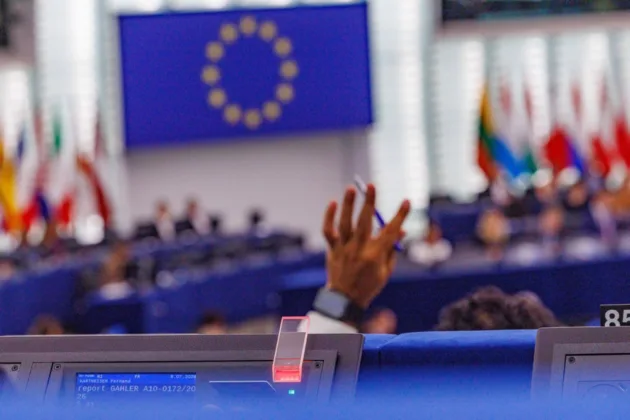
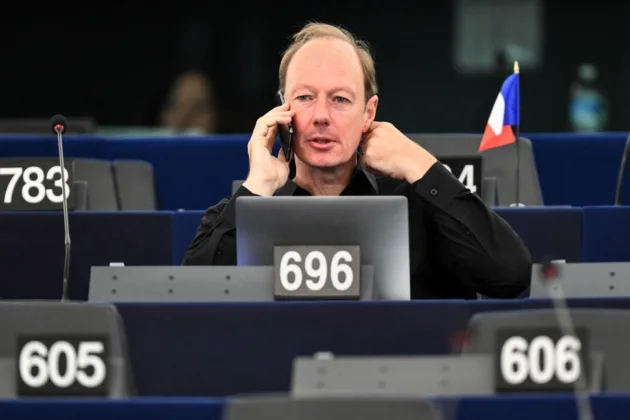
On July 7, two days before the vote, the centre-right European People’s Party (EPP) had pushed the law into an urgent procedure by 331 votes to 304, fast-tracking it into the last sitting week before the holidays. The chamber that voted was a thin one, with more than a hundred members already gone.
Rejection required an absolute majority of every member, present or absent, 361 of 720, so each empty seat worked as a vote in favour. The 314 fell 47 short.
Members could have returned. The timetable was built so that most would not have to. In a recess-week chamber, absence becomes assent.
No rule was broken. The absolute-majority requirement applies to every measure alike, and that is the scandal. A regulation on bottle caps decided in a half-empty chamber would be an embarrassment.
A law reaching into every private conversation on the continent was decided by a default that runs backwards, where blocking the intrusion took a supermajority and waving it through took nothing at all.
European Commission President Ursula von der Leyen appears on no ballot. National leaders nominate her and Parliament confirms, and no voter is ever asked.
From that office her Commission has spent four years insisting this law is good for us. The same Commission lectures governments around the world on their democratic standards. At home, it has just shown what happens to an answer it does not like.
The method is older than this vote. On July 5, 2015, Greek voters were asked whether to accept the terms their creditors were offering. Some 61 per cent said No.
Within two weeks their government agreed to a package harsher than the one the voters had just rejected. The euro, and the rescue that came with it, had been settled long before the question reached a ballot, and the only thing still open was how to arrive there.
Ireland rejected the Nice Treaty in 2001 and voted again in 2002. France and the Netherlands rejected the European Constitution in 2005, whose content returned two years later as the Lisbon Treaty, ratified through parliaments wherever a referendum could be avoided.
The Irish turned down Lisbon in 2008 and approved it in 2009. Each rerun arrived with fresh guarantees attached. None of the rejections survived.
Supporters say the law protects children. That is a serious purpose, and the law’s own record shows how seriously its sponsors treat it. They renewed the powers although the European Commission’s own implementation report of November 19, 2025 found the available data insufficient to judge whether the scanning is proportionate, an admission the European Data Protection Supervisor recorded with serious concern.
Former Pirate Party MEP Patrick Breyer, who has tracked the file for years, called the result “a farce” and said children were the real losers of an undemocratic process. The encryption safeguard passed alongside it exempts nothing, since encrypted chats were never scanned on servers in the first place.
Even taking the Commission at its word, the July vote would look no better. Powers handed over for a good reason do not shrink when the reason fades.
Britain introduced income tax in 1799 to pay for a war with France and called it temporary, and two centuries later it is the largest source of government revenue. France declared a state of emergency after the 2015 attacks in Paris and wrote its powers into ordinary law two years afterwards, because once something has been justified, the main hurdle is behind it.
Nobody is the villain of their own story. A politician who knows he is taking something can be exposed and voted out. One who believes he is protecting your children will not stop, because in his eyes the people standing in his way are the ones causing harm.
The fifth round of talks on the permanent version collapsed on June 29. Negotiations resume in September under the Irish presidency of the Council of the European Union. Left alone, the autumn would run like the summer did, with a thin chamber and a fast-tracked timetable.
MEPs should turn up in full strength and vote it down. Then they should close the door behind them, so that no law touching fundamental rights can be fast-tracked into a week when half the chamber has gone home. Until then, a No in Brussels means only that the question has not yet been asked often enough.