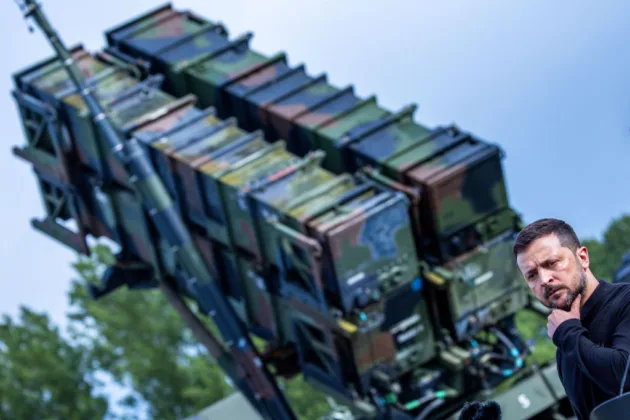



The European Commission has approved €6.1 billion or Ukraine to buy air and missile defence systems, missiles, ammunition and radars.
The money is the next tranche of defence spending under the European Union’s €90 billion Ukraine Support Loan, the EU executive said on August 24.
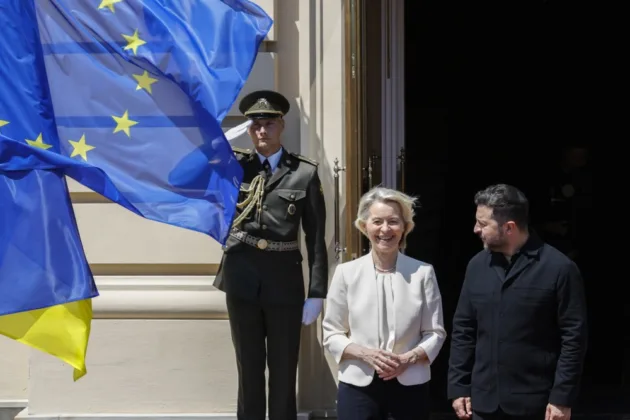
It came as the Coalition of the Willing met in Kyiv to press for air defence supplies, on the 35th anniversary of the country’s declaration of independence.
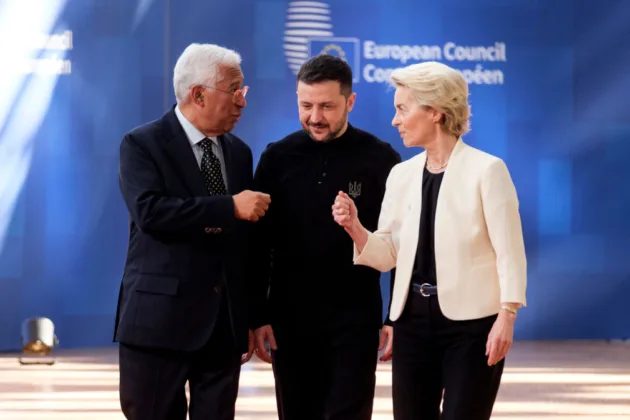
European Commission President Ursula von der Leyen said Europe was “stepping up to help Ukraine protect its people and defend its skies”.
The approval adds to €16 billion of procurement plans already signed off, of which €8.35 billion has been paid out, according to the Commission.
Ukraine will have to submit contracts signed with defence companies before it can request payment. The Commission said it would check those contracts before releasing any money.
Most of the equipment would be sourced from EU defence companies, it added.
The Commission said deliveries would have to rise significantly through destocking, reprioritised orders and increased production, citing Russia’s growing use of ballistic missiles and jet-engined drones. It put the number of Russian missile strikes in July at 376.
The loan is split between €60 billion for defence and €30 billion for budget support over 2026 and 2027. Of that, €28.3 billion is earmarked this year for Ukraine’s defence industrial capacity.
The instrument is run under enhanced cooperation by 24 member states. Czechia, Hungary and Slovakia stayed out when EU leaders agreed the loan in December 2025 and carry no financial liability for it.
The borrowing is raised on capital markets and backed by headroom in the EU budget, with the interest bill falling on the participating governments. Officials have estimated that cost at about €3 billion a year.
Since 2022 the EU and its member states have provided €220.2 billion in overall support to Ukraine, the Commission said, including €3.8 billion from the proceeds of immobilised Russian assets.
Kyiv is due to repay the €90 billion only once Russia compensates it for war damage. Moscow has ruled that out, leaving the guarantee resting on the EU budget for as long as the assets stay frozen.