











Eurozone inflation has climbed to 3.8 per cent in September, its highest reading in three years, according to a flash estimate published by Eurostat on October 2. The rate was up from 3.2 per cent in August, almost double the European Central Bank’s 2 per cent target.
Prices rose 0.6 per cent over the month alone. The last time annual inflation ran higher was September 2023, at 4.3 per cent.
Energy was again the main driver, with costs 18.8 per cent higher than a year earlier after 14.3 per cent in August. The war between the United States and Iran has kept oil and gas prices high.
Fresh food prices rose 4 per cent, against 2.7 per cent a month earlier, while services inflation reached 3.2 per cent. Non-energy industrial goods eased to 1.1 per cent.
Core inflation, which strips out energy, fresh food, alcohol and tobacco, rose to 2.5 per cent from 2.4 per cent.
The burden fell unevenly across the 21 member states of the euro area. Lithuania recorded the steepest increase at 6.1 per cent, followed by Bulgaria on 5.6 per cent and Cyprus and Luxembourg on 5.2 per cent each.
Malta had the mildest rate at 2.4 per cent, ahead of Finland on 2.6 per cent and Latvia on 2.9 per cent, the only member state where annual inflation slowed.
Spain, at 5 per cent, posted the highest figure among the bloc’s large economies, against 4.1 per cent in Italy, 3.4 per cent in France and 3.3 per cent in Germany. Its gap with the eurozone average narrowed to 1.2 percentage points from 1.4 in August.
The data landed three weeks after the ECB lifted its three key rates by 25 basis points on September 10, taking the deposit facility rate to 2.5 per cent, its second increase of the year.
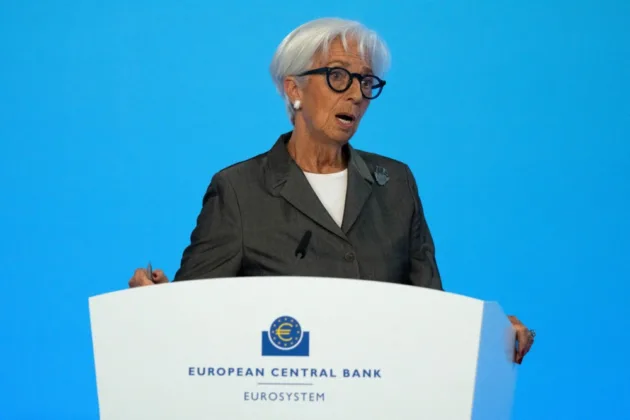
ECB President Christine Lagarde told the European Parliament’s Committee on Economic and Monetary Affairs on September 28 that rates would not track energy prices step for step. The shock was too large to look through, she said, though the bank viewed “a measured response as appropriate to keep inflation in check”.
Lagarde also warned that government subsidies designed to shield households from energy bills were proving less temporary and less targeted than hoped. Such measures hold prices down briefly before prolonging inflation and swelling public spending, she said.
Isabel Schnabel, a member of the ECB executive board, argued in August that inflation would not return to target without further tightening, and investors are now pricing in as many as four more rises over the coming year. That would add to credit costs for households and businesses already paying for the bloc’s dependence on imported fuel.