







Construction has begun on a business park covering part of a former Nazi women’s concentration camp in Lower Austria, drawing protests from survivor groups and historians.
The nine-hectare plot at Leobersdorf, about 40 kilometres south of Vienna, once formed part of the Weinberglager complex, which held thousands of prisoners of war and forced labourers after Nazi Germany annexed Austria in 1938.
It later housed the Hirtenberg subcamp of Mauthausen, the second-largest women’s camp on Austrian soil. Around 400 women, most of them Soviet citizens along with Italians and Poles, were held there from September 1944 until April 1945, making infantry ammunition at a nearby cartridge factory.
Plans for the park, including a cold storage warehouse and a branch of the discount chain Lidl, first emerged in 2024. Grey columns now rise from ground where archaeologists mapped traces of the camp.
Austria’s Federal Monuments Office found those remains were not extensive enough to qualify under the monument protection law, and said it had no influence over municipal zoning.
“A former concentration camp must not be built over with new structures,” the International Mauthausen Committee said.
Josef Pumberger, a board member of Mauthausen Committee Austria, told AFP he felt “grief, anger, rage, that something like this can happen in Austria”.
The project has also drawn scrutiny because a property firm part-owned by Leobersdorf mayor Andreas Ramharter sold the land in 2022 and 2023 for €15.25 million, according to the Wiener Zeitung.
Contract clauses secured the firm a further €1.34 million once the council, controlled by the mayor’s list, rezoned two smaller plots as commercial land. Ramharter has rejected any suggestion of a conflict of interest and said no cellars would be dug so that the foundations survive.
TRA LEO GmbH & Co KG, which bought the plot, said it had offered to support a memorial. Lidl confirmed it planned a store in the park but said the outlet would stand “not directly on the site of the former concentration camp”.
Erich Strobl, who heads a local campaign to preserve part of the grounds, said “a place burdened by history is being built over, sacrificed to the economy”.
Bertrand Perz, a historian of the Mauthausen camp system, said the Hirtenberg site remained “historically important” because women prisoners had been marginalised in Austrian remembrance.
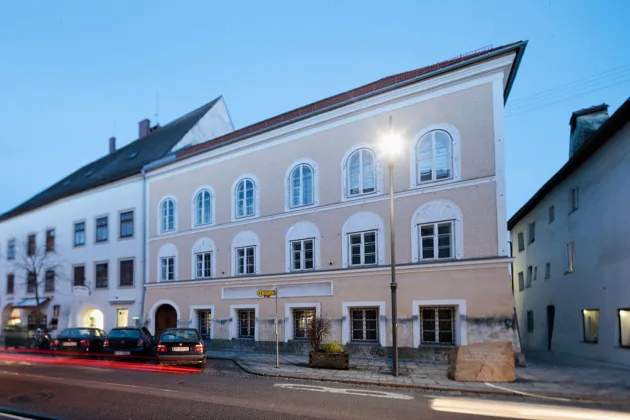
Austria presented itself for decades as Hitler’s first victim and began examining its own role in the Holocaust only from the late 1980s. The row follows other disputes over sites tied to the Nazi era, including the conversion of Hitler’s birthplace in Braunau am Inn into a police station in July.
A memorial stele was unveiled at Hirtenberg in April 2024. Campaigners say a marker cannot replace the physical evidence now being cleared.