






The United Kingdom has agreed to let up to 100,000 young Europeans a year live, study and work on its soil under a youth mobility deal with the European Union, while Brussels keeps pressing London to cut the university fees charged to EU students.
The scheme was among three agreements closed shortly before the second EU-UK summit, held in Brussels today, EU sources told Spanish news agency Europa Press. The same number of young Britons would be admitted to EU member states each year.
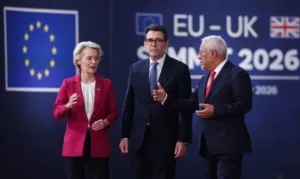
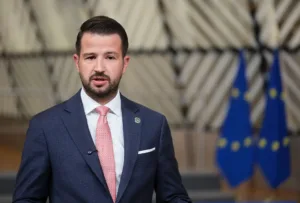
Prime Minister Andy Burnham travelled to Brussels to meet European Council President António Costa and European Commission President Ursula von der Leyen. The meeting had first been scheduled for July 22 and was postponed after Keir Starmer resigned as prime minister.
The other two agreements were a sanitary and phytosanitary (SPS) deal to ease trade in food and farm products and a link between the two sides’ emissions trading systems (ETS). Announcements on energy and on migration and security cooperation were also expected.
Von der Leyen said before the talks that she wanted “a summit of ambition and concrete results”. Costa wrote on social media that the two sides were strengthening their partnership to deliver for citizens and reinforce the continent’s security.
University fees remained unresolved. EU students have paid international rates at British universities since Brexit, well above what British students are charged, and the EU has demanded equal treatment.
London has resisted and offered reductions short of parity, according to the EU sources. Negotiators gave themselves six more months to settle the matter.
An EU official told the Associated Press that the package was contingent on a fees agreement within that period. The sources cited by Europa Press said the EU had stopped short of setting an explicit condition, though the 27 member states intended to sign all the agreements in parallel.
The EU side argued that student mobility had fallen sharply since Brexit, above all from the continent to Britain, and that this had impoverished the relationship.
The cap marks a shift for Labour. The EC proposed a youth mobility scheme for 18 to 30-year-olds in April 2024 and the party, then in opposition, rejected it as a return to free movement.
London had first proposed a ceiling of 50,000, half the figure settled on, according to British media reports.
Conservative leader Kemi Badenoch said the deal would bring 100,000 more young people into the UK “to compete” for jobs, the BBC reported. Reform UK leader Nigel Farage dismissed the talks as a distraction from domestic problems.
The summit was the second since the two sides agreed a reset of relations in London on May 19, 2025.