

The European Commission has urged EU member states to weigh measures to cut gas and electricity consumption over the coming months, after storage sites filled unusually slowly over the summer and prices settled well above the levels seen at the start of 2026.
Energy and Housing Commissioner Dan Jørgensen set out the request in a letter to national energy ministers, sent shortly before they met at Dublin Castle for an informal Energy Council on September 28-29 under the Irish presidency of the Council of the European Union.
The Commissioner stopped short of proposing binding targets. There are “currently no immediate risks to security of supply”, he wrote, while describing storage as exceptionally low and the wider picture as difficult.
EU storage stood at about 70 per cent of capacity in the final days of September, roughly 12 percentage points below the level recorded at the same point in 2025, according to Gas Infrastructure Europe data cited by Euronews. The Dutch TTF benchmark has been trading at around €72 per MWh, some €40 higher than before the US-Israeli strikes on Iran on February 28.
The measures floated in the letter are the familiar toolkit of 2022, and all of them are voluntary. Jørgensen pointed to cutting electricity use at peak hours, on the grounds that gas plants tend to be the marginal source of generation at those moments, so trimming the evening peak feeds directly through to gas demand.
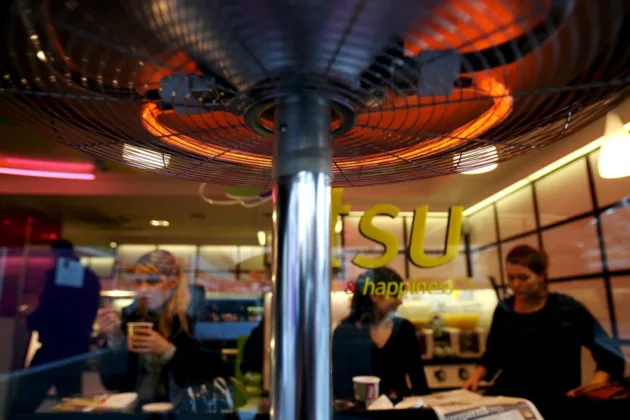
He also suggested making fuller use of smart meters, encouraging demand flexibility through retail markets, capping temperatures in public buildings, ending outdoor heating and switching off unnecessary street lighting overnight. Voluntary and well-planned demand reduction, he argued, had proved useful during the 2022 energy crisis and the lessons of that winter should be applied now.
Energy efficiency is cheap for Brussels to recommend and awkward for capitals to deliver, and the letter asks rather than instructs.
The most consequential passage concerns storage law rather than thermostats. Jørgensen invited ministers to use the flexibility built into the amended gas storage regulation and bring the filling objective down to 80 per cent, which he said could ease the immediate pressure on prices and on the cost of replenishing reserves.
The headline figure in that regulation is still 90 per cent, though the text agreed in 2025 allows member states to fall up to 10 percentage points short in difficult market conditions, with scope for the Commission to widen the gap by a further five points through a delegated act. The objective may now be met at any point between October 1 and December 1 rather than on a single date, and the regime runs to the end of 2027.
The reasoning is straightforward: a legal duty to buy gas into a tight market is itself a price signal, and traders read it. Lowering the bar reduces the premium Europe pays to fill tanks it may not need to fill.
The physics is less forgiving. A lower starting point in November means a larger share of winter demand has to be met by imports arriving in real time, in the months when Asian buyers are competing for the same cargoes.
The crisis of 2022 was a Russian problem. This one is largely a Gulf problem. QatarEnergy declared force majeure on March 3 after tankers were unable to leave the Persian Gulf, and an Iranian strike on the Ras Laffan complex on March 18 damaged facilities that analysts expect to take between three and five years to restore.
Europe has been absorbing the consequences through the liquefied natural gas market ever since, in the same year it began closing the door on Russian supply. New contracts for Russian pipeline gas and LNG were banned under the phase-out regulation given final approval by the Council on January 26, with a complete ban on Russian LNG from the beginning of 2027 and on pipeline imports from the autumn of that year.
The regulation lets the Commission suspend the ban for up to four weeks where a member state declares a supply emergency, a safety valve that has not yet been tested.
On national schemes to hold down bills, Jørgensen was more guarded. Any intervention in prices should be carefully designed, well targeted and limited in time, he wrote, warning that a badly framed measure risks sustaining or even increasing gas consumption, pushing costs onto neighbouring countries and distorting the internal market.
That caution lands in a capital where the presidency has organised two days of talks around energy affordability, innovation and market disruption, and European energy security and cooperation. Irish Climate, Energy and Environment Minister Darragh O’Brien chairs the meeting.
Jørgensen’s case is that the Union stands in a very different place from the winter of 2021, with new capacity to import LNG, sustained growth in wind and solar generation and lower gas demand leaving it collectively better prepared. Ministers in Dublin must now judge how far they share that confidence, and how much they are willing to ask of consumers before the cold sets in.