



Germany’s political firewall against Alternative for Germany (AfD) has been put to a major new test after the left-wing Sahra Wagenknecht Alliance (BSW) signalled that it is prepared to support an AfD candidate for president of the Saxony-Anhalt state parliament.
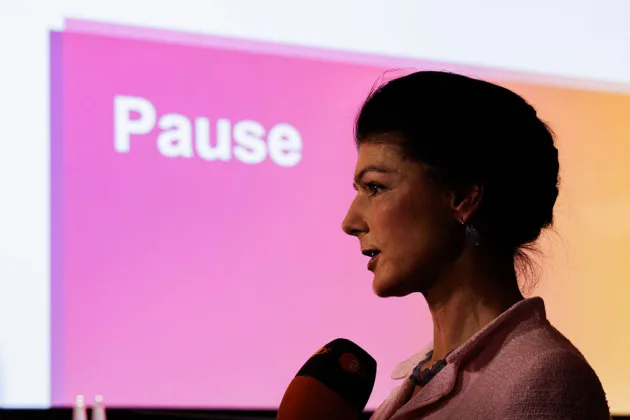
The announcement came on September 8, when BSW founder Sahra Wagenknecht told German magazine Stern that her party regarded the AfD, as the strongest parliamentary group, as entitled to the presidency of the state parliament. “Whether we vote for someone naturally depends on the specific candidacy,” Wagenknecht said. But, she added, “it is undisputed for us that the AfD, as by far the strongest faction, is entitled to the office of parliamentary president.”
Speaking in Magdeburg after Wagenknecht’s comments, the BSW state parliamentary group’s newly elected parliamentary manager John Lucas Dittrich made the party’s position explicit: “The AfD will receive our votes for the parliamentary president.” The statement was reported by Die Zeit and the German Press Agency (dpa) and was also carried by ARD’s news programme Tagesschau.
The move could give the AfD the votes needed to secure one of the most senior parliamentary offices in the eastern German state, following the party’s decisive victory in the September 6 regional election.
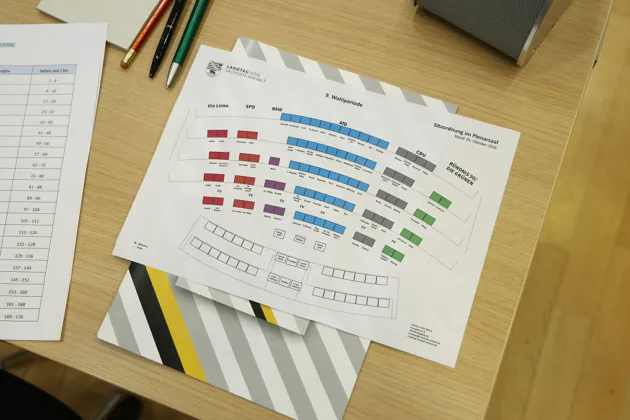
The parliamentary arithmetic makes the BSW potentially decisive. The AfD won 43.8 per cent of the vote, securing 39 of the 83 seats in the state parliament, while the BSW won 5.3 per cent, enough to enter the parliament with five seats for the first time.
The Christian Democratic Union (CDU) of caretaker Minister-President Sven Schulze fell to 17.2 per cent and 15 seats, down from 37.1 per cent in 2021. The Social Democratic Party (SPD), the Greens and the Left Party won eight seats each.
Together, the AfD and the BSW hold 44 seats, two more than the 42 required for an absolute majority. Without the BSW, the other four parties hold 39 seats between them. If the arrangement goes ahead, it would mark the first time the AfD has secured the presidency of a German state parliament.
The result has intensified the debate over Germany’s Brandmauer, the informal political firewall that has long kept the AfD isolated from cooperation with established parties. The BSW, the left-wing populist party founded in January 2024 by former Left Party parliamentary leader Wagenknecht, has explicitly rejected this approach.
In neighbouring Thuringia in 2024, the BSW joined the CDU, the Left Party and the SPD in refusing to elect an AfD candidate as parliamentary president, even though the AfD was the largest group there.
The party combines left-wing economic positions with tougher views on migration and strong opposition to Germany’s military support for Ukraine and sanctions against Russia.
Yet Wagenknecht has stressed that openness to political cooperation does not amount to endorsing the AfD’s programme as a whole. In a September 7 interview with ZDF’s heute journal, she said: “Of course, there are a number of positions in the AfD programme that we do not share. And there will be no support for them, but clear opposition.”
Wagenknecht has proposed an independent, non-partisan minister-president who could govern with changing parliamentary majorities, rather than backing AfD lead candidate Ulrich Siegmund for the top government post. The AfD has rejected that proposal though, with co-leader Tino Chrupalla saying on ZDF talk show Markus Lanz there could be “only one Minister-President” for his party: Siegmund.
For Germany’s established parties though, even limited cooperation represents a significant challenge to the political consensus that has kept the AfD isolated from institutional power. The party’s victory in Saxony-Anhalt has demonstrated how Germany’s political landscape has shifted, particularly in the former East Germany.
German Chancellor Friedrich Merz, who leads the CDU, said on September 7 he was “deeply shocked” by the result.
With five seats, the BSW is a small parliamentary force. But those five lawmakers could prove decisive. Together with the AfD’s 39 deputies, they have enough votes to give the right-wing party control of the presidency of the state parliament.
The new Saxony-Anhalt parliament must convene by October 6 and elect its president. As the largest group, the AfD has the sole right to nominate a candidate in the first round of voting.
If the BSW follows through on its pledge, the vote could mark a historic moment: The first time the AfD secures the presidency of a German state parliament, and another sign that Germany’s political firewall is under growing pressure.