

Warnings of potential Russian military aggression appear almost daily in Europe. The Danish Defence Intelligence Service concluded in a threat assessment published on September 24 that Russia is likely to escalate its “hybrid war against NATO and the West” and noted a “low, but increasing risk” of limited military attacks against a NATO country. NATO deputy supreme allied commander Air Chief Marshal Sir John Stringer said Putin is becoming “increasingly cavalier, dangerous and risk accepting”. Polish foreign minister Radosław Sikorski declares his readiness for an attack by stocking up on rice and jam at home, he told the daily Fakt.
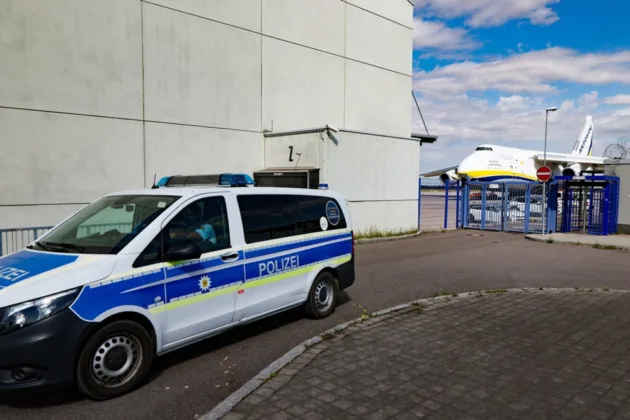
Russia has certainly increased the tempo of its hybrid attacks on European targets. European intelligence officials count over 200 such attacks in 2026 so far, ranging from explosive-laden drones targeted at the Leipzig/Halle airport, attacks on underwater communications infrastructure and cyberattacks. Incursions into Western airspace have become nearly routine, and a drone strike on the Ukraine-Poland border on September 13, minutes after a diplomatic train carrying European dignitaries had left the station, was seen as a warning to Ukraine’s supporters. Ethnic Russians in Ukraine, the Baltics, Georgia and Kazakhstan have been recruited as loyal servants of the Kremlin in campaigns of subversion and covert operations. The build-up of Russian military infrastructure along the Finnish border and in Belarus prompts fears of military moves designed to test NATO solidarity or even seize the vulnerable Suwałki corridor linking the Baltic states with their allies.
Yet these provocations may not signal an impending Russian attack, but rather something more cunning. A direct assault on NATO territory makes little sense, given the immense losses already suffered by Russian forces in their attempt to complete the conquest of Donetsk. Despite years of underinvestment, NATO remains a formidable adversary for Russia’s poorly trained and ineptly led troops. Ukraine has taught the West how to defeat the brittle Russian command structure on the battlefield with unorthodox tactics and equipment. Ordinary Russians are finally feeling the effects of the war with fuel shortages, business bankruptcies, and a stupendous toll of casualties. Mass mobilisation in the service of another invasion will only diminish Putin’s popularity with urban elites thus far spared the consequences of the “special military operation”. Feeding the children of the elite into a new military adventure will threaten Putin’s continued rule.
What then is the utility of these hybrid operations to Putin, without whose explicit approval none of the attacks could happen? Perhaps not to prepare for a war of aggression, but to justify the defence of Russia from her Western enemies. Since well before the initial attacks on Ukraine in 2014, Putin embedded his rule within a historic mission to revive and defend the Russian nation and her people, including those left “stranded” outside the state’s formal borders after the dissolution of the Soviet Union. The fusion of the Orthodox faith, authoritarianism, and a hostility to the decadent West rivalling that of Dostoevsky’s Father Zosima entrenched Putin’s rule with a people eager to leave the corrupt, violent anarchy of the Yeltsin years behind. Keeping his mantle as Russia’s great protector requires the reification of the West and NATO as a direct military threat. Nothing would serve this aim better than a Western attack.
Putin needs a foreign menace to justify his continued rule. And like a good Chekist, he is trained in the art of inciting adversaries into a useful overreaction. Seen in this light, these hybrid attacks are designed to provoke a military response. A Polish or Estonian retaliation against Russian forces or territory would serve as a welcome justification for Putin’s foremost claim to legitimacy. A new war in defence of Mother Russia would instantly restore Putin’s popularity, and permit the imposition of any level of hardship on the Russian people. Putin has no fear of a long, grinding war of attrition provided it entrenches his personal power and serves his vision of great Russia locked in inexorable conflict with the West. A nasty little conflict slugged out in eastern Europe would be an unequal contest between European powers horrified by war and a Russian leader willing to use it as a salutary political tool. Putin is no doubt confident that Western capitals will launch peace entreaties well before any battle approaches a nuclear threshold or even a high number of Western casualties.
The increased tempo and boldness of Russian hybrid attacks serve to increase tensions and raise the chances of a precipitate reaction from NATO allies now primed to fear them as a prelude to a Russian invasion. NATO strategists will cite “managed escalation” or “credible deterrence” to justify a response to a Russian assault, but will give Putin exactly what he wants: domestic unity and a welcome enemy. War, real and foreseen, justified the complete Soviet control of Russian resources, as well as the elevation of the apparat that included Vladimir Putin. Restoration of war as the predicate of absolute rule returns Russia to his preferred state, and likely accords with a nostalgic memory of his life as a young KGB agent dedicated to the battle against Russia’s adversaries. Putin reportedly fears being hanged by his people if he loses in Ukraine. Expanding hostilities by inciting a direct conflict with NATO serves as political life insurance.
Europe is doomed to share a continent with an aggressive state determined to see NATO and the liberal democracies as its foremost adversary. The Yeltsin years infused the military and security services with a toxic victim mentality that cast the West as the agent of Russia’s humiliation. These men now run the country, and are fully prepared to contrive a war by provoking the West into an impulsive response. NATO and the West will face a choice between escalation and appeasement, and an argument that could tear the alliance apart. The only real middle path is one offered by the dreaded occupant of the White House: compel Ukraine to give Russia enough territory and political concessions to forge a durable deal. Faced with the prospect of its soldiers dying in legions like poor Ukrainians, Europe may be prepared to accept this, and choke down the most humiliating aspect of any deal: the inevitable Kremlin crowing after its grand victory over the West. Complete with a parade in Red Square.