

Italian Prime Minister Giorgia Meloni has said the Schengen area of free movement can be preserved only if the European Union’s external borders are defended and every member state does its part against traffickers and mass illegal immigration.
She was speaking at Palazzo Chigi, seat of the Italian Government, on September 7, after receiving Belgian Prime Minister Bart De Wever. Europe had had a turbulent summer that called into question its capacity to respond to such crises, she said.
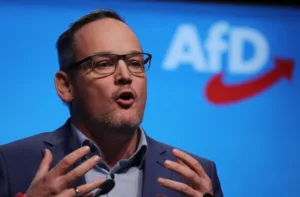
The meeting was Meloni’s first international engagement since the summer break. It came a day after the Alternative for Germany (AfD) won the regional election in Saxony-Anhalt, eastern Germany, three seats short of a majority.
De Wever said only a credible returns policy could turn European migration policy into a success and pressed for the EU Migration and Asylum Pact to be applied in full. Much attention went to the eastern frontier, he said, though Europe also had a Mediterranean border it was responsible for closing.
Meloni pointed to work within the Council of Europe, the 46-member human rights body outside the EU institutions, on applying international conventions, starting with the European Convention on Human Rights, more effectively.
She recalled the Chișinău Declaration, adopted by the organisation’s Committee of Ministers on May 15, which states that governments have the sovereign right to control the entry and residence of foreign nationals. Rome has presented it as recognition of return hubs in third countries, of the kind Italy has opened in Albania.
Italy suspended free movement with Spain on August 1, ordering checks on non-EU nationals arriving by air and sea, after tens of thousands of people crossed from Morocco into Ceuta, the Spanish city on the north African coast, on July 30. Madrid answered with its own controls on travellers from Italy from August 8.
Both sets of checks have since been extended twice. An order signed by Spanish interior minister Fernando Grande-Marlaska on September 4 keeps the Spanish measure in place until September 22 under the Schengen Borders Code, which allows internal controls against a serious threat to public policy.
Migration was one item on a longer agenda. Meloni said trade between the two countries had exceeded €45.6 billion in 2025 and asked the next European Council, due in Brussels on October 15-16, to return to energy costs with more courage, linking the rise to the situation at the Strait of Hormuz.
She also said cohesion policy and the Common Agricultural Policy had to be preserved in the budget talks.
Neither leader raised in public the Russian sovereign assets frozen in Europe, more than €200 billion of which sit at Euroclear in Brussels. Belgium has resisted their use to support Ukraine.