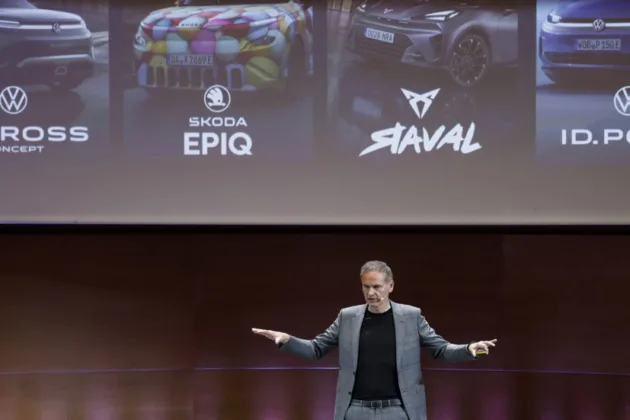
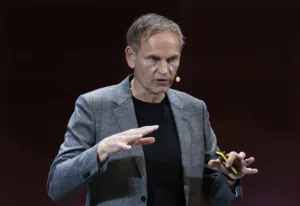




Europe’s mass-market carmakers are under “enormous pressure” from Chinese competition and a shifting market, Volkswagen chief executive Oliver Blume has said, renewing calls for more flexible regulation and incentives to support local manufacturing.
Speaking on October 13 at an industry event alongside the Paris motor show, Blume noted that Volkswagen, Stellantis and Renault together account for more than 60 per cent of European car production.
These companies, he said, face growing pressure to build affordable electric vehicles while keeping costs under control.
“We cannot build our future on export profits alone. Our European businesses must be profitable, resilient and competitive,” Blume said, adding that Europe “must secure” its industrial base.
He described the traditional mass-market model with high volumes and thin margins as under particular strain in Europe and repeated Volkswagen’s call for policymakers to provide more flexible rules and support for domestic production.
Chinese brands are present at the Paris show in record numbers, seeking growth in Europe as demand softens in their home market. European manufacturers have expressed concern about the impact of lower-cost imports.
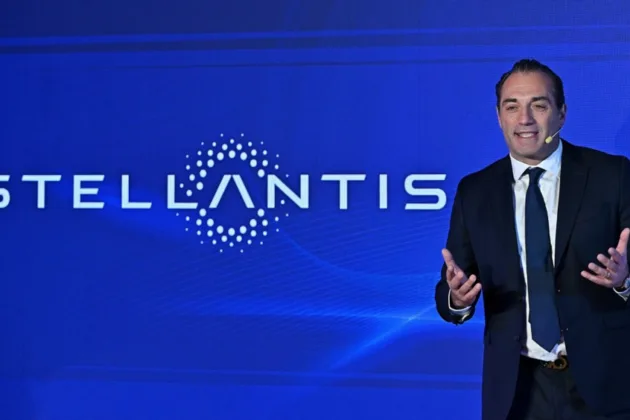
The remarks came as other European groups also urged stronger policy support: Stellantis chief executive Antonio Filosa said Europe needed more battery factories of its own.
Volkswagen, alongside Renault and Stellantis, has proposed a “fleet booster” under the European Union’s planned Made in Europe rules, in a joint paper sent to the European Commission on June 12.
If 70 per cent of a manufacturer’s vehicles sold in the EU meet the criteria, the entire fleet would automatically qualify for associated benefits and subsidies. The Commission’s own draft, dated March 4, sets that threshold at 85 per cent.
The criteria are not limited to the origin of individual components; research and development, engineering, investment and production in the EU would all count toward the threshold.
The manufacturers argue this would strengthen European industrial value creation while still allowing established international supply relationships for part of the range.
Proposed benefits include preferential access to national purchase incentives, public procurement, certain company-car tax advantages and CO2 supercredits for qualifying electric vehicles. The measures form part of ongoing negotiations on the Industrial Accelerator Act and have not yet been adopted.
Renault chief executive François Provost warned that the company might have to cut European output by around 300,000 vehicles if policymakers do not show flexibility on 2030 carbon-emission targets.
Those targets are already in play. The Commission’s auto package would let manufacturers average their performance over 2030-2032 rather than meet a fixed annual target, and would soften the 2035 goal to a 90 per cent cut on 2021 levels instead of zero. The European Parliament’s transport committee has postponed its vote, with a plenary vote expected in November.
Recent delivery figures underscored the broader pressures: BMW reported a 6.4 per cent drop in global third-quarter deliveries, with Chinese sales down by a quarter, while Stellantis said third-quarter shipments fell 1 per cent, though its European shipments rose 10 per cent.
The Volkswagen Group as a whole reported a 14.3 per cent drop in global deliveries to 1.89 million vehicles, with China accounting for about four fifths of the shortfall. Its battery-electric deliveries in Europe rose 19.6 per cent.
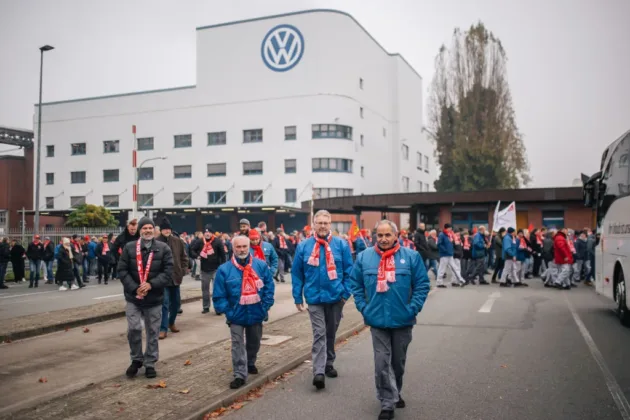
Blume is simultaneously pursuing the largest restructuring in Volkswagen’s history, including tens of thousands of job cuts and the possible closure of factories, amid opposition from unions.
At the Paris show, manufacturers highlighted more affordable electric models, including an electric version of Citroën’s classic 2CV from Stellantis and Volkswagen’s electric Polo. Many of them rely heavily on Chinese technology, components or partners, though.
Stellantis is developing the 2CV on a city-car platform designed with its Chinese partner Leapmotor and due to be built at Pomigliano, near Naples, from 2028. Leapmotor is expected to supply most of the battery packs, electric-motor components, electronics and software architecture.
A similar story holds with Volkswagen, which is deepening its partnership with the Chinese battery maker Gotion. Current lithium iron phosphate (LFP) cells for these models have come from Gotion in China, while new joint ventures agreed on September 28, among them a plant in Valencia, eastern Spain, where Gotion is investing about €1.1 billion, are intended to shift some production to Europe.
The MEB+ platform and cell-to-pack approach also draw on technologies that Chinese firms, notably CATL, scaled first. Assembly of the cars themselves is planned in Spain, but the cost advantage rests on Chinese-origin battery chemistry and partnerships.
European legacy automakers remain dependent on Chinese battery power because China dominates the global supply chain for LFP chemistry, the low-cost technology required to build sub-€25,000 electric vehicles profitably.
European manufacturers are also trying to adopt Chinese-style development speeds. They take 40 to 50 months to bring a vehicle from concept to market, whereas Chinese rivals do it in 24 to 30 months.
The European Union agreed an understanding with China on October 9 that could reduce Chinese exports of hybrid vehicles to the bloc by more than half, a measure welcomed by European producers concerned about increased competition. Hybrids were excluded from the EU’s duties on Chinese battery-electric cars, and imports climbed from 3,800 in October 2024 to about 50,000 in July.