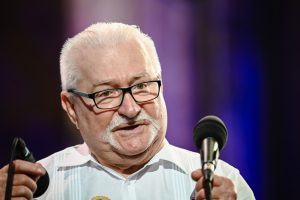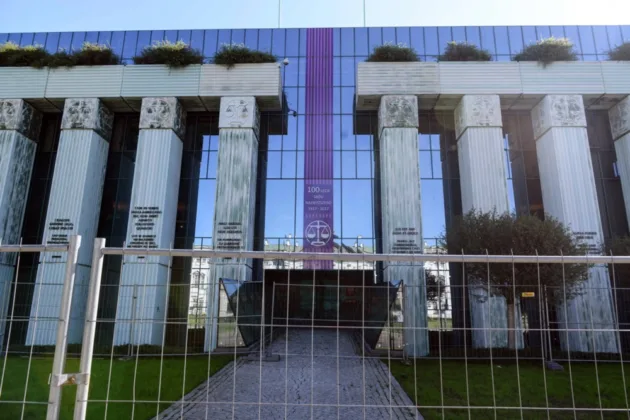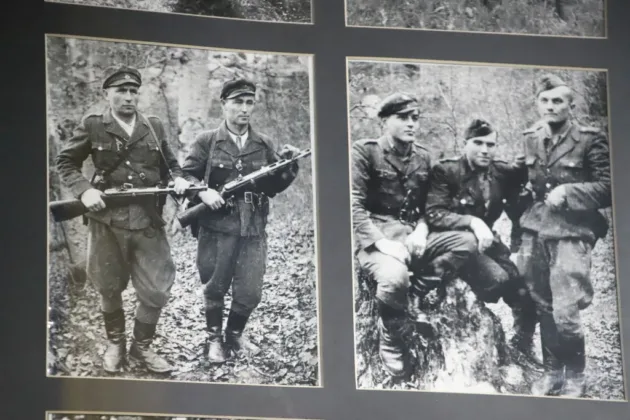



Prosecutors working under the control of the centre-left government led by Prime Minister Donald Tusk have dropped a case in which former president and Solidarity leader Lech Wałęsa was accused of making false claims of denying having signed documents related to his alleged cooperation with the security services of the then communist authorities in the 1970s.
Prosecutors now maintain that Wałęsa was not sufficiently literate to have been able to compose documents which he had allegedly written and signed.
Wałęsa, who was awarded the Nobel Peace Prize in 1983 for his leadership of Solidarity, the first independent trade union in the then communist bloc that became a mass social movement which contributed to the removal of communist rule in Poland, has maintained that he did not consciously cooperate with the country’s communist authorities.
In media interviews he has said that he never signed anything but at the same time has claimed that he engaged in a game with the communist authorities in which he was given money and even allocated an apartment for him and his family but did not betray his colleagues or the cause.
The former president, who turns 83 on September 29, enjoys good relations with the current ruling coalition led by Tusk and very bad relations with the Law and Justice (PiS) opposition because it was its politicians who have accused him of having been a former informer of the security police.
These accusations emerged in 1992 when the then right-wing government led by prime minister Jan Olszewski carried out a parliamentary resolution and revealed the names of informers of the communist security services and among them was Lech Wałęsa. The list, drawn up by interior minister Antoni Macierewicz and circulated on June 4, 1992, named 64 serving deputies and senators. The Olszewski government was voted out of office in the early hours of the following day.
The former Solidarity leader was at that moment president of Poland having been elected in 1990 on a right-leaning platform which advocated removing former communist officials from positions of influence in public administration, the judiciary, the media, finance and business sectors as well as the military and security services.
Having secured election, Wałęsa in 1991 became conflicted, though, with two of his key aides, twin brothers Jarosław and Lech Kaczyński. Jarosław a few years later founded PiS together with his brother Lech who in 2005 became president and was killed in the Smolensk air disaster of April 10, 2010.
The conflict centred on Wałęsa changing course away from attempting to remove former communists from their influence and posts and drew Wałęsa closer to the liberals and the Left, both of whom opposed any purge as well as the random opening of former communist secret service files.
The Kaczyński brothers left Wałęsa’s chancellery and have become enemies of the Solidarity legend who have campaigned for what they consider to be the truth to be made evident about his past.
Wałęsa has been contesting the findings of Poland’s Institute of National Remembrance (IPN), the body which has prosecutorial powers and is responsible for investigating crimes from the period of the Second World War and communist rule.
In 2016 Wałęsa testified as a witness with regard to documents allegedly carrying his signature which were discovered in February that year in the home archives of former communist interior minister Czesław Kiszczak.
The files included a signed commitment to collaborate with the communist secret service, the Security Service (SB), payslips and reports informing on his colleagues signed by Wałęsa.
The former Solidarity leader testified on April 13, 2016 that the documents were forgeries and denied ever having signed them.
Prosecutors working for the then PiS government claimed, though, that, after comparing the documents from Kiszczak’s file with others they said had been written and signed by Wałęsa, as well as consulting forensic handwriting experts, that Wałęsa’s testimony was false in the case of over 50 of the documents.
As a result of that testimony Wałęsa was in 2021 charged with giving false testimony and in November 2023 indicted in court by the Warsaw regional prosecutor’s office, which had taken the case over from the IPN.
In 2024 though after Tusk’s government replaced the PiS administration prosecutors asked the court to return the documentation to them and to suspend the case.
On September 24 the regional prosecutor’s office in Warsaw announced that it was discontinuing the case in its entirety arguing that there were no grounds for Wałęsa to be prosecuted.
In a statement explaining the decision, prosecutors claimed that there had been significant “methodological errors” made previously in attributing handwritten texts to Wałęsa and in handwriting comparisons between them. They said experts had measured multi-page manuscripts from the 1970s against short signatures and notes drawn mostly from later decades.
They said that there was not sufficient certainty that the documents had been signed by Wałęsa and claimed that they had gathered evidence that the former Solidarity leader “did not write long manuscripts during his life”.
“Some witnesses explicitly stated that, at that time, he was a secondary illiterate,” meaning someone who has lost their ability to read and write, said the prosecutors. “He was not able to write and could barely read.”
This, along with other concerns over how the case was previously conducted, “led to the conclusion that there was no certain basis to assume that Lech Wałęsa was the author of the documents disclosed in the ‘Kiszczak files’, and therefore there was no evidence that he lied during the interrogation”.
Prosecutors also argued that, even if Wałęsa had given false testimony, he was protected by the constitutional right against self-incrimination while being interviewed as a witness.
“The prosecution found that Lech Wałęsa could have feared that if he admitted to having prepared or signed the documents from the ‘Kiszczak files’ all his testimonies in which he denied being a secret collaborator in previous proceedings would be deemed false and would lead to his being held criminally liable.”
In response to the announcement, Wałęsa shared on his Facebook page the post by justice minister Waldemar Żurek praising the prosecutors’ decision.
Żurek welcomed the decision to drop the case against Wałęsa, saying that, under PiS, “a politicised state apparatus hounded the legend of Solidarity, deliberately ignoring facts and basic logic”. Now, “truth has triumphed over an attempt to rewrite history”. He also said the communist security services had forged documents and Wałęsa’s signature on a mass scale in the 1980s to discredit him before the Nobel committee.
Wałęsa then added a comment claiming that Jarosław and Lech Kaczyński, the founders of PiS, had ordered PiS-friendly historian Sławomir Cenckiewicz to fake the files on Wałęsa.
Cenckiewicz has written extensively about Wałęsa, including about his alleged collaboration with the communist security services. He headed the National Security Bureau (BBN) under President Karol Nawrocki from August 2025 until he resigned in April 2026. Nawrocki was elected in June 2025 with PiS support.
The historian took to social media to say that he had “never read a bigger lie” than the prosecutors’ statement justifying dropping the case and ridiculed the idea that Wałęsa could have led the Solidarity movement in the 1980s and served as president in the 1990s if he was a “secondary illiterate”.
“They are attempting to clear Wałęsa’s name by making out he was illiterate. You couldn’t make it up,” wrote Cenckiewicz.
Wałęsa was an electrician by training who had completed his schooling. As a qualified electrician he was obliged to be able to read instructions on handling equipment and carrying out work and act upon them and he had been active in the workers strike committee during the strikes on the Baltic coast which took place in December 1970 and probably led to him becoming an object of interest to the secret police.
The 1970 strikes and demonstrations led to the burning down of the local party HQ in Gdańsk and demonstrators and workers being fired on by the military that had been brought in to quell unrest. At least 41 people were killed. The events of 1970 led to the fall of the then communist party chief Władysław Gomułka and him being replaced by Edward Gierek.
The events of 1970 and the way they were swept under the carpet led some young workers to begin to organise underground unions which later during the 1970s joined forces with oppositionists who came from academia, the professions and the world of arts and culminated in the wave of strikes in August 1980 that rocked large parts of Poland and led to the formation of Solidarity and to the departure of Gierek.
Wałęsa did not seem to struggle in reading documents during the protracted negotiations between the workers of the Gdańsk shipyard and the communist authorities which led to the formation of the Solidarity trade union.
Moreover, in previous interviews Wałęsa has admitted to writing a 30-page analysis about the activities of his colleagues which he claims might have found its way into the hands of the secret police.
On the same day Cenckiewicz received a ruling by the Court of Appeal, dated August 21, which found in his favour in a case brought by Lech Wałęsa concerning the former Polish president’s alleged collaboration with the security services.
The historian published an extensive excerpt from the document, in which the court explained that Wałęsa had never proved that he was not an informer adding that Cenckiewicz had provided ample documentation for his claims of alleged collaboration undertaken by the former president and that this documentation has not been challenged by any other scholar.
YouTube channel Kanał Zero‘s commentator Grzegorz Sroczyński told the channel’s viewers that it was a great shame that Wałęsa was undermining his own legacy.
“He made the mistake of not coming clean. Like many people he had become embroiled in some form of unwanted cooperation with the security services of the time but then more than made up for his errors in his successful time as leader of Solidarity. Becoming embroiled in this conflict has not done him any good.”
Wałęsa is still regarded as a hero abroad for his time at the helm of Solidarity in the 1980s. In May he was named one of the three distinguished members of the European Order of Merit awarded by the European Parliament alongside Ukrainian President Volodymyr Zelensky and former German chancellor Angela Merkel. Distinguished member is the highest of the order’s three tiers, conferred on 23 inaugural laureates in all.
But at home the controversy around his past has divided public opinion. Wałęsa was a unifying and heroic figure as Solidarity leader in the 1980s who refused to bow to the communist authorities during martial law introduced in December 1981 and who in 1989 became the focal point for the rebirth of Solidarity as a political movement which routed the communists in the semi-free elections of that year.
He first got into conflict, though, with the coalition government led by Solidarity nominee Tadeusz Mazowiecki in 1990 and clashed with him in the presidential election of 1990 which Wałęsa won.
As president Wałęsa soon became unpopular, frustrated by not having the power over the government which rested with parliament and all too willing to ally himself with the military in attempts to exert pressure.
In 1993 Wałęsa dissolved parliament, days after the government of Hanna Suchocka lost a confidence vote by a single vote, and fielded his own slate of candidates which only managed to poll 5.4 per cent of the vote and win 16 seats in an election which was won by two parties associated with the former communist past, the Democratic Left Alliance (SLD) and the Polish People’s Party (PSL) who went on to govern between 1993 and 1997.
Wałęsa was defeated in both the first and second rounds of the 1995 presidential election by the leader of the SLD Aleksander Kwaśniewski, who took 51.7 per cent in the run-off.
Before leaving office Wałęsa accused the then SLD prime minister Józef Oleksy of having been an agent for Russia. His interior minister Andrzej Milczanowski made the allegation public in parliament on December 21, 1995. The accusation did bring Oleksy down — he resigned on January 24, 1996 — but the SLD-PSL government remained in charge until 1997.
Wałęsa since losing power in 1995 has failed to find a place for himself in Polish politics. He ran for president again in 2000 but polled 1.01 per cent of the vote.
Since then he has concentrated on his numerous trips abroad and media appearances in which he has railed against Jarosław Kaczyński and PiS and has been backing Tusk’s Civic Coalition.