






For years, Poland was among Ukraine’s most loyal supporters in Europe. Successive governments in Warsaw supplied weapons, opened borders, absorbed millions of refugees and framed support for Kiev as both a strategic and moral imperative.
That consensus is beginning to crack.
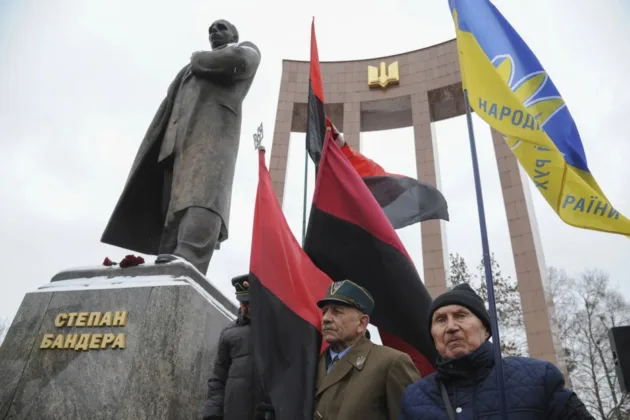
The reason is not a sudden geopolitical realignment, but a growing feeling across parts of the Polish political spectrum that Ukraine’s political elite continues to underestimate — or openly disregard — the historical trauma associated with the Organisation of Ukrainian Nationalists (OUN) and the Ukrainian Insurgent Army (UPA).
The latest controversy may prove to be a turning point.
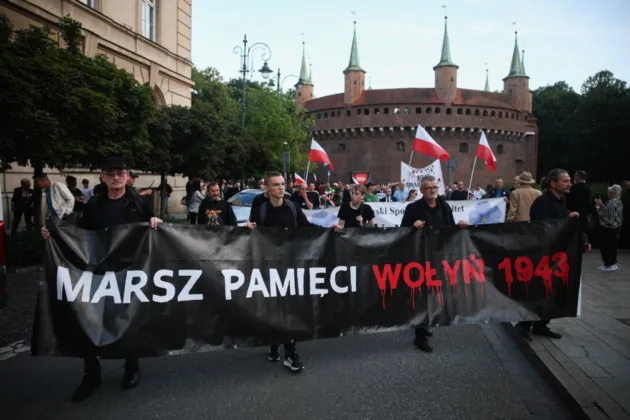
Volodymyr Zelensky signed a decree awarding an elite special operations unit the official title “Heroes of the UPA”. For many Poles, the issue is not abstract history. The UPA was responsible for the Volhynia massacres during World War II, in which tens of thousands of Polish civilians, mostly women and children, were brutally murdered.
What makes the current backlash particularly significant is who is now participating in it.
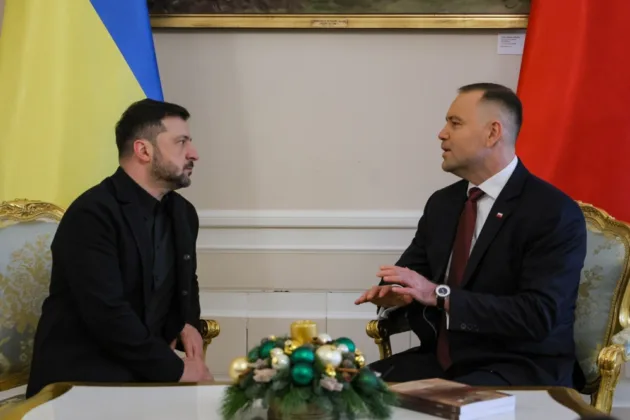
Polish President Karol Nawrocki has announced that he wants to revoke the Order of the White Eagle awarded to Zelensky by former President Andrzej Duda in 2023. This is Poland’s highest state distinction. The move would have been politically unimaginable just two years ago.
Even more symbolically, former Polish president and Solidarity icon Lech Wałęsa publicly declared that he was removing the Ukrainian flag pin he had worn for years in support of Ukraine. In a widely discussed statement, Wałęsa argued that honouring figures associated with the UPA was an insult to Poles murdered during the war.
This matters because Wałęsa is not a nationalist firebrand. He is one of the most recognisable symbols of Poland’s pro-European and anti-communist political tradition. If even figures like him begin publicly distancing themselves from Zelensky’s historical policies, then something deeper is shifting inside Polish public opinion.
The problem for Kiev is that these controversies no longer appear accidental or isolated.
For years, Polish officials largely avoided pressing the issue too hard for fear of damaging strategic relations with Ukraine during wartime. But many Poles increasingly feel that this restraint has not been reciprocated. Instead, Ukrainian state institutions and parts of the political class continue promoting historical narratives that remain profoundly inflammatory to Poland.
This creates a serious long-term risk for the Polish-Ukrainian relationship.
Poland can support Ukrainian sovereignty and maintain close strategic cooperation with Kiev while simultaneously rejecting the rehabilitation of movements linked to ethnic massacres and wartime collaborationism. These positions are not contradictory. In fact, insisting otherwise may itself become politically unsustainable.
There are already signs of this tension emerging across the Polish political landscape. Nawrocki had previously supported stronger measures against the public display of OUN-UPA symbolism, though parts of those efforts reportedly softened after concerns about diplomatic retaliation from Kiev. Ironically, that episode only reinforced the perception among many Poles that Ukraine expects unconditional political loyalty while treating historical sensitivities as negotiable.
The broader issue is not simply historical memory. It is political asymmetry.
For years, Poland acted as one of Ukraine’s closest advocates inside NATO and the European Union. Yet many Poles increasingly feel that Kiev interprets this support less as a partnership and more as something automatically owed regardless of its own actions.
That perception is beginning to erode the emotional foundation of Polish solidarity with Ukraine.
None of this means that Poland is about fundamentally to abandon support for Ukraine. Sympathy for ordinary Ukrainians remains substantial, and much of the Polish political establishment continues to view stability on its eastern border as a core strategic interest.
But the political atmosphere is changing.
What once existed as a near-total taboo around criticism of Ukrainian historical policy is rapidly disappearing. And once that taboo breaks, it becomes much harder to rebuild.
The real significance of the current controversy is therefore not the symbolism itself, but what it reveals: Support for Ukraine in Poland is becoming increasingly conditional, increasingly transactional, and increasingly shaped by unresolved historical memory.
Kiev may discover too late that even among its closest partners, there are limits to how far historical revisionism can go before political goodwill begins to fracture.