




The company behind Portugal’s largest operating solar power plant has entered administration after lower-than-expected electricity generation, falling wholesale prices and technical problems undermined the project’s finances.
Welink Energy Portugal 2 UK Limited, the British-registered company that owns the Solara4 solar plant in Alcoutim in the Algarve, has been placed into administration owing €66.6 million in debts.
UK Companies House lists the company as “in administration”, with the proceedings having begun in June.
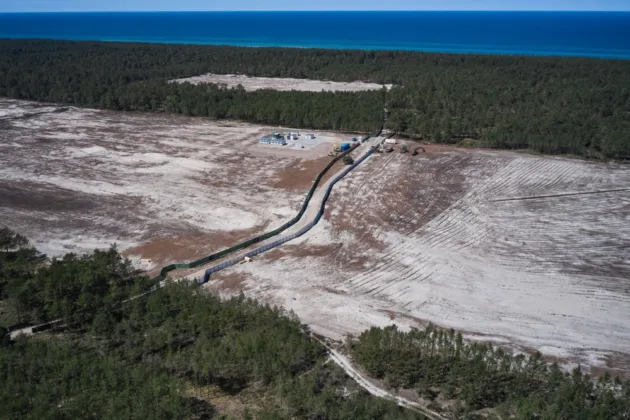
Solara4 has an installed capacity of around 220 MW and began commercial operations in 2021. The facility covers approximately 320 hectares and contains more than 660,000 solar modules.
The project was notable because it was developed without a guaranteed regulated tariff, leaving its revenues directly exposed to high volatility movements in wholesale electricity prices.
Solara4 was initially presented as a landmark example of large-scale, unsubsidised solar power in Portugal, but with a 20-year fixed-price PPA with Spanish energy company Audax Renovables.
That business model has become increasingly challenging as solar generation has expanded rapidly across the Iberian electricity market.
A report by accountancy firm BDO, cited by Portuguese media, found that Solara4 had consistently generated less electricity than initially forecast.
At the same time, the overall increase in solar generation capacity had contributed to lower wholesale prices during periods of high solar output, with prices at times falling to zero or below.
The combination reduced the revenues available to service the project’s financial obligations.
The plant has also experienced technical problems and several fires. According to documents cited by PV Tech, damage to inverters resulted in periods of downtime, while repairs and maintenance increased costs.
The project has additionally become embroiled in a dispute with its original engineering, procurement and construction contractor, China Triumph International Engineering (CTIEC), a subsidiary of Chinese state-owned China National Building Material Group.
The EPC contract was terminated in May 2023 following a dispute over the construction work and payments. CTIEC has subsequently pursued an arbitration claim of around €143 million against the Solara4 project and the wider Welink group. The parties dispute the claim.
Meanwhile, the plant’s principal senior lenders, Investec and Kommunalkredit Austria, have exposure of around €64 million, according to reports on the administration proceedings. The expected return to the lenders has been described as uncertain.
The insolvency does not mean that Solara4 has stopped generating electricity.
The appointed administrators are instead seeking to keep the asset operating while assessing the investment required to improve its performance and preparing it for a possible sale to a new investor.
Management of the project has also been transferred from a Welink subsidiary to renewable-energy operator Exus, with technical consultancy Enertis involved in assessing the plant.
Welink had previously sought to address the project’s financial difficulties by transforming Solara4 into a larger hybrid renewable-energy complex.
Plans announced in 2024 envisaged an additional 50 MW of solar capacity, 264 MW of wind power and a 100 MW battery-storage system, taking the combined project beyond 600 MW.
The idea was to complement solar generation with wind and storage, allowing the existing grid connection to be used more efficiently and reducing reliance on electricity sales during the lowest-priced solar-generation hours.
The proposed wind development has faced environmental obstacles.
Portugal’s Environment Agency, APA, has been assessing a revised hybridisation project. The current proposal involves 25 wind turbines with a combined capacity of 165 MW. The environmental assessment process remains unresolved.
The Solara4 case highlights a growing challenge for large-scale renewable projects in Iberia where increased solar capacity can simultaneously increase renewable generation and depress the prices received by generators during periods when solar output is highest.
Something that was foreseeable and experts warned for “solar cannibalisation” from the beginning.
Operators knew from the start that the 2025 Iberian blackout was due to renewable energy, according to audio recordings Spain’s legislature has obtained.https://t.co/6h0znIcNDm
— Brussels Signal (@brusselssignal) April 1, 2026