





Two thieves have broken into the Musée Renoir in Cagnes-sur-Mer, in the Alpes-Maritimes department of southeast France, and stolen four valuable works of art in the early hours of September 8, abandoning one as they fled, according to the town’s mayor.
After the museum alarm sounded at 5.48am, municipal police arrived five minutes later, at 5.53am.
The pair were identified on the town’s video-surveillance cameras as they escaped, dropping one painting during their flight, mayor Bryan Masson said. Police sources said the two had forced a glazed door and cut the canvases from their frames.
His office estimated the value of the stolen works at €9 million.
The works taken are Renoir’s Madame Colonna Romano, Jeune femme au puits and Coco lisant. A fourth canvas, Portrait de Madame Stephen Pichon, was found in the museum garden.
The museum, housed in Pierre-Auguste Renoir’s last home, the Domaine des Collettes, holds 13 paintings and about 40 sculptures by the Impressionist, together with furniture, his easel and wheelchair, photographs and other personal objects.
It opened to the public in 1960.
The building has been closed pending further inquiries. An investigation has been opened by the Grasse prosecutor’s office and handed to the organised and specialised crime division.
Masson, of National Rally, described the raid as an attack on part of the town’s history and heritage and said additional resources would be devoted to protecting the collection.
Sébastien Chenu, a National Rally vice-president of the National Assembly, said on X that thieves were now cutting up French artworks to steal them.
The theft is the latest in a series of raids on cultural institutions.
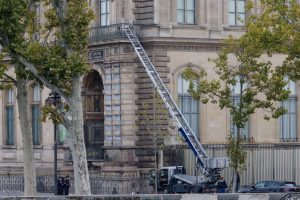
On October 19, 2025, thieves stole eight pieces of the French Crown Jewels, valued at around €88 million, from the Galerie d’Apollon at the Louvre in Paris during opening hours. Suspects have been arrested but the jewels have not been recovered.
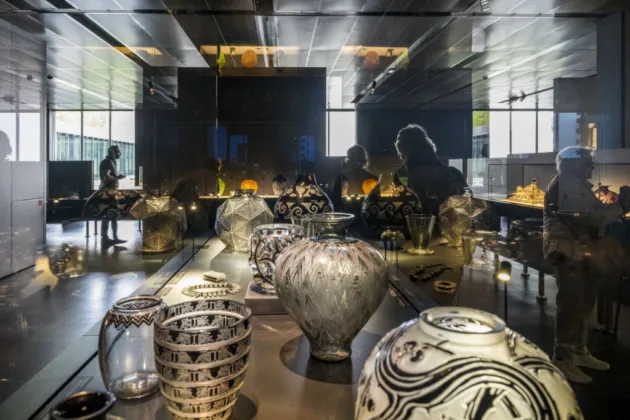
Other recent cases include the theft of three Chinese porcelains classed as national treasures, valued at €6.5 million, from the Adrien Dubouché National Museum in Limoges on the night of September 3, 2025, a smash-and-grab at the Musée Lalique in Wingen-sur-Moder, Alsace on July 5, 2026, in which 27 pieces of jewellery worth more than €4.5 million were taken, and earlier raids on the Cognacq-Jay Museum in Paris and the National Museum of Natural History.
COMMENT: A Pink Panther-style jewel heist in broad daylight at the Louvre has become a symbol of France’s deeper malaise, writes @DavidGHFrost. https://t.co/WaPk1j1geh
— Brussels Signal (@brusselssignal) October 21, 2025
There were also noteworthy art thefts in Spain and the Netherlands this year. More than 60 Bronze Age gold objects from the Villena Treasure were taken from the municipal museum in Villena, Alicante province, southeast Spain, on August 27. In the Netherlands, the Coţofeneşti gold helmet, stolen from the Drents Museum in Assen in January 2025, was recovered in April.
On August 24 Europol published a spotlight report on museum heists. The agency said museum thefts, long regarded as a largely non-violent form of organised property crime, had shifted towards more confrontational methods.
Offenders have used sledgehammers, axes, crowbars, firearms and, in some cases, explosives.
Recruitment of opportunistic groups via social media has become more common, on what the agency called a “crime-as-a-service” basis.
Targets have moved towards gold, silver, gemstones and objects that can be melted down or recut, rather than unique paintings that are harder to sell. Europol also pointed to growing demand for Chinese porcelain.
The Cagnes-sur-Mer raid appears, on current information, to have been a conventional early-morning break-in and underscores the vulnerability of smaller regional museums that hold high-value works.
In a separate case, Italian police recovered three paintings by Renoir, Cézanne and Matisse, valued at more than €9 million, in August 2026. They had been stolen in under three minutes from the Magnani Rocca Foundation near Parma on the night of March 22, 2026. Those thieves also abandoned a fourth canvas, Renoir’s Paysage de Cagnes, when the alarm sounded.
Nine Moldovan nationals were placed under investigation, five of them detained.
French authorities have previously announced plans to tighten museum security after the Louvre raid, though implementation and funding have been questioned. Police continue to search for the two suspects in Cagnes-sur-Mer.
Thieves have stolen jewellery and artefacts worth millions from the Lalique Museum in Wingen-sur-Moder, in the Bas-Rhin department of Alsace, eastern France, in the latest high-profile heist targeting the country’s cultural institutions. https://t.co/wUc27KTam6
— Brussels Signal (@brusselssignal) July 6, 2026