
European affairs are evolving, with the conspicuous failure of Russian arms in Ukraine, where after a war longer than that between Hitler and Stalin, Russia has not been able to occupy more than 20 per cent of Ukrainian territory. And Europe is affected by the collapse of the moral authority and aptitude to govern of the centrist parties in most of Western Europe. But perhaps the most potentially important European phenomenon is the contemporary resurgence of Roman Catholicism.
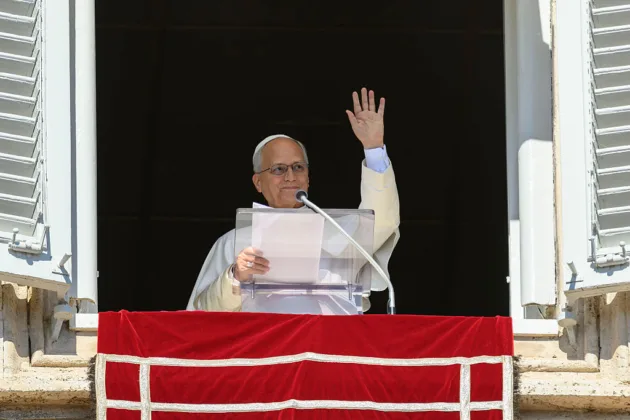
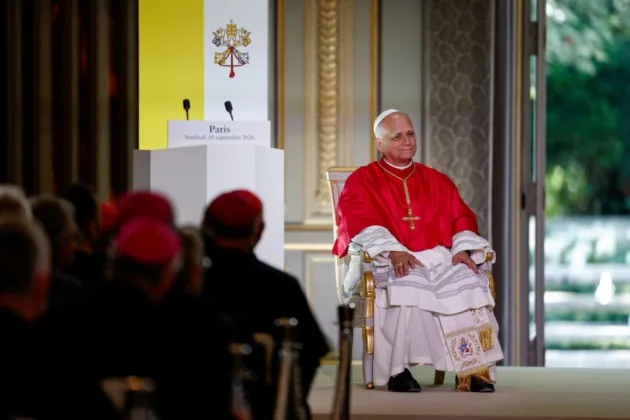
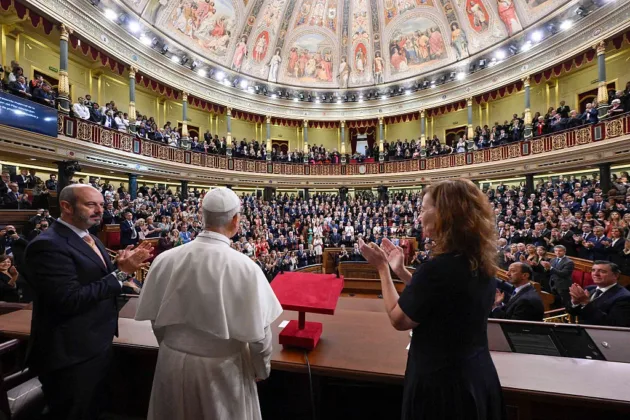
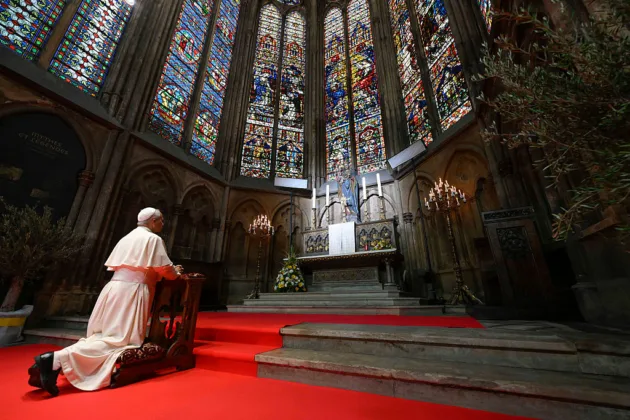
Pope Leo XIV’s visit to France from September 25 to 28 was an astonishing occasion. His arrival and his visit to the great pilgrimage centre of Lourdes, and his visit to the restored Notre-Dame Cathedral in Paris — the first by a pope since the 2019 fire — were very heavily attended, and with an enthusiasm that vastly exceeded matters of mere ceremony, however elaborate.
And he concluded his visit by going to the Moselle city of Metz, seeing it as the home of one of the great founders of European institutions in the spirit of European reconciliation, Robert Schuman, who lived there for decades and is buried in the neighbouring village of Scy-Chazelles. This may have been because Schuman was less a euro-federalist and a more fervent Roman Catholic than Jean Monnet, another founder of modern European institutions. But it may also have had to do with the geographic and historic position of Metz, on the Moselle, and the city of some of the most influential Catholic prince-bishops of the Holy Roman Empire, which endured for 1,000 years, from Charlemagne to Napoleon.
Yet by far the most remarkable element of the Pope’s visit to France was the open-air mass conducted in the Place de la Concorde. Paris has not been an especially religiously observant city for many decades and the anti-clerical tradition there is strong and often violent. Revolutionary France and Napoleon put Popes Pius VI and VII under arrest, and three archbishops of Paris were murdered between the Revolution of 1848 and the Paris Commune of 1871.
Yet this ceremony on September 26 drew a responsibly estimated 800,000 people, according to the French authorities and the Vatican, that stretched all the way up the Champs-Élysées to the Arc de Triomphe. It also extended up the side streets toward Place Vendôme and along Avenues Winston Churchill and Franklin D. Roosevelt. More than 1,000 clergy were present throughout this vast assembly and distributed communion to the great majority of those present, wherever they were.
Nothing remotely like this has been seen anywhere in Europe outside Italy and Poland for more than a century. The new Pope seems to be striking a balance between firmness and flexibility and formality and access that is generally pleasing to the majority of his 1.4 billion co-religionists.
It also demonstrates a public exasperation that extends far beyond France with the failures and squalid compromises of the most militant secularists in civil government. Most of the West European countries have been unable to get a functioning majority behind a policy of admitting an assimilable number of genuine immigrants seeking a new nationality and accommodated by adequate expansions of housing and social services to avoid embittering the citizens of those countries. The Pope is the principal representative of the Christian spirit of reconciling mercy with legitimacy in the exaltation of prudent charity over negligent opportunism and electoral cowardice.
The Roman Catholic Church has traversed a time of great humiliation and scandal, and has finally cleansed itself of the odium of sexual abuse and hypocrisy. In its chastened condition, it has gained a good deal of moral prestige, but the secular leaders have forfeited a great deal of support by their failures of leadership.
Just as conspicuously, the relentless pressures of militant Islam, now including the official bigotry of the mayors of the two most important Western cities, New York and London, are generating an almost unspoken, but very powerful determination not to leave the entire field of spirituality, which affects a great majority of mankind to some extent, effectively to Islam, and especially not to intolerant and aggressive militant Islam.
A very small proportion of the major Western nationalities would qualify as militantly religious, but the overwhelming majority of their populations prefer Judeo-Christian concepts to available alternatives. And the large number of previously comparatively inactive Christians are undoubtedly being stirred to a more demonstrative state by the abrasions and condescensions of both militant Islam and complacent and even iconoclastic atheism.
There are also distinct signs of swiftly increasing numbers of voluntary baptisms, especially among comparatively young people, in much of Western Europe and North America, as well as large parts of Africa, Latin America, East Asia and Australasia. In France alone, more than 21,000 adults and adolescents were baptised at the Easter vigil on April 4, a record, according to the French Bishops’ Conference. The number of adults received has more than tripled since 2022, and 42 per cent of them are aged between 18 and 25.
There is nothing in any of this that is militant or intolerant; it is resistant to militancy and intolerance. There was nothing in the Pope’s remarks or the discernible highly positive response to him in France that would give any offence to any non-Christian, whether as a religious believer or not. As of now, it has rather the character of faith in the roots of our civilisation: Respect and tolerance and personal freedom and dignity, and a firm and quiet but implacable determination that those ideals will not be overrun, abandoned or successfully despised. Whatever any individual’s religious views, this is an objectively desirable turn of events.