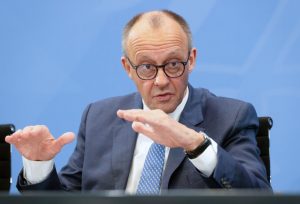





Germany’s transport minister has called the European Union’s planned ban on new combustion-engine cars a “big mistake” and said the German Government would press in Brussels for the rule to be withdrawn.
In an interview published by Die Welt on October 9, Steffen Bilger, of the Christian Democratic Union (CDU), said there was a growing consensus that the 2035 phase-out had been wrong.
“The federal government is united in jointly advocating in Brussels for a reversal of the ban,” he said.
Unions and works councils had helped build that case, he added.
Germany wanted to remain a car-making country and to build vehicles with different powertrains for the world market, which he said was incompatible with a European ban on combustion engines. He also claimed support among transport ministers in other member states.
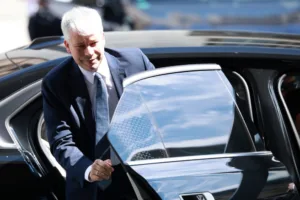
Bilger took over the transport ministry in July 2026, replacing fellow Christian Democrat Patrick Schnieder, and has argued since taking office that the phase-out was a mistake.
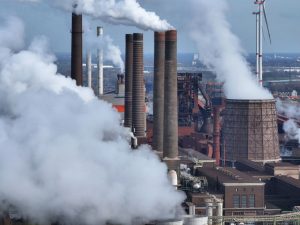
Current EU rules require a 100 per cent cut in average CO2 emissions from new cars by 2035 compared with 2021, which in practice ends the sale of new petrol and diesel cars. The target is one of the central measures of the European Green Deal.
On December 16, 2025, the European Commission, under pressure from Berlin, proposed softening that to a 90 per cent cut, with the remaining 10 per cent offset through low-carbon European steel, e-fuels and biofuels.
Under that proposal, credits for EU-made low-carbon steel would be capped at 7 per cent of the target and credits for renewable fuels at 3 per cent, with a 1 per cent sub-cap for biofuels and biogas. The package also eased the 2030 target for new vans from a 50 per cent cut to 40 per cent.
Bilger said that was not enough. The Commission was moving too slowly, he argued.
If there was political agreement that the ban made no sense, it should be abolished outright rather than replaced by something that amounted to the same thing. The same logic, he said, applied to trucks as well as cars.
The comments come as Berlin and Paris try to loosen the target further.
According to Handelsblatt and other reports published on October 7, Chancellor Friedrich Merz and French President Emmanuel Macron have agreed to seek an additional 10-percentage-point easing, which with planned offsets would leave a reduction of at least 80 per cent versus 2021. Reports said the two capitals were also discussing measuring the 2030 interim target as an average across the years 2028 to 2032.
In exchange, Germany is expected to back French demands for stricter “Buy European” rules in public subsidies and tenders.
EU leaders are due to meet in Brussels on October 15-16. A position from the Council of the European Union is expected in December and a parliamentary vote is scheduled for November 23.
Bilger’s line continues a shift already visible under the current coalition.
Merz criticised one-sided technology mandates at the opening of the IAA motor show in Munich in September 2025, and Bavaria’s minister-president, Markus Söder, has called the combustion-engine ban simply wrong.
Environmental groups have warned that further weakening would raise car CO2 emissions through mid-century and slow the shift to battery-electric vehicles. Such cars accounted for 20.7 per cent of new registrations in the EU in the first half of 2026, up from 15.6 per cent a year earlier, according to the European Automobile Manufacturers’ Association (ACEA).