



The European Union has been preparing a new military mission in Lebanon as the United Nations Interim Force in Lebanon (UNIFIL) prepares to withdraw.
The initiative is part of Brussels’ broader effort to maintain a European role in Lebanon after the UN force’s departure. The proposed mission is already facing a leadership contest between France and Italy, both seeking to take command of the operation.
The competition was reported by Rapporteur in an exclusive article published on October 8, 2026. The EU mission itself had been under preparation for months, with EU foreign policy chief Kaja Kallas confirming on October 8 that planning was complete and that she expected EU foreign ministers to formally establish it on October 12.
The new element is the contest between Paris and Rome over who would lead the operation.
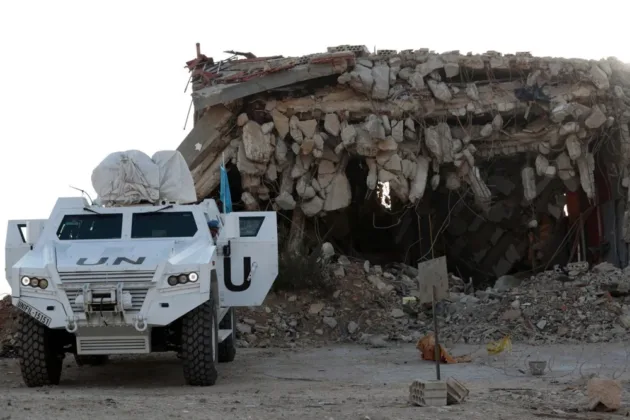
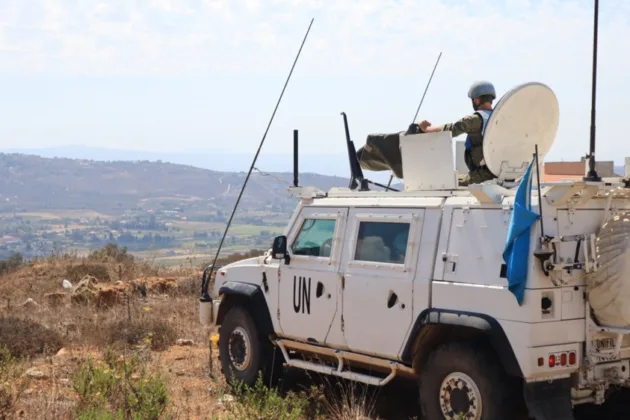
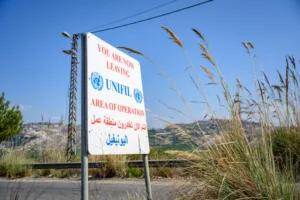
UNIFIL is the UN peacekeeping operation deployed in southern Lebanon to help maintain peace and security along the Israeli-Lebanese border. Established by the UN Security Council in 1978, its original mandate was to confirm the withdrawal of Israeli forces that were then occupying southern Lebanon and assist the Lebanese government in re-establishing its authority in the south.
Following the 2006 war between Israel and Hezbollah, UNIFIL’s mandate was expanded under Security Council Resolution 1701 to monitor the cessation of hostilities, support the deployment of the Lebanese Armed Forces (LAF) in southern Lebanon and help establish a buffer area along the border free of armed personnel and weapons, except those belonging to the Lebanese State and UNIFIL.
That resolution authorised a force of up to 15,000 personnel. At its peak, the mission deployed more than 10,000 peacekeepers.
As of September 23, 2026, UNIFIL comprised 7,565 personnel from 46 countries. Indonesia, Italy, France, Spain and India are its largest contributors, each fielding between 633 and 758 troops.
Despite its long-standing presence, UNIFIL was unable to prevent the resumption of large-scale hostilities between Israel and Hezbollah.
Against this backdrop, the UN Security Council unanimously decided in August 2025 to extend UNIFIL’s mandate for a final time under Resolution 2790, setting December 31, 2026 as the date on which the mission must cease operations. An orderly drawdown and withdrawal of personnel is expected to continue throughout 2027, with most uniformed personnel due to leave by the middle of that year.
In this context, the EU is preparing its new mission. Brussels is not planning to replace UNIFIL with an equivalent peacekeeping force along the Israeli-Lebanese border.
Instead, the proposed European deployment is intended to advise and train Lebanon’s security institutions, helping the Lebanese State strengthen its control over its territory, improve border security and take greater responsibility for internal security. This includes the challenge of extending state authority to areas where Hezbollah has maintained an armed presence, as well as areas where Israeli forces remain deployed on Lebanese territory.
Kallas explicitly ruled out a direct replacement for the UN mission during a joint press conference with Lebanese foreign minister Youssef Rajji in Beirut on October 8. “It is not UNIFIL replacement, and it will not only focus on Southern Lebanon,” she said.
She added: “There cannot be a security vacuum when UNIFIL leaves. Lebanon must have full control of its whole territory.” Kallas also said that the EU remained ready to work with Lebanon, the United Nations and members of the Security Council on arrangements for the period after UNIFIL’s departure.
According to Rapporteur, the proposed EU mission could include around 100 military personnel, with France, Italy and Spain expected to provide most of the contingent. All three already rank among UNIFIL’s biggest troop contributors.
More than 10 EU member states have reportedly expressed willingness to contribute personnel or resources, although the full list of countries has not been publicly disclosed. Kallas first said more than 10 members were ready to take part on September 1, after a meeting of European defence ministers in Ireland.
France reportedly wants to take the initial command, while Italy has put forward its own candidate. An annual rotation of leadership between the two countries is also under consideration.
These arrangements have yet to be definitively confirmed. EU officials have said personnel could deploy in late 2026 or early 2027.
The mission would operate under the EU’s Common Security and Defence Policy (CSDP), the framework through which EU member states coordinate civilian and military missions abroad to manage crises and strengthen international security. Decisions to establish CSDP missions are generally taken unanimously by member states in the Council of the European Union.
Participating countries then contribute the personnel and capabilities needed to carry out the agreed mission. The Franco-Italian competition is therefore about command of a joint EU operation, rather than which country would independently run a separate national deployment.
The Council of the European Union has committed €182 million to the LAF through the European Peace Facility since 2022, including a €100 million package adopted on June 4, 2026.
Alongside the EU mission, France and Italy are also pursuing a separate initiative intended to help organise an international presence in Lebanon after UNIFIL’s departure. According to Rapporteur, the two countries are seeking a United Nations mandate that would allow a smaller international force to operate alongside the Lebanese Armed Forces.
The initiative could involve French, Italian and Lebanese personnel, with other countries potentially joining at a later stage. Its tasks could include supporting the Lebanese army across the country, including south of the Litani River, through training and potentially joint or coordinated patrols.
The precise composition, mandate and operational arrangements have not yet been finalised. The initiative is therefore distinct from the EU mission, which is primarily designed to provide advice and assistance to Lebanese security institutions rather than take over UNIFIL’s peacekeeping role.